


Lead Nuturing Lifecycle Powerpoint Ppt Template Bundles




Try Before you Buy Download Free Sample Product
 Impress Your
 Audience
 100%
100% Editable
 Save Hours
 of Time


Our Lead Nuturing Lifecycle Powerpoint Ppt Template Bundles are topically designed to provide an attractive backdrop to any subject. Use them to look like a presentation pro.
People who downloaded this PowerPoint presentation also viewed the following :
Lead Nuturing Lifecycle Powerpoint Ppt Template Bundles with all 22 slides:
Use our Lead Nuturing Lifecycle Powerpoint Ppt Template Bundles to effectively help you save your valuable time. They are readymade to fit into any presentation structure.






FAQs for Lead Nuturing Lifecycle Powerpoint
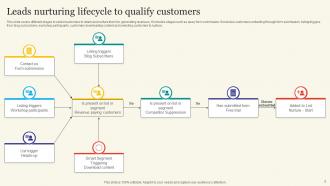
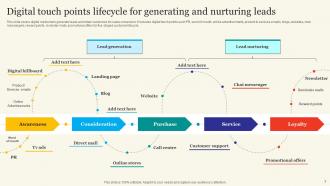
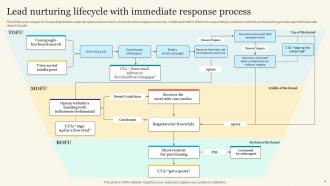
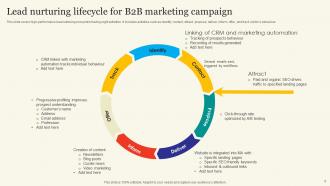
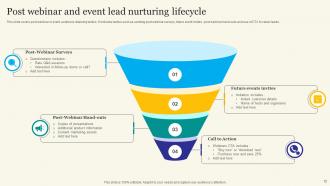
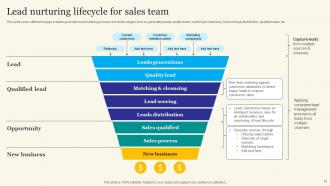
The key stages of the Lead Nurturing Lifecycle include awareness generation, interest cultivation, consideration facilitation, intent identification, and conversion optimization. These stages enable organizations to systematically guide prospects through targeted content, personalized communications, and strategic touchpoints, with many businesses finding that structured nurturing delivers higher conversion rates and stronger customer relationships.
Businesses determine optimal content by analyzing lead behavior, engagement metrics, and conversion patterns at each lifecycle stage, while conducting A/B testing on different content formats and messaging approaches. Through marketing automation platforms and CRM data, companies can track which educational resources, case studies, and interactive content drive progression, with many organizations finding that personalized, stage-specific content increases conversion rates significantly.
Marketing automation platforms like HubSpot, Marketo, Pardot, ActiveCampaign, and Drip are most effective for automating lead nurturing processes. These tools streamline engagement by delivering personalized email sequences, tracking behavioral triggers, and scoring lead interactions, with many organizations finding that automated nurturing increases conversion rates while reducing manual effort, ultimately delivering faster sales cycles and enhanced customer experiences.
Personalized communications significantly enhance lead conversion rates by delivering targeted content, addressing specific pain points, and building stronger relationships throughout the nurturing process. Through advanced segmentation and behavioral tracking, organizations achieve conversion improvements of 20-30%, with companies in financial services, healthcare, and retail finding that personalized messaging ultimately delivers higher engagement and accelerated sales cycles.
Key metrics include conversion rates, email engagement rates, lead scoring progression, sales cycle length, and cost per acquisition. These metrics enable marketers to optimize campaign performance by identifying high-performing content, tracking prospect behavior patterns, and measuring revenue impact, with many organizations finding that comprehensive tracking ultimately delivers improved lead quality and faster sales conversions.
Segmentation enhances lead nurturing by delivering targeted content based on demographics, behavior, engagement levels, and buying stage, enabling personalized messaging that resonates with specific audience groups. This strategic approach increases conversion rates, reduces sales cycles, and improves customer experiences, with many organizations finding that segmented campaigns deliver significantly higher engagement and ultimately accelerate prospects through the sales funnel.
Social media facilitates lead nurturing through targeted content sharing, community engagement, personalized messaging, and social listening capabilities. These platforms enable businesses to maintain consistent touchpoints with prospects, share valuable educational content, and respond to customer inquiries in real-time, with many organizations finding that strategic social engagement significantly accelerates the conversion process while building stronger relationships.
Businesses can align their sales and marketing teams through shared lead scoring systems, unified customer data platforms, regular cross-team meetings, and collaborative content creation strategies. This strategic combination enables seamless handoffs between marketing-qualified and sales-qualified leads, with many organizations finding that aligned teams generate significantly higher conversion rates, shorter sales cycles, and ultimately deliver enhanced customer experiences while maximizing revenue potential.
Common lead nurturing pitfalls include over-emailing prospects, sending irrelevant content, neglecting lead scoring, poor timing of communications, and lack of personalization. These mistakes often result from insufficient segmentation and automation setup, with many organizations finding that addressing these issues through strategic content mapping, behavioral triggers, and consistent testing ultimately delivers higher conversion rates and stronger customer relationships.
Feedback loops improve lead nurturing by tracking engagement patterns, analyzing conversion data, and monitoring behavioral responses to refine messaging strategies. Through systematic data collection, marketers can identify which touchpoints resonate most effectively, adjust content timing and personalization, and optimize campaign sequences, ultimately delivering higher conversion rates and more qualified leads.
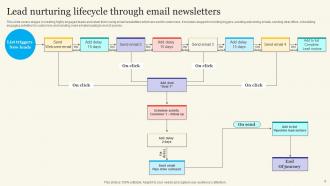
Best practices for lead nurturing email sequences include personalized content based on buyer personas, strategic timing intervals, compelling subject lines, clear calls-to-action, and progressive value delivery. These approaches enhance engagement by addressing specific pain points, building trust through educational content, and guiding prospects through the sales funnel, with many organizations finding that segmented sequences deliver significantly higher conversion rates and stronger customer relationships.
Data analytics optimizes lead nurturing by tracking engagement patterns, identifying behavioral triggers, and predicting conversion likelihood across touchpoints. Through comprehensive data analysis, organizations can personalize content delivery, automate timely follow-ups, and allocate resources more strategically, with many companies finding that analytics-driven nurturing increases qualified leads by 20-30% while reducing acquisition costs.
Timing in lead nurturing communications is critical because it determines message relevance, prevents prospect fatigue, and maximizes conversion potential through strategic touchpoint spacing. Effective timing involves delivering content when prospects are most receptive, with many companies finding that personalized cadences based on engagement patterns and buying stage ultimately deliver higher conversion rates and stronger customer relationships.
Storytelling enhances lead nurturing by creating emotional connections, building trust through relatable narratives, and simplifying complex solutions into memorable scenarios. Through compelling case studies and customer success stories, businesses can guide prospects through decision-making journeys more effectively, ultimately delivering higher engagement rates and faster conversion cycles across industries.
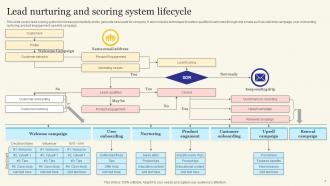
Lead scoring significantly enhances nurturing efficiency by prioritizing high-potential prospects, personalizing content delivery based on engagement levels, and optimizing sales team focus on qualified leads. Through automated scoring systems, organizations streamline resource allocation, accelerate conversion timelines, and deliver more targeted experiences, with many companies finding that strategic scoring ultimately increases conversion rates while reducing acquisition costs.
-
They saved me a lot of time because they had exactly what I was looking for. Couldn’t be happier!
-
The Designed Graphic are very professional and classic.