


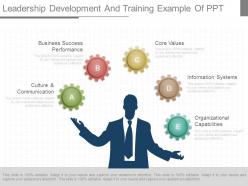
Leadership development and training example of ppt





Try Before you Buy Download Free Sample Product
 Impress Your
 Audience
 100%
100% Editable
 Save Hours
 of Time


Gain the approval of your audience. Get a thumbs up with our Leadership Development And Training Example Of Ppt.
People who downloaded this PowerPoint presentation also viewed the following :
Leadership development and training example of ppt with all 7 slides:
Create an air of exclusivity with Leadership Development And Training Example Of Ppt. Your brand will get classy coverage.



FAQs for Leadership development and training
Honestly? Adaptability is everything right now. Things change so fast you'll get whiplash trying to keep up. Emotional intelligence matters too - you gotta read the room and actually connect with people authentically. Don't micromanage. People want autonomy, especially with all this hybrid work stuff. Focus more on growing your team instead of just checking off tasks. Resilience helps since there's always some crisis or uncertainty happening. The whole command-and-control thing is dead anyway - nobody responds to that anymore. Ask yourself: am I actually helping people develop or just being a glorified task manager? That mindset shift changes everything.
Honestly, 360-degree feedback is probably your best starting point - get input from their peers, team, and boss. Behavioral interviews work great too, especially asking about times they had to lead without any real authority. Those situations really show someone's natural instincts. Assessment centers are solid if you have the budget, but I've found just watching how people handle team projects tells you a lot. Look for emotional intelligence and how they make decisions when things get stressful. Oh, and notice if people actually want to follow them - that's huge.
Look, you can't lead people if you can't read them or handle your own stuff first. EQ is huge - way more than most people realize. I've watched super smart managers totally crash because they had zero emotional awareness. But here's the thing - you can actually get better at this with practice. Next time you're in meetings, just pay attention to how you react to things and watch how people respond when you change your tone. Oh and get feedback from people you trust. It sounds basic but it works.
Honestly, don't wait to match people with mentors - do it from day one. Monthly one-on-ones work great, plus random coffee chats or whatever feels natural. Here's what I've learned though: mentors need to actually know what leadership stuff you're teaching each week. Otherwise it's just two separate things happening. Set clear expectations upfront about what good mentoring looks like. The real breakthrough happens when someone can take those leadership concepts and apply them to whatever messy situation they're dealing with at work right now. That's where the learning actually sticks.
Oh man, where do I start? Getting people actually engaged is probably the hardest part - half the time they're just going through the motions. Plus everyone expects magic overnight results when real leadership development takes months, maybe years. Most programs are just one-off workshops that accomplish basically nothing. Measuring real impact is tough too since completion rates don't tell you if anyone actually changed. And don't get me started on senior leaders who preach one thing but do another - that kills credibility fast. You really need ongoing support and realistic timelines from day one, or you're wasting everyone's time.
Honestly, tech can totally transform how you develop leaders. AI assessments give super personalized feedback on blind spots - way better than generic surveys. VR training is wild now too, people can practice difficult conversations without real consequences. Mobile apps work great for busy schedules, just quick leadership tips here and there. You can also set up peer coaching between different offices online. Oh, and the analytics side is probably the best part - you'll actually see what's working instead of just guessing. My friend's company started tracking this stuff and it completely changed their approach.
Honestly, you gotta track the hard numbers AND the softer stuff. Promotion rates from participants, retention of your high-potential people, 360 feedback scores. Employee engagement surveys are huge - they show if people actually feel supported. The good programs create internal buzz, which sounds cheesy but it's true. Also measure business outcomes like team performance for leaders who completed development. Oh, and this is key - set baseline measurements before starting. Check progress at 6 and 12 months. Without comparison data, you're basically throwing darts in the dark.
Honestly, start by looking at your own blind spots first - we've all got them. Give everyone actual speaking time in meetings, not just whoever talks loudest. I'd suggest doing one-on-ones with each person to figure out what they're good at and where they want to go career-wise. Ask real questions that dig deeper instead of surface-level stuff. The whole point is making people feel safe enough to actually speak up when they disagree or have different ideas. Oh, and actively mentor people from underrepresented groups - that makes a huge difference. It's not enough to just hire diversely if you're not actually using those different perspectives to make better decisions.
Honestly, feedback is your best friend for growth - even when it stings. Don't wait for annual reviews; ask your team and manager regularly what you could do better. The tricky part? Actually sitting with their responses instead of getting defensive. I try to do a quick weekly check-in with myself about what went well and what flopped. Look for patterns too - maybe you're micromanaging without realizing it, or your communication isn't as clear as you think. Pick one specific thing from recent feedback and make a real plan to fix it. Small steps work better than trying to overhaul everything at once.
Honestly, communication is everything when you're managing remotely. You can't just pop by someone's desk anymore, so being super clear in your messages is crucial. I totally bombed this in my first remote role - learned real quick! Staying organized across time zones is huge too. Give people space to work independently but still hold them accountable somehow. Oh, and those regular one-on-ones? Actually listen during them. That's where you'll spot problems before they blow up into bigger messes. Trust me on that one.
Honestly, coaching is a game changer for new leaders. Having someone who can call out your blind spots is invaluable - way better than just figuring it out as you go. They create this safe space where you can practice tough conversations without the stakes being real. What I love about it is getting feedback from someone who isn't tied to your company politics, you know? A good coach helps you develop that self-awareness piece, which is honestly half the battle in leadership. Oh, and definitely find someone who's worked with people in similar roles - they'll actually understand what you're dealing with day-to-day.
Dude, your company culture is basically the blueprint for what kind of leaders you'll get. When people see blame flying around, they learn to play it safe instead of taking smart risks. But honestly? The best cultures I've worked in rewarded people for learning from mistakes - even the messy ones. Free-flowing feedback matters too. If your top performers are mentoring others and actually speaking up with ideas, that's gold. Watch what behaviors get promoted at your place. That'll show you exactly what leadership "recipe" your culture is cooking up, for better or worse.
Yeah, generational stuff totally affects leadership styles. Boomers are big on hierarchy and want those face-to-face meetings. Gen X? They're all about work-life balance and giving people space to do their thing. Millennials need constant feedback and want everything to feel collaborative and meaningful. And Gen Z - honestly, they can smell corporate fake-ness from a mile away. They want real impact and authenticity. The trick is figuring out what actually motivates each person on your team. You can't just use the same playbook for everyone because it'll backfire pretty quickly.
So basically, you need real challenges - not just boring training sessions that don't teach them anything useful. Give them cross-functional projects and pair them with senior mentors who can show them how the whole business works. Rotational assignments are gold for this. Here's the thing though - formal coaching only works if you combine it with actual leadership opportunities where they can mess up without major consequences. I'd honestly skip most leadership programs, they're pretty worthless on their own. Track how they're doing and pivot when needed. Start with 2-3 concrete experiences that'll stretch each person.
Honestly, case studies are where it's at for leadership training. Real stories stick way better than boring theory - you get to see how actual leaders screwed up or nailed it in tough spots. I'd grab maybe 8-10 good ones covering different scenarios like crisis management, team drama, strategic shifts. Mix up industries too so it doesn't get stale. The magic happens when you dig into their thought process, not just what happened afterward. Like, why did they choose that route? What were they thinking in the moment? Way more valuable than textbook stuff, trust me.
-
Really like the color and design of the presentation.
-
Thanks for all your great templates they have saved me lots of time and accelerate my presentations. Great product, keep them up!