


Logistics operations in supply chain powerpoint presentation slides




Try Before you Buy Download Free Sample Product
 Impress Your
 Audience
 100%
100% Editable
 Save Hours
 of Time


Our Logistics Operations In Supply Chain Powerpoint Presentation Slides are topically designed to provide an attractive backdrop to any subject. Use them to look like a presentation pro.
People who downloaded this PowerPoint presentation also viewed the following :
Content of this Powerpoint Presentation
Slide 1: This is the cover slide of Logistics Operation in Supply Chain PowerPoint Presentation.
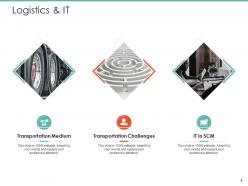
Slide 2: This slide talks about Transportation Medium and its challenges.
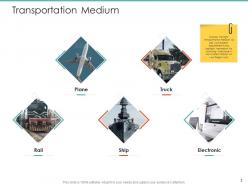
Slide 3: This slide presents all the Transportation Medium in pictorial form.
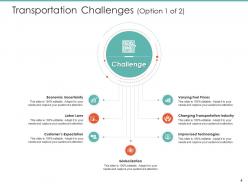
Slide 4: This slide talks about Transportation Challenges (Option 1 of 2).
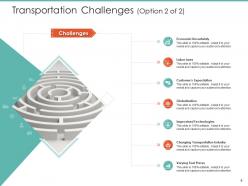
Slide 5: This slide talks about Transportation Challenges (Option 2 of 2).
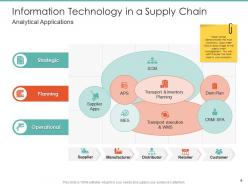
Slide 6: This slide presents Information Technology in a Supply Chain Analytical Applications.
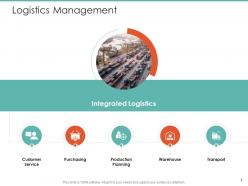
Slide 7: This slide talks about Logistics Management.
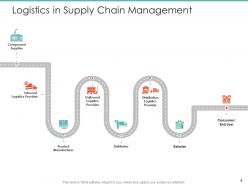
Slide 8: This slide talks about Logistics in Supply Chain Management.
Slide 9: This is Icon Slide with various icons. Use as per need and requirement.
Slide 10: This slide is titled Additional Slides to move forward. Change/ alter content as per need.
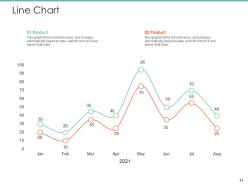
Slide 11: This is a Line chart slide that can be used to compare different products.
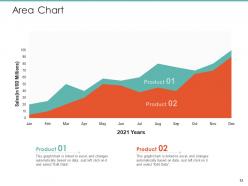
Slide 12: This is a Area chart slide that can be used to compare different products.
Slide 13: This is an About Us slide. State company/team specifications etc. here
Slide 14: This is Our Team slide with name and designation to fill.
Slide 15: This is a Post IT Notes slide that can be used to keep important information at one place.
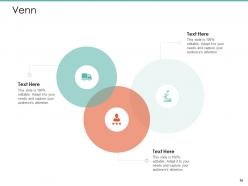
Slide 16: This is a Venn diagram slide that can be used to compare three different products.
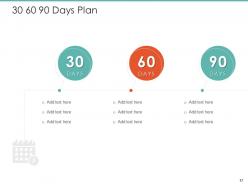
Slide 17: This is a 30 60 90 Days Plan slide to create robust plans.
Slide 18: This is a Magnifying Glass slide that can be used to highlight important information.
Slide 19: This is a Marketing Roadmap slide that can be used to present chronological sequence of events.
Slide 20: This is a Thank You slide for acknowledgement.
Logistics operations in supply chain powerpoint presentation slides with all 20 slides:
Use our Logistics Operations In Supply Chain Powerpoint Presentation Slides to effectively help you save your valuable time. They are readymade to fit into any presentation structure.



FAQs for Logistics operations in supply chain
Modern logistics operations face challenges including supply chain disruptions, rising fuel costs, driver shortages, regulatory compliance, and increasing customer expectations for faster delivery. These obstacles significantly impact operational efficiency and profitability, with many companies finding that strategic technology adoption, route optimization, and workforce development help streamline processes while delivering competitive advantage in an increasingly demanding market.
Technology has revolutionized logistics operations through automation, artificial intelligence, IoT sensors, blockchain integration, and predictive analytics. These innovations streamline supply chain visibility, optimize route planning, and enhance inventory management, with companies in retail and manufacturing experiencing faster deliveries, reduced operational costs, and improved customer satisfaction in an increasingly competitive marketplace.
Data analytics plays a crucial role in optimizing logistics efficiency by enabling predictive demand forecasting, route optimization, inventory management, real-time tracking, and performance monitoring across supply chains. Through advanced analytics platforms, logistics companies streamline warehouse operations, reduce transportation costs, and minimize delivery times, while enhancing customer experiences, ultimately delivering significant competitive advantages in increasingly complex global markets.
Supply chain disruptions significantly impact logistics operations by creating delays, increasing costs, forcing route modifications, and reducing inventory availability across distribution networks. These disruptions compel companies to implement alternative sourcing strategies, enhance warehouse flexibility, and adopt real-time tracking technologies, with many organizations finding that diversified supplier networks and predictive analytics ultimately deliver greater operational resilience and competitive advantage.
Best practices for warehouse management include strategic layout optimization, automated inventory tracking systems, efficient picking and packing processes, real-time data analytics, and cross-training staff across multiple functions. These approaches streamline operations by reducing retrieval times, minimizing errors, and maximizing space utilization, with many distribution centers finding that integrated warehouse management systems ultimately deliver faster order fulfillment and reduced operational costs.
Sustainability integrates into logistics operations through route optimization, electric vehicle fleets, renewable energy warehouses, circular packaging systems, and carbon footprint tracking technologies. These approaches streamline costs while reducing environmental impact, with companies like Amazon and DHL finding that sustainable practices ultimately deliver operational efficiency, regulatory compliance, and competitive advantage in increasingly eco-conscious markets.
Key logistics performance metrics include on-time delivery rates, order accuracy, inventory turnover, cost per shipment, and customer satisfaction scores. These measurements enable organizations to streamline operations, reduce transportation costs, and enhance supply chain visibility, with many retailers and manufacturers finding that comprehensive tracking ultimately delivers competitive advantage and improved customer experiences.
Last-mile delivery significantly impacts logistics efficiency by representing 40-50% of total shipping costs, creating bottlenecks through complex route optimization, and directly influencing customer satisfaction scores. Through advanced routing algorithms and strategic distribution centers, companies like Amazon and FedEx streamline final delivery stages, reduce operational expenses, and enhance customer experiences, ultimately delivering competitive advantage in an increasingly demanding marketplace.
Global trade regulations significantly impact logistics operations through customs compliance requirements, documentation protocols, tariff structures, cross-border security measures, and supply chain transparency mandates. These regulations present both challenges and opportunities, with many logistics providers finding that strategic compliance automation, regulatory expertise development, and adaptive routing capabilities ultimately deliver competitive advantages while ensuring seamless international operations.
Companies manage inventory levels across multiple locations through centralized inventory management systems, demand forecasting algorithms, automated reorder points, real-time tracking technologies, and strategic distribution planning. These integrated approaches enable organizations to optimize stock levels, reduce carrying costs, and minimize stockouts across warehouses, with many retail and manufacturing companies finding that centralized visibility ultimately delivers improved customer satisfaction and operational efficiency.
Automating logistics processes delivers reduced operational costs, enhanced accuracy, faster delivery times, improved inventory management, and real-time tracking capabilities. These technologies streamline operations by minimizing human error, optimizing route planning, and accelerating order fulfillment, with many distribution centers finding that automation ultimately enhances customer satisfaction while delivering significant competitive advantage.
Collaboration among supply chain partners improves logistics operations by enabling real-time data sharing, coordinated planning, and resource optimization across the entire network. Through integrated systems and strategic partnerships, companies streamline inventory management, reduce transportation costs, and enhance delivery reliability, with many retailers and manufacturers finding that collaborative approaches ultimately deliver faster customer fulfillment and significant competitive advantages.
Strategies to enhance customer satisfaction in logistics include real-time tracking systems, proactive communication protocols, flexible delivery options, automated exception management, and personalized service offerings. These approaches streamline operations by reducing uncertainty, minimizing delays, and improving transparency, with many retail and e-commerce companies finding that enhanced visibility and communication capabilities ultimately deliver higher customer loyalty and competitive advantage.
Companies adapt their logistics operations by implementing flexible supply chain networks, investing in automation technologies, expanding fulfillment centers, and leveraging data analytics for demand forecasting. Through strategic partnerships with third-party providers, businesses streamline last-mile delivery, enhance inventory management, and optimize distribution routes, with many retailers finding that these adaptations deliver faster customer service and competitive advantage in an increasingly dynamic marketplace.
Future trends shaping logistics operations include autonomous vehicles, drone deliveries, AI-powered demand forecasting, blockchain for supply chain transparency, and sustainable packaging solutions. These technologies streamline operations by reducing labor costs, improving delivery speed, and enhancing inventory management, with many retailers and manufacturers finding that early adoption delivers significant competitive advantages in an increasingly complex marketplace.
-
I discovered this website through a google search, the services matched my needs perfectly and the pricing was very reasonable. I was thrilled with the product and the customer service. I will definitely use their slides again for my presentations and recommend them to other colleagues.
-
Excellent work done on template design and graphics.
-
Easily Editable.
-
Commendable slides with attractive designs. Extremely pleased with the fact that they are easy to modify. Great work!
-
Appreciate the research and its presentable format.
-
Unique and attractive product design.
-
Appreciate the research and its presentable format.
-
Great quality product.
-
Unique and attractive product design.