


Long Short Hedge Funds Powerpoint Presentation And Google Slides ICP




Try Before you Buy Download Free Sample Product
 Impress Your
 Audience
 100%
100% Editable
 Save Hours
 of Time


This PowerPoint presentation provides an overview of Long Short Hedge Funds, a type of hedge fund that seeks to generate returns by taking long positions in stocks that are expected to increase in value and short positions in stocks that are expected to decrease in value. It covers the strategies used by these funds, their advantages and disadvantages, and the risks associated with them. It also looks at the performance of Long Short Hedge Funds compared to other types of hedge funds. The presentation is suitable for investors and financial professionals interested in learning more about this type of fund.
People who downloaded this PowerPoint presentation also viewed the following :
Long Short Hedge Funds Powerpoint Presentation And Google Slides ICP with all 21 slides:
Use our Long Short Hedge Funds Powerpoint Presentation And Google Slides ICP to effectively help you save your valuable time. They are readymade to fit into any presentation structure.
-

Long Short Hedge Funds
-
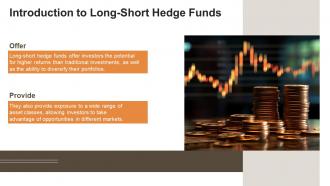
Introduction to Long Short Hedge Funds
-
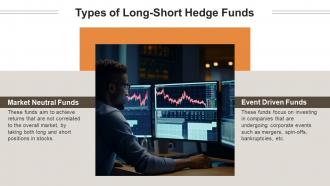
Types of Long Short Hedge Funds
-
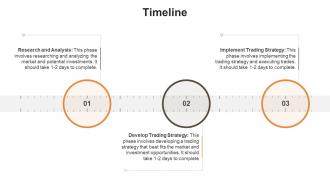
Timeline
-
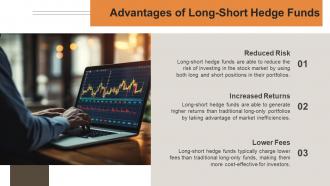
Advantages of Long Short Hedge Funds
-
Disadvantages of Long Short Hedge Funds
-

30 60 90 Days Plan
-
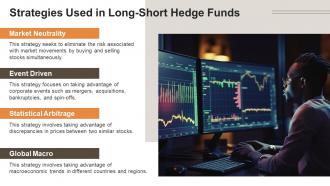
Strategies Used in Long Short Hedge Funds
-
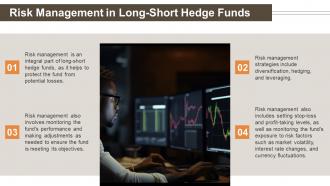
Risk Management in Long Short Hedge Funds
-
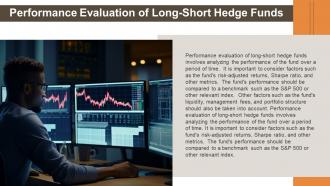
Performance Evaluation of Long Short Hedge Funds
-
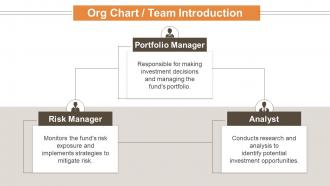
Org Chart Team Introduction
-
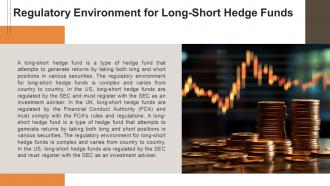
Regulatory Environment for Long Short Hedge Funds
-

Thank You
-

-

-

-

-

-

-

-

FAQs for Long Short Hedge Funds Powerpoint Presentation And
So hedge funds are basically limited partnerships - you're a limited partner, they're general partners calling the shots. They can do pretty much whatever they want investment-wise: short selling, derivatives, all that risky stuff mutual funds can't touch. Way more exclusive too with crazy high minimums. Here's the kicker though - they'll charge you management fees PLUS take 20% of any profits they make you. Mutual funds just do the management fee thing. Oh, and don't expect to pull your money out whenever you feel like it. Lock-up periods are real and honestly kind of annoying if you need quick access to cash.
So hedge funds don't just buy stocks and pray like normal funds do. They're playing both sides - betting some stocks go up while also betting others crash. Smart, right? Most also mess around with derivatives and arbitrage stuff, basically profiting off tiny price differences between markets. It's like placing multiple bets instead of putting everything on red. The crazy thing is performance swings wildly depending on which strategies they're using. If you're looking at them, definitely check what their actual approach is first.
Most hedge funds still do that classic "2 and 20" thing - 2% management fee plus they take 20% of whatever profits they make above some benchmark. Some are lowering the management side lately but yeah, they're not giving up that performance cut. They'll tell you it's worth it because they've got these fancy strategies and can supposedly make money when markets tank. Honestly though? A lot of them don't even beat boring index funds once you factor in all those fees. I'd definitely want to see at least 5-10 years of actual returns before throwing money at one. The track record matters way more than their sales pitch.
So hedge funds basically borrow money to make way bigger bets than they could with just their own cash. Think 2x, 5x, sometimes 10x their actual money. Market neutral funds do this to go long and short at the same time with more punch, while macro funds use it for massive currency or commodity plays. Obviously wins get bigger but losses do too - that's the trade-off. When you're looking at funds, definitely check their ratios because that shows you how much risk they're actually taking. Some of these guys get pretty wild with it, honestly.
So hedge funds basically scan tons of securities with algorithms, then dig into the actual financials. They're using crazy data now - like satellite images and social media trends. Wild stuff. Networks matter huge for deals and intel too. Risk modeling comes next, stress testing everything against different market crashes. But honestly? Start by figuring out what type of fund you're looking at first. A distressed debt shop works nothing like those momentum quant guys - totally different playbooks.
Yeah so hedge funds are way more of a pain regulation-wise than mutual funds or ETFs. There's no standard playbook since each fund can basically do whatever their docs say. Once you hit $150M in assets, you'll need to register as an investment adviser - that's when things get real messy. Accredited investor rules, 13F reporting, all the derivatives compliance stuff. Honestly the SEC looks at each hedge fund individually instead of just applying blanket rules, which makes it super unpredictable. My advice? Get a solid compliance person early, even if it feels expensive at first. Trust me on that one.
So hedge funds short stocks when they think prices will tank - they borrow shares, sell them right away, then buy back later at a lower price to return them. Works great until it doesn't! The scary part is losses can be infinite if the stock keeps rising instead. Plus you've got borrowing fees eating into profits. Short squeezes are brutal too - that's when everyone panics and tries to cover at once, driving prices even higher. Honestly, if you're looking at hedge funds, definitely ask about their short limits and how they manage that risk.
So hedge funds basically do three things with derivatives. First, they get way more exposure without spending all their cash - like controlling $1M in stocks with just $100K through options. Smart, right? They also use them to hedge by shorting stuff that's correlated to their main positions. Reduces risk big time. The really interesting part though is how they profit from volatility and market weirdnesses that you can't catch with regular stock picks. Honestly, if you're studying this stuff, look at how they mix these strategies together rather than just what specific derivatives they're buying.
So hedge funds usually help with liquidity - they're throwing money around and making trades easier for everyone. Most of the time they act like market makers, keeping things smooth and prices reasonable. But man, when shit hits the fan? That's when things get messy. They all panic and try to sell at once, which makes crashes way worse. Look at 2008 or that whole GameStop thing recently. It's wild how fast they flip from helpful to harmful. Day-to-day trading is generally better because of them. Crisis mode though? Different story entirely.
Okay so first thing - check their absolute returns, like what they actually made you. Sharpe ratio is good too, shows return vs risk. Alpha's probably the most important though, that's how much they beat the market after adjusting for risk. All those Greek letters get confusing honestly! Look at how they did during market crashes since hedge funds are supposed to protect you when things go south. Oh and don't forget fees - that whole 2-and-20 thing adds up quick. I'd want at least 3-5 years of data before trusting them with my money.
Honestly, the whole industry's kinda scrambling right now. ESG is huge - LPs won't shut up about sustainable investing so funds are pivoting like crazy. Tech stuff too, everyone's throwing money at AI and alternative data hoping to find some edge. The fee wars are getting nasty though. That old 2-and-20 model? Getting destroyed. Oh and retail investors are finally getting access through liquid alts and interval funds, which is wild. My buddy works at a fund and says differentiation is everything now - can't just rely on returns anymore. It's messy but interesting to watch unfold.
So hedge funds basically spread their money across different stuff - stocks, bonds, different countries, you name it. They're big on using options and futures as backup protection, kind of like insurance for when things go south. Most have these crazy expensive monitoring systems tracking everything 24/7. Position limits are huge too - they'll only risk a certain amount per trade and bail with stop-losses if needed. Honestly the whole setup is pretty intense. For regular people like us though? Same idea applies - don't put all your eggs in one basket and know when you're gonna cut your losses before you even buy.
Dude, transparency is everything - don't hide fees or risks behind complicated jargon your investors can't decode. Conflicts of interest will bite you hard. Insider trading? Obviously off limits, but even sketchy-looking moves can wreck your rep fast. There's always drama about whether aggressive short selling actually hurts the market (personally think that's overblown). Your clients are trusting you with real money here. Would you feel good explaining every trade to their face? That's basically your litmus test. Fiduciary duty sounds boring but it's literally your job.
Yeah, most regular people can't get into actual hedge funds - you need like $1M minimum and have to be an "accredited investor" (basically prove you're rich enough). Honestly though, the fees are insane so you're not missing much. Check out hedge fund ETFs instead - they copy the same strategies without the crazy barriers. There's also funds of funds that pool everyone's money together to hit those minimums. Oh, and platforms like CAIS or iCapital sometimes work if you qualify, but that's getting into weird territory I don't know much about. First step is just seeing if you're even accredited.
Honestly, hedge funds are mainly about diversification and generating returns that don't just follow the stock market. Big institutions like pension funds use them because they're not correlated with regular stocks and bonds - though the fees are absolutely insane. They can do stuff normal fund managers can't, like short selling and playing with derivatives. Universities and endowments are obsessed with them for this reason. Look, if you're thinking about adding one, ignore the fancy "hedge fund" marketing and focus on their actual strategy and track record. Some are garbage despite the hype.
-
SlideTeam has helped me take my presentation to the next level. Everyone at the office is impressed! I’ll be using their designs for a long-long time.
-
The PPT layout is great and it has an effective design that helps in presenting corporate presentations. It's easy to edit and the stunning visuals make it an absolute steal!