


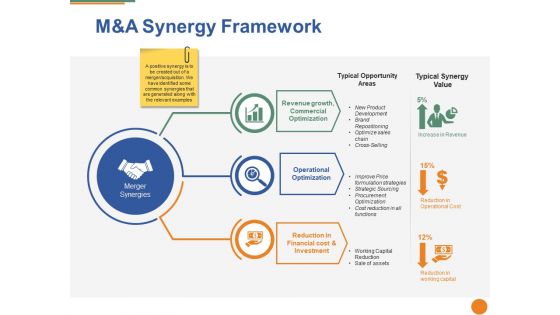
M and a synergy framework ppt pictures slide portrait





Try Before you Buy Download Free Sample Product
 Impress Your
 Audience
 100%
100% Editable
 Save Hours
 of Time


Give investors insight into increasing earnings with our M And A Synergy Framework Ppt Pictures Slide Portrait. Get them interested in your financial advice.
People who downloaded this PowerPoint presentation also viewed the following :
M and a synergy framework ppt pictures slide portrait with all 5 slides:
Beat out the competition. Flawless M And A Synergy Framework Ppt Pictures Slide Portrait design will give you the edge in the next presentation.




FAQs for M and a synergy framework ppt
So there are basically three types of synergies in M&A deals. Cost synergies are your bread and butter - cutting duplicate roles, combining suppliers, that kind of stuff. Way easier to predict than the flashy revenue synergies everyone gets excited about. Revenue ones come from cross-selling or expanding into new markets, but honestly they're pretty hit-or-miss. Then you've got financial synergies where you optimize the combined company's capital structure. My old professor always said focus on the cost cuts first since you can actually control those. The revenue upside sounds great in PowerPoint but it's basically a gamble.
Cultural stuff will absolutely wreck your synergy numbers if you ignore it. Different work styles and communication habits cause integration delays, talent exodus, broken collaboration between the old teams. I've watched deals where revenue synergies died because sales couldn't mesh - honestly such a waste. Operations gets chaotic too when you're clashing on basic things like meeting frequency or how you handle performance reviews. Do a cultural assessment up front and create integration plans that actually tackle the gaps you discover.
Track your cost savings first - headcount cuts, office consolidations, bulk purchasing deals. Way easier to measure than the fluffy revenue stuff. For revenue synergies, watch cross-selling numbers and whether you're actually keeping customers happy. Employee satisfaction matters too, honestly more than people think. Monthly dashboards comparing real vs projected numbers work well. Oh and don't be afraid to tweak your targets when reality hits - most initial projections are pretty optimistic anyway. Revenue synergies take forever to show up compared to cost cuts.
Tech integration can honestly make or break your whole deal. Start the IT due diligence super early - I can't stress this enough. You'll want those systems talking to each other ASAP to actually see the cost savings from cutting duplicate platforms. Clean data flows are everything too. Without them, you're flying blind on revenue opportunities. I've watched deals where the tech piece dragged on for years past deadline and just murdered half their projected savings. Pretty brutal to watch, honestly. Get a solid integration roadmap with real milestones mapped out before you even close.
Look, financial synergies are just fancy math to justify why you're paying more than the target's worth alone. You're hunting for stuff like lower borrowing costs, tax savings, better cash flows - things that only happen because of the merger. The debt capacity calculations can get pretty wonky, but they feed directly into your DCF models. That's how you bridge the gap between current value and what you're actually paying. Here's the thing though - be super conservative with your numbers. I've seen too many deals go south because someone got overly optimistic about synergies. Stress-test everything before you take it upstairs.
So operational synergies are all about cutting duplicate stuff and making processes smoother. You can merge IT systems, supply chains, back-office work - basically anything that's happening twice for no reason. The cool part is mixing the best from both companies. Like maybe one's amazing at buying stuff cheap, the other ships things super fast. Honestly, I think people focus too much on just cost-cutting when it's really about building something better overall. Map out where functions overlap early in your planning though - timing matters a ton for actually seeing those efficiency gains pay off.
Honestly, teams always mess up the same two things. They think cost savings will be way higher than reality - like combining systems is somehow magic. Then integration becomes this nightmare that drags on forever. Cultural stuff is brutal too - people clash, your best workers bail, and suddenly productivity tanks. Revenue synergies? Good luck with that one, because customers hate change. The communication piece kills most deals though. Nobody knows what's happening, so everyone freaks out. My take: cut your synergy numbers in half and throw money at change management right away. Trust me on this.
Change management is basically your insurance policy against people torpedoing your financial projections. Start planning during due diligence, not after you close - learned that one the hard way watching deals implode. Get employees bought in early because resistance kills synergies and cost savings faster than anything. I've watched perfect models on paper die because people wouldn't adopt new processes or work across company lines. Clear communication about why changes matter, plus involving key influencers from both sides. Oh, and create some quick wins to build momentum - people need to see it's actually working.
Honestly, skip the high-level BS estimates - they always blow up later. Get your cross-functional teams to map out specific stuff they can actually execute: customer overlap, supply chain tweaks, tech consolidation. Bottom-up analysis is your friend here. The strategy people won't be doing the real work, so talk to whoever's actually running integration. Build conservative scenarios because you know something will go wrong. Don't forget implementation costs either - that's where deals die. Oh, and create some kind of tracker so you're not flying blind after closing. Real timelines with actual owners, not wishful thinking.
First thing - figure out what you're actually trying to accomplish. Market expansion? Focus on revenue synergies, not just cutting costs. Quick procurement wins are great for cash flow, but don't get stuck there forever. Revenue stuff takes way longer to pan out, just so you know. Your team probably can't handle everything at once (mine never could), so pick fewer things and actually do them well. Build a timeline that covers immediate needs plus your longer vision. Honestly, start small with a pilot to see what works before going all-in.
Start with the synergy value creation framework - it's your best bet for breaking down revenue stuff (cross-selling, new markets) vs cost savings (scale efficiencies, cutting duplicate roles). NPV analysis helps you actually put numbers on things. Honestly though, most synergy estimates are way too rosy, so definitely build in some risk adjustments. I'd also look at comparable deals for benchmarking and do bottom-up analysis by department. Oh, and don't forget integration complexity - that can kill deals. Maybe begin with simple synergy mapping to grab the easy wins first?
Honestly, getting people on board from the start is huge - it'll make or break everything. Map out who matters early (employees, customers, key partners) and actually talk to them regularly throughout the whole process. Here's the thing though - people hate change when they don't get it or weren't involved. But if they feel heard and can see what's in it for them? Total game changer. They'll actually help you instead of working against you. I've seen deals fall apart because someone skipped this step and everyone just... revolted basically.
Market conditions totally change the game with synergy estimates. Revenue synergies? Way easier when people are actually spending money during good times. Cross-selling becomes a nightmare when everyone's tightening budgets. Cost synergies are different though - you can still merge departments and cut duplicate roles pretty much whenever. Actually, bad markets might push you to move faster on those cuts since pressure's on. I'd definitely run your numbers against a few different scenarios, not just the optimistic version. Don't get burned assuming everything stays rosy.
Honestly, regulatory stuff will completely wreck your synergy numbers if you ignore it upfront. You're planning to cut costs by consolidating facilities? Antitrust might force you to keep everything separate or sell off pieces. Cross-selling gets torpedoed when regulators block integrations - there go your revenue synergies. I've watched teams scramble to rebuild their entire model halfway through because they got blindsided by pushback. Build different regulatory scenarios into your projections from the start. Don't just assume compliance will nibble at the edges - it can reshape everything.
Honestly, start by digging into both companies' historical data - revenue streams, customer bases, operational stuff. Cross-selling opportunities usually jump out pretty quick when you map customer overlap. Cost synergies are easier to spot: duplicate roles, supply chain redundancies, that kind of thing. The real pain is getting clean data from both sides during due diligence (such a mess every time). Build some predictive models to figure out timing and which synergies are actually realistic - don't chase the fantasy ones first. Track everything quarterly post-close with dashboards. Makes it way easier to see what's working.
-
Unique and attractive product design.
-
Excellent template with unique design.