


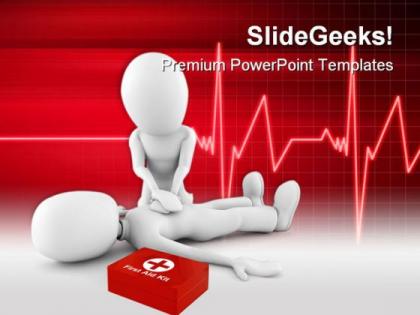
Man providing first aid medical powerpoint templates and powerpoint backgrounds 0211




Try Before you Buy Download Free Sample Product
 Impress Your
 Audience
 100%
100% Editable
 Save Hours
 of Time


You know your place is at the top. Start your climb now with our Man Providing First Aid Medical PowerPoint Templates And PowerPoint Backgrounds 0211.
People who downloaded this PowerPoint presentation also viewed the following :
Man providing first aid medical powerpoint templates and powerpoint backgrounds 0211 with all 3 slides:
Put your thoughts in the safe custody of our Man Providing First Aid Medical PowerPoint Templates And PowerPoint Backgrounds 0211. They will ensure their safe passage.
FAQs for Man providing first aid medical powerpoint templates and
First Aid PowerPoint templates should include emergency contact information, step-by-step CPR procedures, wound care techniques, choking response protocols, and basic life support guidelines. These comprehensive templates enhance workplace safety training by delivering clear visual instructions, standardized procedures, and accessible reference materials, with many organizations finding that structured presentations significantly improve employee preparedness and regulatory compliance.
Visual elements enhance First Aid presentations by improving information retention, simplifying complex procedures, and enabling faster comprehension during emergencies. Through infographics, step-by-step diagrams, and color-coded instructions, healthcare organizations, schools, and corporate training departments deliver more engaging educational experiences, with many finding that visual learning approaches significantly improve participant confidence and practical skill application.
Healthcare professionals, corporate trainers, educational institutions, and safety coordinators benefit most from First Aid PowerPoint templates, along with HR departments conducting workplace safety training. These templates streamline emergency preparedness education by providing structured, visual content that enhances knowledge retention, ensures regulatory compliance, and delivers consistent training across organizations, ultimately improving response times and potentially saving lives.
Creating a balanced First Aid presentation layout involves using consistent visual hierarchy, strategic white space, and logical information flow that prioritizes critical content. Effective designs separate emergency procedures into digestible sections with clear headings, complementary colors like medical blues and whites, and prominent placement of contact numbers, with many healthcare organizations finding that structured templates enhance comprehension during high-stress training scenarios.
Red and white combinations work most effectively for First Aid presentations, as they mirror universal medical symbols and emergency signage, while blue and green palettes convey trust and calm professionalism. These color schemes enhance audience retention by creating immediate visual recognition and psychological comfort, with many healthcare organizations and corporate training departments finding that consistent medical color coding streamlines emergency preparedness communications and reinforces critical safety messaging.
Infographics enhance First Aid PowerPoint presentations by transforming complex medical procedures into visual step-by-step guides, emergency response flowcharts, symptom identification charts, and statistical comparisons of treatment effectiveness. These visual elements enable healthcare trainers, corporate safety teams, and educational institutions to deliver more engaging content while improving knowledge retention, ultimately ensuring participants can respond more confidently during actual medical emergencies.
**INPUT**: What are the best practices for text size and font choice in a First Aid slide? **OUTPUT**: Best practices include using sans-serif fonts like Arial or Calibri, maintaining 24-point minimum text size, ensuring high contrast ratios, and limiting font varieties to two maximum. These design choices enhance readability during emergency training sessions, with healthcare facilities, corporate safety programs, and educational institutions finding that clear typography enables faster information processing and better retention during critical training moments.
Images and videos enhance First Aid templates by illustrating proper techniques, showing step-by-step procedures, and demonstrating emergency responses through visual learning. These multimedia elements streamline training delivery, improve knowledge retention, and enable healthcare organizations, educational institutions, and corporate safety programs to deliver more engaging presentations, ultimately creating more confident first responders and better emergency preparedness across teams.
First aid PowerPoint presentations should include workplace injuries, cardiac emergencies, choking incidents, burns, cuts and wounds, allergic reactions, and unconsciousness scenarios. These comprehensive training modules enhance preparedness by covering real-world situations employees encounter, from office accidents to manufacturing injuries, ultimately delivering more effective emergency responses and potentially life-saving outcomes across organizations.
Presenters can engage audiences with First Aid PowerPoint templates by incorporating interactive scenarios, real-world case studies, hands-on demonstration segments, and audience participation exercises throughout their presentations. These templates enable trainers to seamlessly blend visual content with practical learning experiences, while healthcare organizations, corporate safety teams, and educational institutions find that interactive elements significantly enhance retention and create more impactful training sessions.
Common mistakes include overcrowding slides with excessive text, using poor color contrast that reduces readability, selecting inappropriate fonts, and omitting clear visual hierarchies. These design flaws can compromise emergency training effectiveness, with many healthcare organizations and safety departments finding that streamlined layouts, high-contrast colors, and strategic white space ultimately enhance comprehension and retention during critical training sessions.
Case studies and real-world examples are essential in First Aid training presentations because they bridge theoretical knowledge with practical application, helping learners understand when and how to apply specific techniques. These scenarios enhance retention, build confidence, and prepare participants for actual emergencies by demonstrating proper responses to workplace injuries, cardiac events, and choking incidents, ultimately delivering more effective training outcomes.
First Aid presentations typically require 15-30 minutes for basic topics, 45-60 minutes for comprehensive training, with interactive segments every 5-7 minutes to maintain engagement and retention. Effective pacing balances theoretical knowledge with hands-on demonstrations, allowing time for questions and practice scenarios, with many healthcare organizations and corporate training programs finding that shorter, focused sessions with clear learning objectives ultimately deliver better skill retention and participant confidence.
Themes in First Aid templates can be customized by adjusting color schemes to match organizational branding, modifying slide layouts for different training formats, and incorporating industry-specific scenarios and imagery. Healthcare facilities, corporate environments, and educational institutions increasingly personalize these templates with relevant case studies, custom icons, and sector-appropriate terminology, ultimately delivering more engaging training experiences that resonate with their specific audiences and operational contexts.
First Aid PowerPoint presentations should reference certified training organizations like American Red Cross and American Heart Association, official medical guidelines, emergency contact databases, and regulatory compliance resources. These materials enhance credibility by connecting learners to authoritative sources, ongoing certification opportunities, and updated protocols, with many organizations finding that comprehensive resource linking significantly improves training retention and workplace safety outcomes.
-
Great quality product.
-
Helpful product design for delivering presentation.