


Manual Cleaning Methods For Hotel Housekeeping Training Ppt




Try Before you Buy Download Free Sample Product
 Impress Your
 Audience
 100%
100% Editable
 Save Hours
 of Time


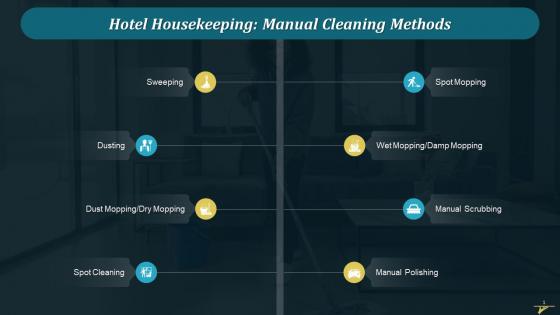
This slide lists manual cleaning methods deployed in hotels for housekeeping which are sweeping, dusting, dust mopping or dry mopping, mop sweeping, spot cleaning, spot mopping, wet mopping or damp mopping, manual scrubbing, and manual polishing.
People who downloaded this PowerPoint presentation also viewed the following :
Manual Cleaning Methods For Hotel Housekeeping Training Ppt with all 19 slides:
Use our Manual Cleaning Methods For Hotel Housekeeping Training Ppt to effectively help you save your valuable time. They are readymade to fit into any presentation structure.










FAQs for Manual Cleaning Methods For Hotel
Manual cleaning methods offer greater precision, flexibility, cost-effectiveness for smaller operations, and immediate adaptability to unique circumstances or delicate surfaces. While automated systems excel in large-scale environments, manual approaches enable healthcare facilities, specialized manufacturing plants, and boutique hospitality businesses to deliver customized cleaning standards, ultimately providing superior attention to detail and quality control.
Manual cleaning techniques enhance sanitation quality by ensuring thorough surface contact, allowing targeted treatment of contaminated areas, and enabling real-time quality assessment during the cleaning process. Industries like food processing, healthcare facilities, and pharmaceutical manufacturing rely on these methods for critical areas where automated systems cannot reach, ultimately delivering superior hygiene standards and regulatory compliance.
Effective manual cleaning tools include microfiber cloths for glass and electronics, scrub brushes for textured surfaces, squeegees for smooth wet areas, sponges for delicate materials, and steel wool for tough stains. These tools enhance cleaning efficiency by targeting specific surface requirements, reducing cleaning time, and minimizing damage risk, with many commercial facilities finding that strategic tool selection ultimately delivers superior results and cost savings.
Manual cleaning effectiveness differs significantly between environments, with high-traffic areas requiring more frequent interventions, specialized techniques, and durable cleaning products, while low-traffic spaces allow for less intensive maintenance schedules. In commercial settings like retail stores, airports, and hospitals, high-traffic zones demand strategic resource allocation and continuous monitoring, ultimately delivering consistent hygiene standards and enhanced customer experiences across varying operational demands.
Healthcare manual cleaning best practices include using EPA-approved disinfectants, following proper contact times, cleaning from top to bottom, using color-coded cloths for different areas, and employing the two-step process of cleaning then disinfecting. These protocols enhance infection control by eliminating pathogens, preventing cross-contamination, and maintaining sterile environments, with many hospitals finding that systematic manual cleaning significantly reduces healthcare-associated infections while ensuring patient safety.
Training improves manual cleaning efficiency by teaching proper techniques, safety protocols, equipment usage, and time management strategies. Through structured programs, cleaning staff develop systematic approaches, reduce waste, minimize rework, and enhance service quality, while organizations benefit from lower costs, improved compliance, and more consistent results across facilities.
Manual cleaning plays a crucial role in sustainable facility management by reducing chemical usage, minimizing packaging waste, enabling precise resource allocation, and extending equipment lifespan through targeted care. These practices streamline environmental impact by allowing staff to use eco-friendly products selectively, control water consumption more effectively, and reduce overall waste generation, ultimately delivering cost savings and enhanced sustainability credentials.
Managers can assess manual cleaning effectiveness through visual inspections, ATP testing for surface contamination, customer feedback surveys, staff compliance audits, and frequency tracking of cleaning tasks. These evaluation methods enable organizations to identify protocol gaps, optimize resource allocation, and maintain consistent hygiene standards, with many facilities finding that regular assessments ultimately deliver improved safety outcomes and operational efficiency.
Manual cleaning challenges include inconsistent quality standards, time-intensive processes, physical strain on workers, difficulty accessing confined spaces, and inadequate documentation of completed tasks. These obstacles can be overcome by implementing standardized checklists, rotating staff responsibilities to minimize fatigue, providing ergonomic tools and protective equipment, establishing regular training programs, and integrating digital tracking systems, ultimately delivering improved efficiency and workplace safety.
The choice of cleaning agents significantly impacts manual cleaning effectiveness by determining soil removal capacity, surface compatibility, and sanitation levels achieved. Different agents target specific contaminants, with alkaline cleaners breaking down organic matter, acidic solutions removing mineral deposits, and disinfectants eliminating pathogens, ultimately delivering thorough cleaning while protecting surface integrity and ensuring operational safety.
Manual cleaning methods present significant health and safety implications including chemical exposure risks, repetitive strain injuries, slip and fall hazards, respiratory issues from dust and fumes, and ergonomic challenges from prolonged physical activity. These concerns increasingly drive organizations across healthcare, manufacturing, and hospitality sectors toward automated solutions, ultimately delivering enhanced worker protection, reduced liability costs, and improved operational efficiency while maintaining cleaning standards.
Technology complements manual cleaning through IoT sensors for real-time monitoring, automated scheduling systems, and data analytics that optimize resource allocation and timing. These digital tools enhance human efficiency by identifying high-traffic areas, tracking supply levels, and streamlining workflows, ultimately delivering improved cleanliness standards while empowering cleaning teams with strategic insights for better decision-making.
Manual cleaning is preferred when dealing with delicate surfaces, intricate equipment with complex geometries, contaminated areas requiring targeted attention, and situations where precise control is essential. Many healthcare facilities, laboratories, and manufacturing plants find that manual methods enable better inspection during cleaning, allow immediate adjustments based on contamination levels, and ensure thorough attention to critical areas where automated systems might miss details.
Environmental considerations when choosing manual cleaning products include biodegradability, toxicity levels, packaging sustainability, water usage requirements, and chemical runoff impact. These factors enable organizations to streamline compliance with environmental regulations, reduce ecological footprints, and enhance corporate sustainability profiles, with many facilities finding that eco-friendly alternatives deliver comparable cleaning effectiveness while minimizing environmental liability.
Businesses ensure compliance through comprehensive staff training, documented cleaning protocols, regular safety audits, proper equipment maintenance, and adherence to industry-specific standards like OSHA guidelines. These manual approaches enable organizations to maintain regulatory requirements while reducing liability risks, with many healthcare facilities and food service establishments finding that structured cleaning programs ultimately deliver consistent compliance and enhanced operational credibility.
-
A beautiful, professional design paired with high-quality images and content that is sure to impress. It is a must-use PPT template in my opinion.
-
“I've always gotten excellent slides from them and the customer service is up to the mark.”