


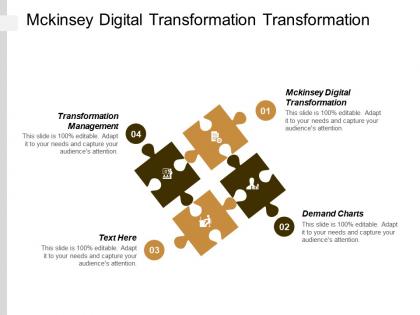
Mckinsey digital transformation transformation management demand charts lean management cpb




Try Before you Buy Download Free Sample Product
 Impress Your
 Audience
 100%
100% Editable
 Save Hours
 of Time


Highlight irritating habits with our Mckinsey Digital Transformation Transformation Management Demand Charts Lean Management Cpb. Advise folks to avoid jarring conduct.
People who downloaded this PowerPoint presentation also viewed the following :
Mckinsey digital transformation transformation management demand charts lean management cpb with all 5 slides:
Ease the change with our Mckinsey Digital Transformation Transformation Management Demand Charts Lean Management Cpb. Make the new easier to digest.



FAQs for Mckinsey digital transformation transformation management demand charts
Key components of a successful digital transformation strategy include cloud infrastructure, data analytics capabilities, process automation, employee training programs, and customer experience optimization. These elements work together by streamlining operations, enhancing decision-making, and delivering personalized services, with many organizations finding that strategic integration of these components ultimately drives competitive advantage and sustainable growth.
Businesses can effectively measure digital transformation ROI through key performance indicators like operational efficiency gains, customer acquisition costs, revenue growth, and process automation savings. By establishing baseline metrics before implementation, organizations across sectors like retail and healthcare track measurable outcomes such as reduced processing times, improved customer satisfaction scores, and enhanced competitive positioning, ultimately delivering quantifiable value and strategic advantage.
Organizational culture serves as the foundation for digital transformation success, influencing employee adoption, change management, leadership commitment, cross-functional collaboration, and innovation mindset. Companies with adaptive cultures that embrace learning, experimentation, and technology integration see significantly higher transformation success rates, while organizations with rigid hierarchies often struggle to achieve desired outcomes.
Small businesses can leverage digital transformation by adopting cloud-based systems, automation tools, data analytics, and customer relationship management platforms to streamline operations and enhance customer experiences. These technologies enable smaller companies to operate more efficiently, reduce overhead costs, and deliver personalized services that rival larger competitors, with many finding that strategic digital investments ultimately level the competitive playing field.
Cloud computing, artificial intelligence, IoT, automation platforms, and data analytics are driving current digital transformation trends. These technologies streamline operations by enabling remote accessibility, predictive insights, and seamless integration, with many organizations finding that strategic combinations deliver enhanced customer experiences, operational efficiency, and competitive advantage in increasingly dynamic markets.
Companies ensure data security and privacy during digital transformation through comprehensive encryption protocols, multi-factor authentication systems, regular security audits, employee training programs, and compliance frameworks like GDPR or HIPAA. These strategic measures enable organizations to streamline operations while protecting sensitive information, with many financial services and healthcare institutions finding that robust security infrastructure ultimately delivers enhanced customer trust and competitive advantage.
Organizations typically face resistance to change, legacy system integration complexities, skills gaps, budget constraints, and cybersecurity concerns when pursuing digital transformation. These challenges can be overcome through comprehensive change management programs, phased implementation strategies, employee training initiatives, and strategic partnerships with technology vendors, with many companies finding that starting with pilot projects and securing leadership buy-in ultimately delivers sustainable transformation and competitive advantage.
Customer experience drives digital transformation by identifying pain points, revealing automation opportunities, and highlighting areas requiring technological enhancement. Organizations prioritize initiatives that streamline customer interactions, reduce friction, and deliver personalized services, with many companies finding that CX-focused transformations ultimately increase satisfaction, retention, and competitive advantage in increasingly digital markets.
Digital transformation impacts workforce dynamics by enabling remote collaboration, automating routine tasks, facilitating continuous learning, and creating data-driven performance insights. These technological advances streamline operations while enhancing employee engagement through flexible work arrangements, upskilling opportunities, and personalized career development paths, with many organizations finding that digitally empowered teams deliver significantly higher productivity and job satisfaction.
Healthcare benefits from digital transformation through electronic health records, telemedicine platforms, AI diagnostics, and automated patient scheduling, which streamline care delivery and reduce administrative costs. Financial services leverage mobile banking, algorithmic trading, blockchain security, and automated loan processing to enhance customer experiences, minimize fraud risks, and accelerate transaction speeds, ultimately delivering competitive advantages in increasingly digital markets.
Organizations can foster innovation during digital transformation through cross-functional collaboration, employee upskilling programs, experimentation frameworks, strategic partnerships with tech vendors, and dedicated innovation labs. These strategies enable companies to streamline processes, accelerate product development, and enhance customer experiences, with many financial services and healthcare institutions finding that structured innovation approaches ultimately deliver competitive advantage and sustainable growth.
Businesses should prioritize digitizing processes with high customer impact, frequent usage, significant manual effort, and measurable ROI potential, starting with customer-facing services like online ordering or appointment scheduling. Many organizations find success beginning with processes that deliver immediate efficiency gains, such as automated invoicing in retail or digital patient records in healthcare, ultimately creating competitive advantage while building digital transformation momentum.
Agile methodologies enable successful digital transformation by promoting iterative development, cross-functional collaboration, and rapid adaptation to changing requirements. These approaches streamline project delivery through shorter development cycles, continuous feedback loops, and flexible resource allocation, with many organizations finding that agile frameworks ultimately deliver faster time-to-market and enhanced customer experiences.
Partnerships with technology providers enhance digital transformation by delivering specialized expertise, accelerated implementation timelines, and access to cutting-edge solutions that organizations might lack internally. These strategic collaborations enable companies to leverage proven methodologies, reduce implementation risks, and scale innovations more effectively, with many enterprises finding that external partnerships ultimately deliver faster ROI and competitive advantages.
Leadership plays a crucial role in digital transformation by setting strategic vision, allocating resources effectively, fostering cultural change, and ensuring cross-functional alignment throughout the organization. Effective leaders champion new technologies, communicate transformation benefits clearly, and support employee development, with many organizations finding that strong executive sponsorship accelerates adoption while minimizing resistance to change.
No Reviews