


Media Relations Strategy Challenges And Solutions




Try Before you Buy Download Free Sample Product
 Impress Your
 Audience
 100%
100% Editable
 Save Hours
 of Time


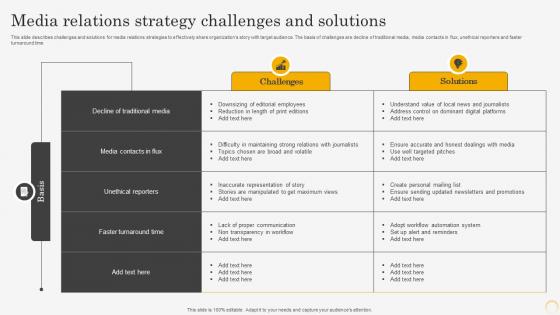
This slide describes challenges and solutions for media relations strategies to effectively share organizations story with target audience. The basis of challenges are decline of traditional media, media contacts in flux, unethical reporters and faster turnaround time
People who downloaded this PowerPoint presentation also viewed the following :
Media Relations Strategy Challenges And Solutions with all 6 slides:
Use our Media Relations Strategy Challenges And Solutions to effectively help you save your valuable time. They are readymade to fit into any presentation structure.






FAQs for Media Relations Strategy
Key components of an effective media relations strategy include clear messaging frameworks, targeted media lists, proactive story pitching, crisis communication protocols, and relationship building with journalists. These elements work together by establishing consistent brand narratives, identifying relevant media outlets, and maintaining ongoing journalist relationships, with many organizations finding that strategic media engagement significantly enhances brand visibility and credibility.
Organizations measure media relations success through metrics like media coverage volume, reach and impressions, sentiment analysis, share of voice, and message consistency across outlets. These measurements enable companies to track brand visibility, assess public perception shifts, and demonstrate ROI to stakeholders, with many finding that combining quantitative data with qualitative insights ultimately delivers more strategic communication planning and competitive positioning.
Storytelling transforms media relations by creating compelling narratives that capture journalists' attention, humanize corporate messages, and make complex information accessible and memorable. Through strategic storytelling, organizations build stronger media relationships, generate more engaging coverage, and differentiate themselves in crowded markets, with many companies finding that narrative-driven pitches achieve significantly higher media pickup rates.
Businesses can tailor press releases by crafting compelling headlines, incorporating timely news angles, including relevant data and quotes, and targeting specific journalists who cover their industry. Strategic timing, local angles, and multimedia elements enhance appeal, while clear value propositions and newsworthy content enable media outlets to deliver engaging stories, ultimately amplifying brand visibility and credibility.
Building long-term journalist relationships requires consistent value delivery, authentic engagement, and strategic communication practices. Best practices include providing exclusive insights, respecting deadlines, offering expert commentary on industry trends, maintaining regular but non-intrusive contact, and delivering newsworthy content tailored to each journalist's beat, with many media professionals finding that consistent, relationship-focused approaches ultimately enhance coverage quality and brand visibility.
Companies should approach crisis communication by establishing pre-planned response protocols, designated spokesperson roles, transparent messaging frameworks, and rapid deployment channels across all media platforms. Through proactive stakeholder mapping and real-time monitoring systems, organizations can address concerns swiftly, maintain brand credibility, and preserve customer trust, ultimately transforming potential reputation damage into opportunities for demonstrating accountability and strengthening market position.
Media relations management tools include CisionPoint, Meltwater, Prezly, HARO (Help a Reporter Out), and Prowly, which streamline contact databases, pitch tracking, and journalist relationship building. These platforms enhance outreach efficiency by automating media list creation, monitoring coverage metrics, and facilitating targeted communications, with many PR teams finding that integrated dashboards ultimately deliver faster response times and stronger media relationships.
Social media integration enhances traditional media relations by amplifying press coverage, building direct journalist relationships, and creating real-time engagement opportunities around announcements. Through strategic social campaigns, organizations streamline media outreach, monitor coverage sentiment, and extend story reach beyond traditional outlets, with many companies finding that this hybrid approach delivers faster response times, broader audience engagement, and ultimately stronger brand visibility.
Media relations ethical considerations include transparency, accuracy, respect for deadlines, avoiding conflicts of interest, and maintaining honest relationships with journalists. These principles enhance credibility by ensuring truthful communication, timely responses, and clear disclosure of potential biases, with many organizations finding that ethical media practices ultimately deliver stronger brand reputation, increased trust, and sustained positive coverage.
Startups can leverage media relations through targeted pitching to niche publications, building genuine relationships with relevant journalists, creating compelling story angles around innovation or market disruption, and utilizing social media to amplify coverage. These cost-effective strategies enable emerging companies to generate significant visibility, establish credibility, and attract investors while competing with larger organizations through strategic storytelling and authentic relationship-building.
**INPUT**: What strategies can public relations professionals use to pitch stories to specific media outlets? **OUTPUT**: PR professionals can pitch stories effectively through personalized research of journalists' beats, crafting compelling subject lines, timing pitches strategically, providing exclusive angles, and building authentic relationships with media contacts. These approaches streamline media outreach by demonstrating story relevance, offering newsworthy value, and establishing trust, with many organizations finding that targeted, relationship-based pitching ultimately delivers higher coverage rates and stronger media partnerships. **Word count**: 59 words
Identifying target audiences is fundamental to media relations strategy, as it determines messaging approach, media outlet selection, spokesperson positioning, and content timing for maximum impact. Through audience segmentation, organizations streamline their communications by reaching relevant journalists, securing appropriate coverage, and delivering tailored messages that resonate, ultimately enhancing brand visibility and stakeholder engagement across key demographics.
**INPUT**: What techniques can be applied to ensure that press coverage is accurate and beneficial? **OUTPUT**: Effective media relations techniques include developing clear messaging frameworks, building relationships with key journalists, providing comprehensive press materials, conducting media training, and establishing proactive communication channels. These strategies enhance accuracy by ensuring consistent information flow, timely responses to inquiries, and strategic positioning of key messages, ultimately delivering stronger brand credibility and more favorable coverage across publications.
Organizations effectively use data and analytics to inform media strategies by tracking audience engagement metrics, monitoring sentiment analysis, measuring reach and impressions, analyzing competitor performance, and identifying optimal posting times. Through these insights, companies can refine their messaging, target specific demographics more precisely, and allocate resources strategically, ultimately delivering higher engagement rates and stronger brand visibility in an increasingly competitive media landscape.
Media training equips company spokespeople with essential skills including message development, handling difficult questions, body language awareness, crisis communication techniques, and interview pacing strategies. Through simulated interview scenarios and professional coaching, executives learn to deliver clear, consistent messaging while managing unexpected challenges, ultimately enhancing brand credibility and minimizing communication risks during high-stakes media interactions.
-
The quality of PowerPoint templates I found here is unique and unbeatable. Keep up the good work and continue providing us with the best slides!
-
This PowerPoint layout is very helpful from a business point of view, and it's visually stunning too! I'm so happy with this product because it has helped me understand and deliver great presentations.