


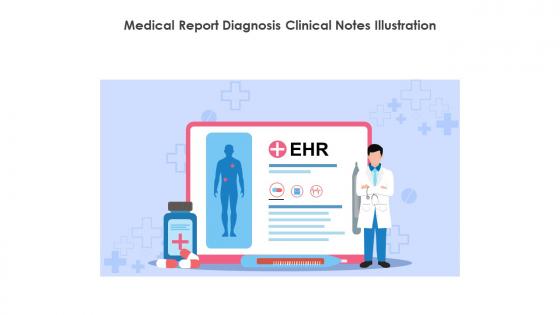
Medical Report Diagnosis Clinical Notes Illustration




Try Before you Buy Download Free Sample Product
 Impress Your
 Audience
 100%
100% Editable
 Save Hours
 of Time


Use this Medical report diagnosis clinical notes illustration and create amazing PowerPoint presentations or graphics with ease. This downloaded file is available in all the editable formats such as EPS, PNG and Powerpoint pptx.
People who downloaded this PowerPoint presentation also viewed the following :
Medical Report Diagnosis Clinical Notes Illustration with all 6 slides:
Use our Medical Report Diagnosis Clinical Notes Illustration to effectively help you save your valuable time. They are readymade to fit into any presentation structure.





FAQs for Medical Report Diagnosis
Key factors influencing medical diagnosis accuracy include clinical experience, comprehensive patient history, thorough physical examination, appropriate diagnostic testing, and effective communication skills. These elements work synergistically, with hospitals and specialty clinics finding that systematic diagnostic protocols, continuous medical education, and interdisciplinary collaboration significantly enhance accuracy rates while reducing misdiagnosis risks, ultimately delivering better patient outcomes.
AI and machine learning enhance diagnostic accuracy by analyzing medical imaging, identifying patterns in patient data, and cross-referencing symptoms with vast databases of medical knowledge. Through predictive algorithms, healthcare providers streamline diagnosis timelines, reduce human error, and enable early disease detection, with many hospitals finding that these technologies ultimately deliver faster patient outcomes and improved treatment precision.
Patient history provides crucial diagnostic context through symptom timelines, family medical backgrounds, lifestyle factors, medication records, and previous treatments. Digital health records and AI-powered analysis tools streamline this process by automatically flagging relevant patterns and risk factors, enabling healthcare providers to make faster, more accurate diagnoses while reducing oversight risks and ultimately improving patient outcomes.
Differential diagnosis techniques enhance decision-making by systematically comparing symptom patterns, eliminating unlikely conditions through targeted testing, and prioritizing probable diagnoses based on clinical evidence. This structured approach enables physicians to navigate complex cases more efficiently, reduce diagnostic errors, and accelerate treatment decisions, with hospitals finding that standardized protocols ultimately improve patient outcomes while minimizing costly misdiagnoses.
Common diagnostic errors include delayed diagnosis, misdiagnosis due to cognitive biases, inadequate patient history-taking, over-reliance on initial impressions, and failure to consider differential diagnoses. These challenges can be mitigated through systematic diagnostic protocols, enhanced clinical decision support systems, and structured peer review processes, with many hospitals finding that collaborative diagnostic approaches and continuous medical education ultimately deliver improved patient outcomes and reduced liability.
Interdisciplinary collaboration significantly enhances diagnostic accuracy by combining diverse medical expertise, reducing cognitive biases through multiple perspectives, and ensuring comprehensive patient assessment across specialties. Through integrated care teams, hospitals and medical centers achieve faster diagnoses, minimize diagnostic errors, and deliver more precise treatment plans, with many healthcare institutions finding that collaborative approaches ultimately improve patient outcomes while reducing costs.
Telemedicine revolutionizes medical diagnosis and management by enabling remote consultations, real-time monitoring, digital imaging analysis, AI-assisted diagnostics, and electronic health record integration. Through these technologies, healthcare providers streamline patient access, reduce diagnostic delays, and enhance treatment coordination, with many hospitals and clinics finding that telemedicine delivers faster care delivery while significantly improving patient outcomes.
Medical diagnosis ethical considerations include informed consent, accuracy transparency, privacy protection, equitable access, and avoiding overdiagnosis or underdiagnosis based on patient demographics. Healthcare institutions increasingly balance diagnostic efficiency with patient autonomy, ensuring comprehensive disclosure of test limitations, potential risks, and alternative options, while maintaining data security and delivering personalized care experiences.
Big data analytics revolutionizes diagnostic practices by enabling predictive modeling, pattern recognition across massive patient datasets, and real-time analysis of symptoms, lab results, and imaging data. Through machine learning algorithms, healthcare providers can identify diseases earlier, reduce diagnostic errors, and personalize treatment approaches, with many hospitals finding that data-driven insights ultimately deliver faster, more accurate diagnoses and improved patient outcomes.
Rare disease diagnosis faces challenges including limited clinical expertise, insufficient research data, complex symptom overlap with common conditions, lengthy diagnostic journeys, and inadequate testing infrastructure. These obstacles often result in delayed treatments, increased healthcare costs, and patient frustration, with many healthcare systems increasingly adopting AI-powered diagnostic tools and specialized referral networks to streamline identification processes.
Genomic data integration revolutionizes personalized medicine by enabling targeted therapies, precise risk assessments, pharmacogenomic dosing, and early disease detection tailored to individual genetic profiles. Through advanced sequencing technologies, healthcare providers streamline treatment selection, minimize adverse drug reactions, and enhance diagnostic accuracy, with oncology and cardiology practices finding significantly improved patient outcomes and reduced trial-and-error approaches.
Diagnostic imaging techniques deliver precise visualization of internal structures, enabling early disease detection, treatment planning, surgical guidance, and monitoring therapeutic progress. Through technologies like MRI, CT scans, and ultrasound, healthcare providers streamline diagnostic workflows, reduce invasive procedures, and enhance patient outcomes, with hospitals and clinics finding that advanced imaging ultimately accelerates treatment decisions and improves care quality.
Patient engagement and communication enhance diagnostic accuracy by encouraging detailed symptom reporting, improving adherence to follow-up appointments, and fostering collaborative treatment planning between healthcare providers and patients. Through digital health platforms and structured communication protocols, hospitals and clinics streamline information sharing, reduce diagnostic errors, and deliver more personalized care experiences, ultimately improving patient outcomes and satisfaction.
Emerging trends in biomarker testing include liquid biopsies for cancer detection, multi-omics integration combining genomic and proteomic data, point-of-care testing devices, AI-powered diagnostic algorithms, and personalized medicine approaches. These technologies streamline early detection by enabling non-invasive screening, reducing diagnostic timelines, and enhancing accuracy, with hospitals and diagnostic labs finding that strategic implementation delivers faster patient outcomes and improved treatment success rates.
Cultural and socioeconomic factors significantly influence medical diagnosis by affecting symptom expression, healthcare-seeking behavior, and provider interpretation of presentations. Patients from diverse backgrounds may describe pain differently, delay seeking care due to cost concerns, or hold cultural beliefs affecting symptom reporting, while socioeconomic barriers can limit access to comprehensive diagnostic testing, ultimately requiring culturally competent approaches for accurate diagnoses.
-
Thank you for showering me with discounts every time I was reluctant to make the purchase.
-
The slides come with appealing color schemes and relevant content that helped me deliver a stunning presentation without any hassle!