


Metaverse Digital Disruptor Of Fashion Training Ppt




Try Before you Buy Download Free Sample Product
 Impress Your
 Audience
 100%
100% Editable
 Save Hours
 of Time


This set of slides in detail covers the metaverses impact on the fashion industry. It explains how in the metaverse, fashion integrates with gaming to provide users with real-time experience in the virtual world.
People who downloaded this PowerPoint presentation also viewed the following :
Content of this Powerpoint Presentation
Slide 1
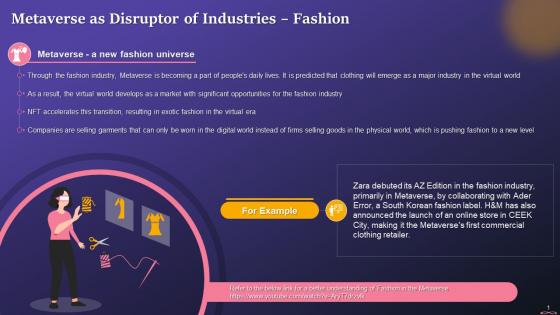
This slide depicts information regarding fashion in the Metaverse. It highlights that the Metaverse is integrating fashion into people's daily routines. It is predicted that clothing will become more critical in the virtual world.
Slide 2
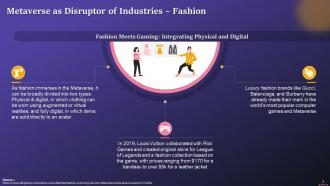
This slide depicts the how fashion is meeting gaming industry in Metaverse. As fashion immerses in the Metaverse, it can be broadly divided into two types: Physical and digital, in which clothing can be worn using augmented or virtual realities, and fully digital, in which items are sold directly to an avatar. It also mentions that luxury fashion brands like Gucci, Balenciaga, and Burberry have already made their mark in the world's most popular computer games and the Metaverse.
Metaverse Digital Disruptor Of Fashion Training Ppt with all 18 slides:
Use our Metaverse Digital Disruptor Of Fashion Training Ppt to effectively help you save your valuable time. They are readymade to fit into any presentation structure.












FAQs for Metaverse Digital Disruptor Of
The metaverse transforms fashion retail through virtual showrooms, digital-first collections, avatar customization services, and immersive brand experiences that transcend physical limitations. Brands like Gucci and Nike increasingly leverage virtual stores and NFT collections, enabling global reach without inventory constraints, while customers enjoy personalized styling experiences and instant try-ons, ultimately delivering enhanced engagement and reduced operational costs.
Virtual fashion creates opportunities for emerging designers through reduced production costs, global reach without physical infrastructure, experimental design freedom, and direct customer engagement platforms. These digital environments enable brands to showcase innovative concepts, collaborate with virtual influencers, and test market responses instantly, while many fashion startups find that metaverse platforms deliver cost-effective brand building and accelerated customer acquisition in an increasingly digital marketplace.
Augmented reality enhances metaverse shopping by enabling virtual try-ons, interactive product visualization, personalized styling assistance, and immersive brand experiences that bridge physical and digital retail. These AR capabilities streamline customer decision-making, reduce return rates, and deliver enhanced engagement, with fashion retailers increasingly finding that virtual showrooms and personalized avatars create competitive advantages while expanding their market reach globally.
Sustainability practices in metaverse fashion include zero-waste digital design, virtual sampling to reduce physical prototypes, blockchain-based supply chain transparency, and circular economy models for digital assets. Fashion brands like Stella McCartney and Adidas integrate these approaches by eliminating material waste, minimizing carbon footprints through virtual production, and enabling infinite garment reuse, ultimately delivering environmental benefits while maintaining creative innovation.
NFTs enable true ownership of virtual fashion items through blockchain verification, allowing users to buy, sell, and trade digital garments across different metaverse platforms with provable authenticity. This creates new revenue streams for fashion brands and users alike, with virtual luxury items commanding significant resale values, while establishing scarcity and exclusivity in digital wardrobes, ultimately delivering sustainable business models for metaverse fashion economies.
Fashion brands can differentiate themselves in the metaverse through immersive virtual showrooms, exclusive digital-only collections, interactive avatar customization experiences, and strategic partnerships with gaming platforms. By creating unique brand worlds that blend storytelling with commerce, brands like Gucci and Nike have successfully engaged younger demographics, ultimately delivering enhanced customer loyalty and new revenue streams while establishing competitive advantage in digital fashion markets.
Ethical considerations include intellectual property protection, cultural appropriation prevention, body image representation standards, sustainable design practices, and accessibility across diverse user demographics. These challenges require fashion brands to balance creative expression with social responsibility, ensuring digital garments promote inclusivity while respecting cultural heritage, ultimately delivering ethical innovation that enhances virtual experiences responsibly.
Consumer behaviors in the metaverse differ significantly through digital identity expression, social-driven purchasing decisions, virtual try-on experiences, and instantaneous sharing capabilities that bypass traditional retail constraints. While physical retail focuses on tangible product evaluation, metaverse consumers prioritize avatar customization, peer validation through virtual communities, and seamless integration across digital platforms, ultimately creating more experimental and socially-influenced purchasing patterns that many fashion brands find accelerate trend adoption and customer engagement.
Virtual reality platforms, augmented reality fitting rooms, blockchain authentication, AI-driven personalization engines, and 3D modeling software are revolutionizing metaverse fashion experiences. These technologies streamline virtual garment creation, enhance customer interactions, and enable seamless digital-physical integration, with many fashion brands finding that immersive shopping environments ultimately deliver competitive advantage and enhanced customer engagement.
Social media platforms can leverage the metaverse to enhance fashion engagement through virtual try-on experiences, immersive brand showrooms, digital fashion marketplaces, and interactive style communities. These technologies streamline customer discovery and purchasing by enabling real-time outfit visualization, personalized styling sessions, and social shopping experiences, with many fashion retailers finding that virtual engagement significantly increases conversion rates and brand loyalty.
Notable collaborations include Gucci's partnerships with Roblox and The Sandbox, Louis Vuitton's integration with League of Legends, Nike's acquisition of RTFKT Studios, and Balenciaga's ventures with Fortnite and Afterworld. These strategic alliances revolutionize digital fashion by creating virtual storefronts, exclusive digital collections, and immersive brand experiences, ultimately delivering new revenue streams and enhanced customer engagement.
Cultural influences in metaverse fashion manifest through traditional motifs, regional color preferences, local celebration themes, and indigenous design elements adapted for digital avatars. Asian markets often embrace kawaii aesthetics and anime-inspired designs, while Western users gravitate toward streetwear and luxury brand recreations, with many fashion houses finding that localized virtual collections significantly enhance user engagement and cultural authenticity across diverse global communities.
Fashion retailers face technical complexity, high development costs, user adoption barriers, platform fragmentation, and digital asset management challenges when creating metaverse experiences. These obstacles require significant investment in 3D modeling, virtual reality infrastructure, and cross-platform compatibility, with many brands finding that successful implementation demands strategic partnerships with technology providers and careful audience education to drive meaningful engagement.
Virtual fashion shows enable brands to transcend physical limitations through immersive 3D environments, interactive experiences, global accessibility, and personalized viewer journeys. These digital platforms streamline costs while expanding reach, with luxury brands like Balenciaga and Gucci finding that virtual presentations deliver enhanced storytelling capabilities, real-time audience engagement, and ultimately greater brand differentiation in an increasingly competitive market.
Virtual fashion significantly disrupts traditional supply chains by eliminating physical production, warehousing, and distribution requirements, while enabling instant global delivery and zero inventory costs. Fashion brands increasingly leverage digital-only collections to test market demand, reduce overproduction risks, and streamline operations, with companies like Gucci and Nike finding that virtual garments deliver enhanced customer engagement while minimizing environmental impact and operational complexity.
-
“Easy to use. I always wanted to have a quick search for products and SlideTeam has helped me have it.”
-
Mesmerized with the fantastic collection! Super sleek, relevant infographics.