


Mitigation plan in risk management powerpoint presentation slides




Try Before you Buy Download Free Sample Product
 Impress Your
 Audience
 100%
100% Editable
 Save Hours
 of Time


In order to control potential business risk successfully, risk mitigation policies and strategies have been developed in companies. Minimize the impact of risk with our content ready Mitigation Plan in Risk Management PowerPoint Presentation Slides. The risk mitigation planning presentation deck helps to identify, track and monitor risk. Evaluate the effectiveness of the risk management process using the professional-looking risk mitigation PPT visuals. The business threat mitigation strategies PowerPoint complete deck comprises ready to use thirty-nine PPT slide. Utilize the professionally designed project risk mitigation PPT slide to discuss risk reduction strategies of business like avoid, accept, control and transfer. It is important to understand the objective of risk management is to minimize risk exposure. Furthermore, you can also utilize these visually appealing risk contingency plan PowerPoint templates to evaluate the probability of risk occurrence and its impact. Thus, download the risk response plan PPT graphics now and engage your viewers. Cover the circuit with our Mitigation Plan In Risk Management Powerpoint Presentation Slides. They allow you to go anywhere you desire.
People who downloaded this PowerPoint presentation also viewed the following :
Content of this Powerpoint Presentation
Slide 1: This slide introduces Mitigation Plan in Risk Management. State Your Company Name and begin.
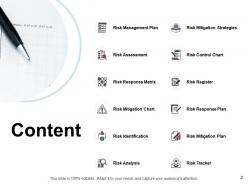
Slide 2: This slide shows content of the presentation.
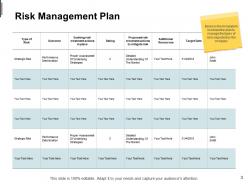
Slide 3: This slide presents Risk Management Plan describing- Type of Risk, Outcome, Existing Risk Treatment Actions in Place, Rating, Proposed Risk Treatment Actions to Mitigate risk, Additional Resources, Target Date and Person Responsible.
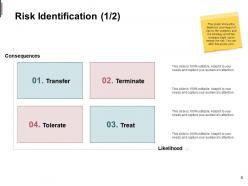
Slide 4: This slide represents Risk Identification with a graph that shows the likelihood and impact of risk on the company and the strategy which the company might opt to mange the risk.
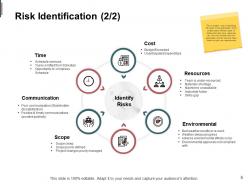
Slide 5: This is another slide on Risk Identification describing factors like cost, time, resources etc.
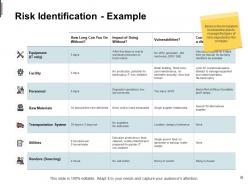
Slide 6: This slide showcases Risk Identification- Example describing Time period, Impact of Doing, Vulnerabilities and Contingency in case of a disaster.
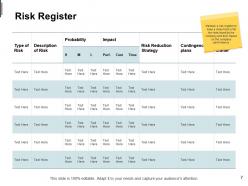
Slide 7: This slide shows Risk register to keep a close track of all the risks faced by the company and their impact on the company performance.
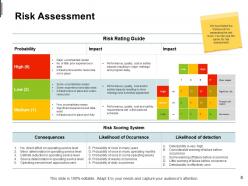
Slide 8: This slide shows Risk Assessment describing Risk Rating Guide with probability and impact along with Risk scoring system describing Consequences, Likelihood of Occurrence and Likelihood of detection.
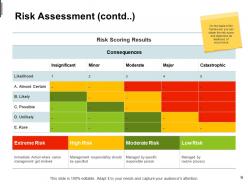
Slide 9: This is another slide continuing Risk Assessment, with this you can obtain the risk score and determine its likelihood of occurrence.
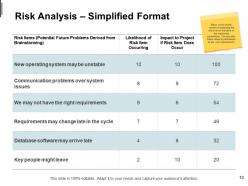
Slide 10: This slide presents Risk Analysis – Simplified Format with related table and text boxes. You can alter these values & parameters as per your requirements.
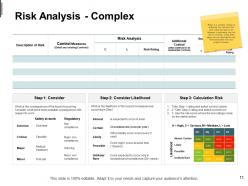
Slide 11: This slide displays Risk Analysis- Complex. This is a complex version of analysing the risk level. Follow the described steps to calculate risk.
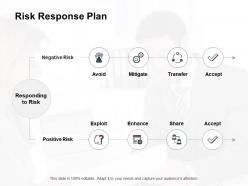
Slide 12: This slide represents Risk Response plan describing positive and negative ways of responding to the risk levels.
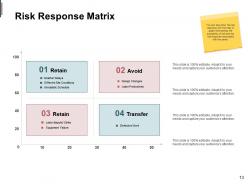
Slide 13: This slide showcases Risk Response Matrix with the help of graph describing the probability of risk and the risk response associated with it.
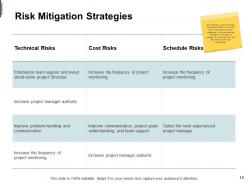
Slide 14: This slide presents Risk Mitigation Strategies describing Technical, cost and scheduled risks.
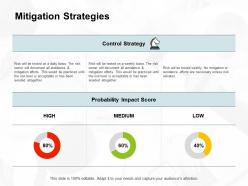
Slide 15: This slide shows Mitigation Strategy with related imagery and text.
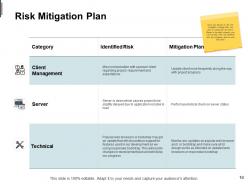
Slide 16: This slide displays Risk Mitigation Plan in a tabular form.
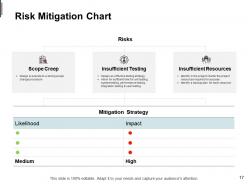
Slide 17: This slide showcases Risk Mitigation Chart with likelihood and impact of risk.
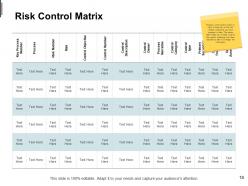
Slide 18: This slide shows Risk Control Matrix. This matrix helps you to keep a log of the control measures you have decided to take to manage the risk levels.
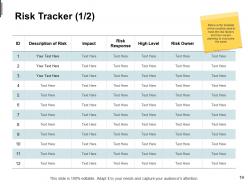
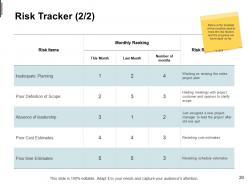
Slide 19: This slide presents Risk Tracker which could be used to track the risk factors and how we are planning to overcome the same.
Slide 20: This is another slide presenting Risk Item Tracking which could be used to track the risk factors and the progress we have made so far.
Slide 21: This slide displays Mitigation Plan In Risk Management Icons.
Slide 22: This slide reminds about 30 minutes coffee break.
Slide 23: This slide is titled as Additional slides for moving forward.
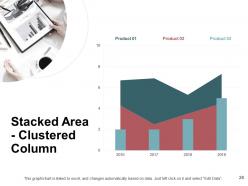
Slide 24: This slide shows Stacked Area - Clustered Column chart.
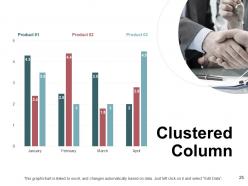
Slide 25: This slide displays Clustered Column chart with three products comparison.
Slide 26: This is Our Mission slide with related imagery and text.
Slide 27: This is About Our Company slide to show company specifications etc.
Slide 28: This is Meet Our team slide with names and designation.
Slide 29: This is a Timeline slide to show information related with time period.
Slide 30: This is another slide continuing Timeline.
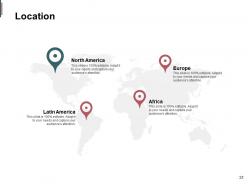
Slide 31: This is a Location slide with maps to show data related with different locations.
Slide 32: This slide is titled as Post it. Post your notes here.
Slide 33: This is a Financial slide. Show your finance related stuff here.
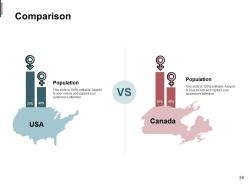
Slide 34: This is a Comparison slide to state comparison between commodities, entities etc.
Slide 35: This is a Target slide. State your targets here.
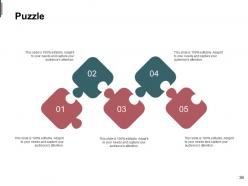
Slide 36: This is a Puzzle slide with text boxes.
Slide 37: This is a Bulb or idea slide to state a new idea or highlight information, specifications etc.
Slide 38: This slide shows Magnifying Glass to highlight information.
Slide 39: This is a Thank You slide with address, contact numbers and email address.
Mitigation plan in risk management powerpoint presentation slides with all 39 slides:
Use our Mitigation Plan In Risk Management Powerpoint Presentation Slides to effectively help you save your valuable time. They are readymade to fit into any presentation structure.


FAQs for Mitigation plan in risk management
Look, you need four main pieces for this to work. First, figure out what risks you're actually facing - be specific here. Then map out your responses and assign someone to own each one. Don't forget timelines and triggers for when to act. Honestly, the documentation feels tedious but I've watched teams crash and burn without it. You want both prevention stuff (stopping problems upfront) and backup plans for when things inevitably go sideways. Keep everything simple though - if your team can't execute it under stress, what's the point?
Think of risk assessment as your cheat sheet for figuring out what actually matters. You'll spot which threats are likely to hit and which ones would totally wreck your day if they happened. Can't fix everything though - money doesn't grow on trees, right? So you tackle the scary, probable stuff first. The assessment shows you exactly what's broken or vulnerable. Honestly, most people skip this step and just throw money at random problems. Don't be those people. Pull up your latest assessment and let those findings drive where you spend your mitigation budget.
Dude, stakeholder engagement can totally make or break your whole plan. If people don't buy into it from the start, you're basically creating expensive paperwork that nobody will use. Get them involved early - they'll spot risks you missed and help make your solutions actually work in the real world. Honestly, I've seen too many projects fail because someone skipped this step. People follow through when they help build something, not when it gets dumped on their desk. Map out who matters most and get them in those planning meetings ASAP.
Okay so first thing - make a simple grid with probability vs impact. How likely is each risk and how much would it mess you up? Focus on the high-probability, high-impact stuff obviously. The crazy unlikely disasters? Honestly those can wait unless you're swimming in money lol. Don't forget about compliance requirements and what your company can actually handle risk-wise. Look for quick wins that knock out multiple risks at once - those are pure gold. I'd say pick your top 5-7 worst ones and work through those before bothering with anything else.
Honestly, the worst part is dealing with people who don't want change - it's like pulling teeth sometimes. Resource limits will hit you hard too, plus everyone wanting stuff done unrealistically fast. Scope creep is brutal because "small additions" pile up quick. Technical issues you never saw coming? Yeah, those happen constantly. Oh and departments love not talking to each other, which creates total chaos. What saved me was padding my timelines way more than felt reasonable, finding allies who actually get excited about the project, and basically updating people constantly even when it feels excessive. Trust me on the buffer time thing - you'll thank yourself later.
Honestly, tech makes mitigation planning so much easier. GIS mapping beats the hell out of spreadsheets for finding high-risk spots. Risk assessment software can run different scenarios automatically - saves tons of time. Cloud tools are a game changer too since your whole team can update plans simultaneously instead of that annoying email chain thing. Oh, and mobile apps work great for collecting field data during site visits. I'd start small though - pick whatever manual task is driving you crazy and find a tech solution for just that first.
Pick metrics that actually match your specific risk - like if you're worried about security breaches, track how often incidents happen and how fast you respond. Budget concerns? Watch your spending variance and timeline stuff. Honestly, most people go overboard here. Just grab 3-4 solid indicators that'll actually tell you if your mitigation is doing its job, not some BS vanity numbers. Mix in some early warning signs with your outcome measures so you can fix things before they blow up. Oh and start tracking from day one - you'll need that baseline data to compare against later.
Okay so here's the thing - your plan can't be some rigid document that sits in a drawer. Set up trigger points that kick in automatically when conditions change, like weather gets worse or resources run low. Most people mess this up by creating one path forward instead of multiple scenarios. I'd honestly check in quarterly to see what's still working and what isn't - that's where plans usually die. Think of it like a decision tree with clear "if this happens, then we do that" branches. Way better than panicking when things shift. Oh, and don't forget to actually monitor the data you're collecting - otherwise you're flying blind.
Every industry builds their risk plans totally differently based on what actually threatens them. Finance companies stress test everything because of market swings and regulations. Healthcare? They're neurotic about patient safety and data breaches - honestly can't blame them though. Manufacturing focuses on supply chains breaking down and equipment dying on them. Tech companies lose sleep over hackers and servers going down. You can't just copy someone else's template. Your plan needs to match whatever keeps your specific industry up at night, not some generic checklist that sounds good on paper.
First thing - figure out what compliance rules hit your industry. OSHA, EPA, financial regs, whatever applies. Your liability's on the line here since they'll pick apart your plan if anything goes sideways (trust me, seen it happen). Don't forget disclosure stuff, especially with public companies or government work. Everything needs proper documentation - regulators eat that up. Oh and definitely get legal to review before you roll it out. They always spot things you miss.
Don't treat risk planning like some separate thing you do once a year. Build it right into your regular strategic planning instead. Figure out which business goals are riskiest first, then tackle mitigation during those same planning meetings. Honestly, I've watched so many companies waste time on fancy risk charts that nobody ever looks at again. Give department heads ownership of specific actions with actual deadlines. The trick is making it feel normal, not like extra busywork. Oh, and definitely do quarterly reviews to tweak things as stuff changes.
Honestly, planning ahead will save your sanity and your budget. I learned this the hard way at my last job - we were always scrambling to fix stuff that broke instead of preventing it. Super stressful. When you tackle risks early, fixes are way cheaper and less complicated. Reactive mode sucks because you're constantly putting out fires instead of actually moving forward. Your team will thank you too since nobody likes working in crisis mode 24/7. Start with whatever keeps you up at night and work prevention into your regular planning. Way better than waiting for everything to implode.
Look, quarterly reviews are the bare minimum - don't let anyone tell you otherwise. But here's the thing: you can't just set it and forget it. Big incidents happen, regulations change, your business pivots... that's when you need to jump on it immediately. I've watched teams religiously stick to their annual review schedule while everything falls apart around them. Markets shift crazy fast these days, especially with all the tech changes. Set those quarterly reminders for sure, but also create some kind of trigger system. When something major hits, that's your cue to reassess everything.
Look, you can't just write up some emergency plan and call it a day - people need to actually know what they're doing when stuff hits the fan. Regular drills are huge. Otherwise everyone's gonna freeze up or run around like headless chickens when it matters. I'd say quarterly training sessions work pretty well, plus you gotta test people's knowledge somehow. Keep communication clear about any updates too. The worst thing is when procedures change and half the team doesn't know. Make it hands-on practice, not just boring PowerPoint slides that put everyone to sleep.
Working with others seriously multiplies what you can accomplish - you get access to knowledge and resources you'd never have solo. Shared funding means bigger projects. Real-time threat intel sharing cuts your response time way down. Honestly, I think the best part is having multiple perspectives when you're trying to spot risks before they hit. Joint response protocols are where things get really powerful though. Look for organizations dealing with similar threats and start small - maybe just a basic info-sharing deal to test the waters.
-
Enough space for editing and adding your own content.