


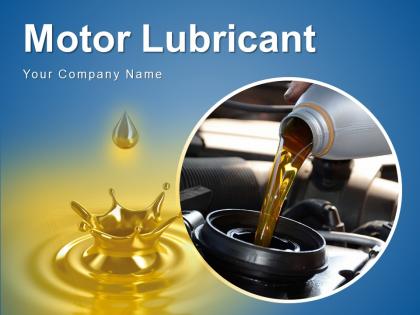
Motor Lubricants Machines Dispenser Nozzle Rotating Gears




Try Before you Buy Download Free Sample Product
 Impress Your
 Audience
 100%
100% Editable
 Save Hours
 of Time


Our Motor Lubricants Machines Dispenser Nozzle Rotating Gears are topically designed to provide an attractive backdrop to any subject. Use them to look like a presentation pro.
People who downloaded this PowerPoint presentation also viewed the following :
Motor Lubricants Machines Dispenser Nozzle Rotating Gears with all 12 slides:
Use our Motor Lubricants Machines Dispenser Nozzle Rotating Gears to effectively help you save your valuable time. They are readymade to fit into any presentation structure.
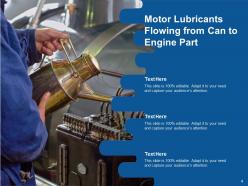

FAQs for Motor Lubricants Machines Dispenser
Motor lubricants include conventional oils, synthetic blends, full synthetic oils, high-mileage formulations, and specialty racing oils, each designed for specific engine requirements and operating conditions. These lubricant types enhance engine performance by reducing friction, managing heat dissipation, and extending component life, with automotive manufacturers and fleet operators finding that strategic lubricant selection delivers improved fuel efficiency and reduced maintenance costs.
Synthetic motor oils deliver superior performance through enhanced temperature stability, longer drain intervals, and better engine protection compared to conventional oils. These advanced lubricants provide improved fuel economy, reduced engine wear, and consistent viscosity across extreme conditions, with many automotive manufacturers finding that synthetic oils enable extended service life and optimal engine performance in modern vehicles.
Additives enhance motor lubricants by improving viscosity stability, reducing friction and wear, preventing oxidation and corrosion, and extending service intervals. These chemical compounds enable automotive manufacturers and fleet operators to achieve better fuel efficiency, reduced maintenance costs, and enhanced engine protection, with many finding that advanced additive packages ultimately deliver competitive advantages in increasingly demanding operational environments.
Motor lubricant viscosity significantly impacts engine performance by determining flow resistance, with lower viscosity oils reducing friction and enabling smoother component movement, while higher viscosity provides better protection under extreme conditions. Automotive manufacturers increasingly specify multi-grade oils that balance protection with fuel efficiency, as proper viscosity selection can improve fuel economy by 2-3% while extending engine life through optimal lubrication coverage.
Consumers should consider viscosity grade matching manufacturer specifications, additive packages for engine protection, synthetic versus conventional base oils, operating temperature ranges, and driving conditions like stop-and-go or highway usage. These factors work together to optimize engine performance, extend component life, and maintain warranty compliance, with many drivers finding that proper lubricant selection significantly reduces maintenance costs while enhancing fuel efficiency.
Motor oil should typically be changed every 3,000-5,000 miles for conventional oil or 7,500-10,000 miles for synthetic oil, though modern engines and advanced lubricants increasingly extend these intervals. These maintenance schedules enhance engine protection, minimize wear, and optimize performance, with many automotive manufacturers finding that regular oil changes ultimately deliver improved fuel efficiency, reduced repair costs, and extended engine life across various vehicle types and driving conditions.
Motor lubricant production and disposal present both challenges and opportunities, including air emissions from refining, water contamination risks, greenhouse gas generation, soil pollution from improper disposal, and plastic waste from packaging. However, increasingly sustainable practices like advanced recycling technologies, bio-based formulations, and closed-loop systems enable manufacturers to minimize environmental impact while delivering enhanced performance, with many automotive and industrial sectors finding that strategic lubricant management ultimately reduces both costs and ecological footprint.
Extreme temperatures significantly impact motor lubricant viscosity, flow characteristics, and protective capabilities, with cold conditions causing thickening that impairs circulation while heat reduces viscosity and accelerates degradation. These temperature fluctuations affect engines across industries from automotive manufacturing to heavy machinery operations, ultimately requiring specialized formulations that maintain optimal performance, minimize wear, and extend equipment lifespan in demanding thermal environments.
Using incorrect motor lubricants can cause severe engine damage through inadequate viscosity protection, improper additive chemistry, and thermal breakdown under operating conditions. Wrong lubricants lead to increased friction, accelerated wear of pistons and bearings, oil sludge formation, and potential seizure, with automotive manufacturers and fleet operators finding that specification mismatches ultimately result in costly repairs and reduced engine lifespan.
Bio-based motor lubricants are advancing through improved synthetic esters, plant-derived base oils, enhanced biodegradability formulations, and renewable additive packages that deliver comparable performance to petroleum alternatives. These developments enable automotive manufacturers, fleet operators, and industrial facilities to reduce environmental impact while maintaining engine protection, with many organizations finding that bio-lubricants offer competitive viscosity performance and extended service intervals.
Motor lubricants significantly reduce engine wear by creating protective barriers between moving parts, minimizing friction, and dispersing heat throughout the engine system. Quality lubricants extend engine longevity by preventing metal-to-metal contact, reducing corrosion, and maintaining optimal operating temperatures, with many automotive manufacturers finding that proper lubrication programs deliver enhanced performance and reduced maintenance costs.
Following manufacturer specifications for motor lubricants ensures optimal engine performance, longevity, and warranty protection by matching viscosity grades, additive packages, and performance standards to specific engine designs. These specifications deliver enhanced fuel efficiency, reduced wear rates, and minimized maintenance costs, with automotive manufacturers increasingly finding that proper lubricant selection significantly extends engine life while maintaining peak operational reliability.
Motor lubricants enhance vehicle performance by reducing friction, preventing engine wear, maintaining optimal temperatures, and ensuring smooth component operation. Through advanced formulations, these lubricants enable improved fuel efficiency, extended engine life, and reliable braking system function, while minimizing breakdowns and maintaining consistent performance, ultimately delivering safer driving experiences and reduced maintenance costs.
Common motor lubricant myths include believing expensive oils are always better, thinking synthetic oils cause leaks in older engines, assuming darker oil needs immediate changing, and that all vehicles require the same viscosity grade. These misconceptions often lead to unnecessary expenses, improper maintenance schedules, and suboptimal engine performance, with many automotive professionals finding that education about oil specifications, change intervals, and compatibility ultimately delivers better engine longevity and cost efficiency.
Electric vehicle motor lubricant innovations include synthetic thermal management fluids, advanced dielectric coolants, specialized gear oils for EV transmissions, battery cooling lubricants, and high-performance bearing greases. These technologies enhance EV efficiency by reducing friction in electric drivetrains, optimizing battery temperature regulation, and extending component lifespan, with automotive manufacturers finding that strategic lubricant selection significantly improves vehicle range and performance.
-
Awesomely designed templates, Easy to understand.
-
Use of different colors is good. It's simple and attractive.
-
It saves your time and decrease your efforts in half.