


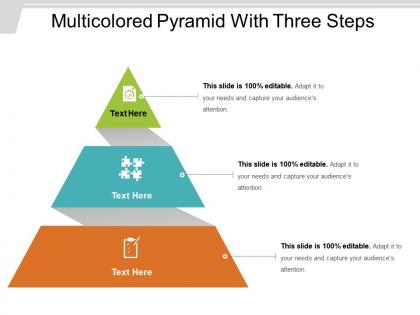
Multicolored pyramid with three steps





Try Before you Buy Download Free Sample Product
 Impress Your
 Audience
 100%
100% Editable
 Save Hours
 of Time


Instill intense faith with our Multicolored Pyramid With Three Steps. Get folks to believe from the core of their hearts.
People who downloaded this PowerPoint presentation also viewed the following :
Multicolored pyramid with three steps with all 5 slides:
You may not know it but your presentations can create an impression that may either make or break a career. Why stand the chance of failing when our Multicolored Pyramid With Three Stepswill make the job easier.



FAQs for Multicolored pyramid
So pyramids started around 2600 BCE in Egypt - pharaohs used them as crazy elaborate tombs to show off their power and help them reach the afterlife. Egypt totally nailed the whole pyramid thing, but other cultures built them too. Mesopotamians had ziggurats, and in Mesoamerica you've got these massive ones at places like Teotihuacan. Those weren't just for burials though - they were temples, observatories, basically power symbols. The shape itself was symbolic, pointing up to the heavens. Pretty wild how different civilizations came up with similar ideas for totally different reasons, right?
So pyramids work because they're basically perfect weight distributors. That broad base spreads everything out evenly, then all the force gets funneled straight down through the center. Ancient Egyptians nailed the math too - around 1.6:1 base-to-height ratio is the sweet spot. Those angled sides are genius because wind or earthquakes just get redirected downward into the foundation instead of knocking things over. Honestly, it's such elegant engineering. If you're ever building something that can't fall over, just think pyramid. Wide bottom, narrow top. Works every time.
Oh man, there's actually so many different styles! Egypt's got those classic smooth limestone ones everyone thinks of first. But then Mesoamerican ones are totally different - they're stepped with flat tops where they'd put temples. Way cooler looking imo. Nubian pyramids in Sudan are way steeper and smaller. Ancient Mesopotamia had ziggurats which were more like massive stepped towers. There's even modern stuff like that glass pyramid at the Louvre. If you're doing this for school or whatever, I'd definitely compare Egyptian vs Mesoamerican since they're so different in how they built them and why.
Oh you see pyramid shapes everywhere once you start noticing! The Louvre's glass one is obvious, but check out building rooflines and even some skyscraper tops. They're actually super practical - great for dramatic high ceilings and the angled surfaces let in amazing natural light. Structurally they're rock solid too. For your project, think about how pyramid elements could solve boring stuff like water drainage while making the space way more interesting. I'm kind of obsessed with how they maximize interior space without looking bulky from outside.
Pyramids are like the ultimate power symbol - every culture seems to have figured this out independently. Ancient Egyptians used them for spiritual ascension, Mesoamericans saw them as cosmic mountains. The shape just naturally makes you look up, which is probably why rulers and priests loved building with them. Honestly, it's kind of genius when you think about it. Modern designers still use pyramid shapes in logos because people instantly get the hierarchy vibe. They scream "important stuff happens here" whether it's a tomb, temple, or monument. If you're working on anything about achievement or spiritual themes, pyramids are basically visual shorthand for that whole concept.
Oh dude, the tech we have now has totally changed how we look at pyramid construction! Ground-penetrating radar found hidden chambers and ramp systems nobody knew about. Laser measurements proved ancient engineers were crazy precise with just copper tools and wooden rollers. Wild, right? Drone surveys mapped out whole construction sites - worker villages, quarry routes, all of it. Computer simulations actually prove people back then could've built these things without any mystery involved. The cosmic ray imaging stuff they're doing at Giza lately is pretty mind-blowing too if you want to look that up.
Oh man, the slave thing is totally wrong - they were actually skilled workers who got fed well and lived in villages nearby. People still think aliens built them which is honestly ridiculous. They're just elaborate tombs to help pharaohs get to the afterlife. The Great Pyramid only took like 20 years too, not centuries like everyone assumes. Organized work crews can get stuff done fast. Don't fall for those crazy History Channel documentaries - stick with real archaeological sources if you're looking this up.
Oh this is actually super interesting! Ancient builders just used whatever was around them. Egypt had tons of limestone quarries so that's what they went with, plus granite. Mesoamerican ones? Volcanic stone and adobe - totally different vibe. In Sudan they used mud brick, which makes total sense for the climate there. Some Pacific islands even used coral blocks (honestly kind of genius). Each region's geology basically determined everything. If you're looking into a specific pyramid, definitely check out what stones were naturally available in that area first - it'll tell you a lot about why they built it that way.
So basically, they built all those chambers and twisty passages for a few reasons. Main burial chamber goes deep inside, obviously. Then you've got smaller rooms stuffed with treasures and religious stuff. But here's the cool part - lots of those passages were fake-outs! Dead ends and blocked routes to mess with tomb robbers. Ancient Egyptians were pretty paranoid about grave robbing, and honestly, can you blame them? The whole layout also tied into their beliefs about the afterlife journey. When you're studying this stuff, focus on how everything was designed around protecting the burial and supporting those rituals.
Dude, pyramids are insane when you really think about it. These people moved massive stone blocks without cranes or anything we'd use today. The math behind them? Crazy precise - they knew geometry and astronomy way better than most textbooks give them credit for. What gets me is how they figured out the logistics. Coordinating thousands of workers, designing ramps, creating pulley systems from scratch. There's new research about internal ramps that completely changes how we think they built these things. Honestly makes you wonder what else we're missing about ancient tech. If you're into engineering stuff, it's worth diving into.
Dude, it's rough out there. Centuries of weathering and pollution have beaten these sites to hell - sand basically sandblasts the limestone constantly. Rising groundwater doesn't help either. But honestly? The red tape might be worse than the environmental stuff. You'll need permits from like three different governments just to look at anything interesting. Some places go completely off-limits during conflicts too. 3D scanning tech is amazing when it works, but good luck getting stable conditions. Partner up with local institutions - they actually know how to deal with all the bureaucratic nonsense.
So pyramids are everywhere in marketing because they just scream "premium" and "stable" to our brains. Think about it - we see triangles and immediately think Egyptian pyramids, mountains, strong foundations. Toblerone's the obvious one, but financial companies love this shape too. Even a simple upward triangle feels like progress and success. Here's the thing though - they can come across super serious. Like, if you're a fun startup, maybe don't go full pyramid mode. But for luxury brands or anything where you want authority? Perfect. I'd honestly test it in your next campaign and see if people think your stuff looks more expensive.
Oh pyramid buildings? Yeah, they're actually pretty smart environmentally. Those sloped sides mean way less surface area getting hit by weather, so you'll save tons on heating and cooling. Solar panels work great on them too - much better than slapping them on later. The downside is construction gets wasteful with all the weird angled cuts. I'd probably go with recycled steel or local stone if I was building one. Honestly, the shape just makes sense from an energy perspective. Just plan your materials super carefully upfront or you'll blow the budget on waste.
Dude, pyramids were like the ancient world's biggest flex. Think about it - you're mobilizing thousands of workers and tons of resources just to build your tomb. That takes serious power and organization. They're basically giant stone billboards screaming "look how much control I have over people." Most housed rulers' bodies too, which reinforced that whole divine king thing they had going. Honestly, whenever I'm reading about old civilizations, I just look at their massive buildings first. It's a dead giveaway of how much political juice they actually had. Pretty wild they're still standing today.
Oh dude, ancient Egyptians were actually geniuses at city planning! They'd put the pyramid at the center, then build everything else flowing outward - temples, walkways, worker areas. Each zone had its own purpose but still connected visually to the main monument. Smart move was working WITH the landscape instead of against it (why don't more people do this?). For your projects, start with one focal point and branch out from there. Create distinct areas with smooth transitions between them. Use big landmarks so people don't get lost wandering around.
-
Great product with effective design. Helped a lot in our corporate presentations. Easy to edit and stunning visuals.
-
Amazing product with appealing content and design.