


New business model of a consulting company case competition powerpoint presentation slides




Try Before you Buy Download Free Sample Product
 Impress Your
 Audience
 100%
100% Editable
 Save Hours
 of Time


Big revenue consulting firms basic business model hasnt changed in more than a hundred years, while the market landscape and the companies they represent have radically changed. Due to this, the companys financials are not increasing reasonably. Check out our professionally designed New Business Model of a Consulting Company Case Competition that is helpful for the consultancy companies which are facing issues related to the old business model, changing the clients behavior, increase in competition, project complexities, etc. This presentation will help the companies to identify new strategies to tackle these challenges. The main objective of this presentation is to analyze the reasons for the inefficiency in the operations of the consultancy company and identify the strategies to overcome those challenges. This presentation includes various slides related to overall industry analysis, market size, trends in the consultancy business, types of consultancy services, reasons behind the restructuring of business model, problems and their solutions, competitive analysis, etc. It provides the company forecasted financials for five years, budget preparation, etc. Get access to this insightful template now.
People who downloaded this PowerPoint presentation also viewed the following :
Content of this Powerpoint Presentation
Slide 1: This slide introduces New Business Model of a Consulting Company (Case Competition). State Your Company Name and begin.
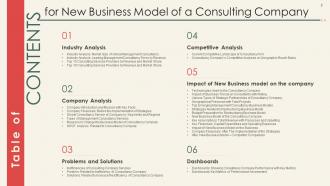
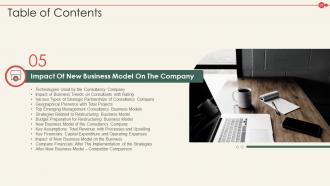
Slide 2: This slide presents Table of Content for the presentation.
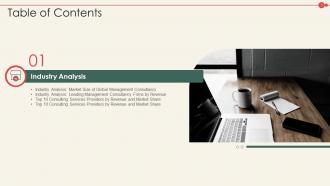
Slide 3: This slide highlights title for topics that are to be covered next in the template.
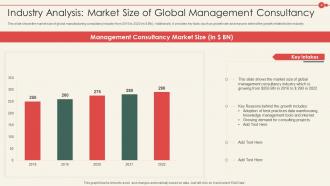
Slide 4: This slide shows the market size of global manufacturing consultancy Industry.
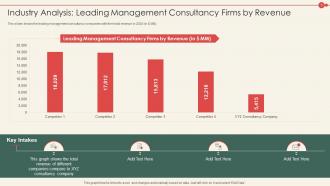
Slide 5: This slide presents leading management consultancy companies with their total revenue in 2020 (in $ MM).
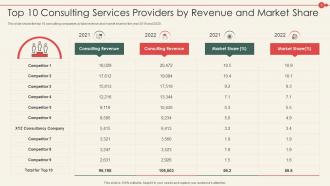
Slide 6: This slide displays Top 10 consulting services providers by revenue and market share.
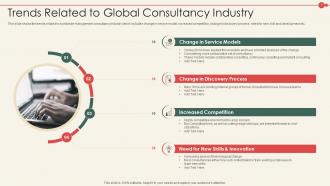
Slide 7: This slide represents Trends Related to Global Consultancy Industry.
Slide 8: This slide highlights title for topics that are to be covered next in the template.
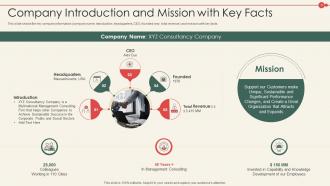
Slide 9: This slide showcases Company Introduction and Mission with Key Facts.
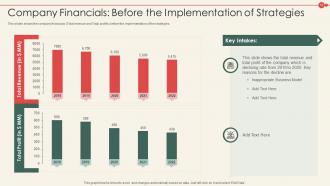
Slide 10: This slide shows Company Financials: Before the Implementation of Strategies.
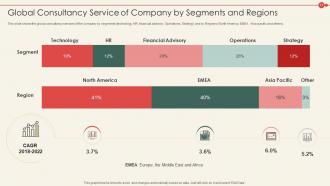
Slide 11: This slide presents Global Consultancy Service of Company by Segments and Regions.
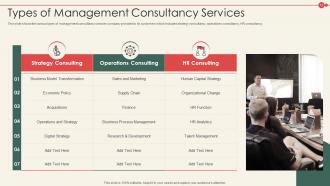
Slide 12: This slide displays various types of management consultancy services company.
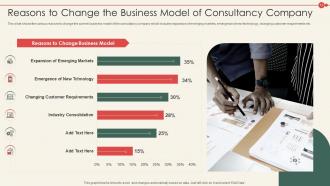
Slide 13: This slide represents Reasons to Change the Business Model of Consultancy Company.
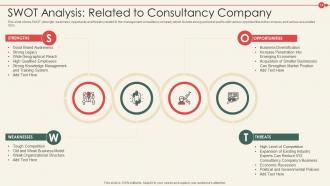
Slide 14: This slide shows SWOT (strength, weakness, opportunity and threats) related to the management consultancy company.
Slide 15: This slide highlights title for topics that are to be covered next in the template.
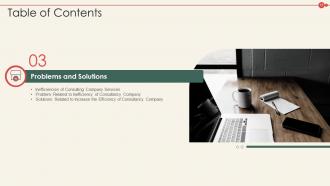
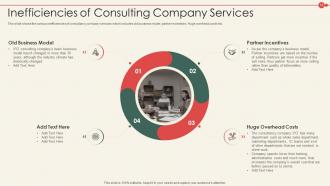
Slide 16: This slide presents the various inefficiencies of consultancy company services.
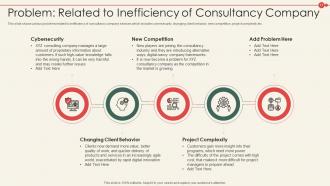
Slide 17: This slide displays problems related to inefficiency of consultancy company services.
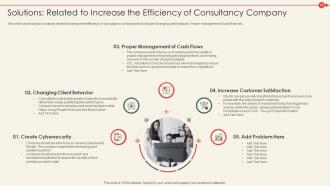
Slide 18: This slide shows various solutions related to increase the efficiency of consultancy company.
Slide 19: This slide highlights title for topics that are to be covered next in the template.
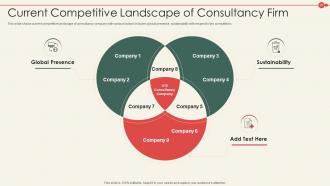
Slide 20: This slide represents current competitive landscape of consultancy company.
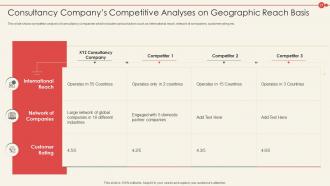
Slide 21: This slide shows competitor analysis of consultancy companies.
Slide 22: This slide highlights title for topics that are to be covered next in the template.
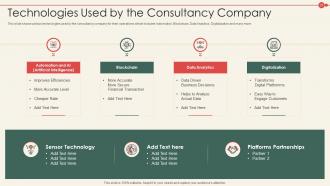
Slide 23: This slide shows various technologies used by the consultancy company.
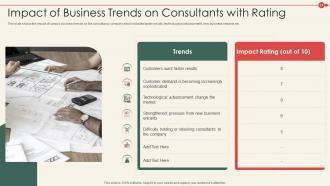
Slide 24: This slide presents Impact of Business Trends on Consultants with Rating.
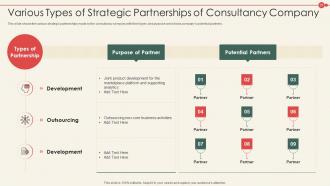
Slide 25: This slide displays Various Types of Strategic Partnerships of Consultancy Company.
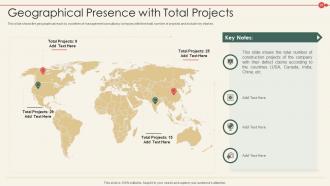
Slide 26: This slide shows the geographical reach by countries of management consultancy company.
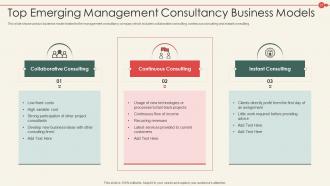
Slide 27: This slide represents Top Emerging Management Consultancy Business Models.
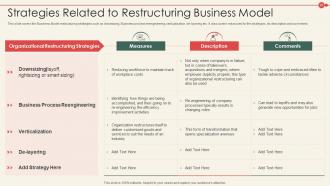
Slide 28: This slide covers the Business Model restructuring strategies such as downsizing, Business process reengineering, etc.
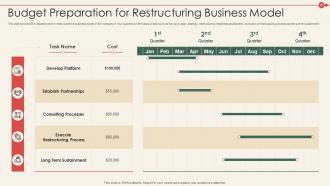
Slide 29: This slide showcases Budget Preparation for Restructuring Business Model.
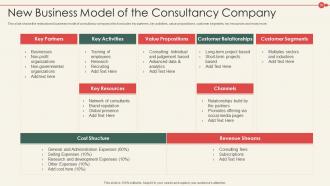
Slide 30: This slide shows the restructured business model of consultancy company.
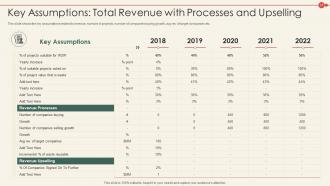
Slide 31: This slide displays key assumptions related to revenue, number of projects, number of companies buying growth, etc.
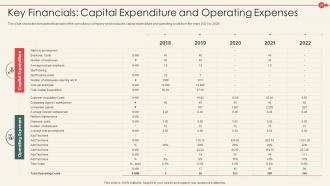
Slide 32: This slide represents Key Financials: Capital Expenditure and Operating Expenses.
Slide 33: This slide shows the impact of restructure business model on the consultancy company.
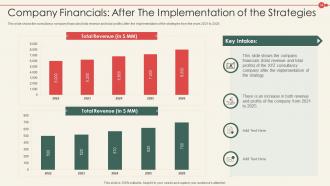
Slide 34: This slide showcases the consultancy company financials (total revenue and total profits) after the implementation of the strategies.
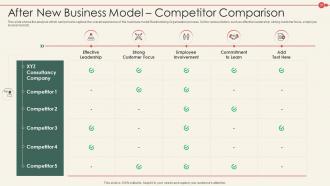
Slide 35: This slide shows the analysis which carried out to capture the overall experience of the business model.
Slide 36: This slide highlights title for topics that are to be covered next in the template.
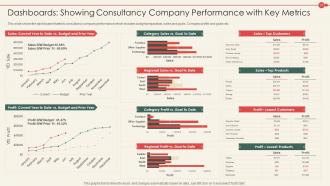
Slide 37: This slide shows the dashboard related to consultancy company performance.
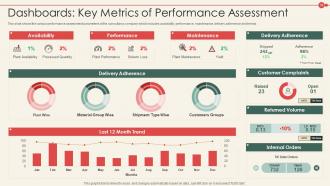
Slide 38: This slide presents various performance assessment parameters of the consultancy company.
Slide 39: This slide displays Icons for New Business Model of a Consulting Company.
Slide 40: This slide is titled as Additional Slides for moving forward.
Slide 41: This slide depicts Venn diagram with text boxes.
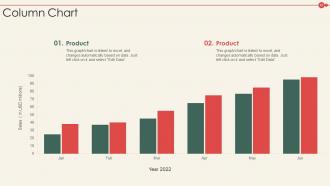
Slide 42: This slide displays Column chart with two products comparison.
Slide 43: This is a Timeline slide. Show data related to time intervals here.
Slide 44: This slide presents Roadmap with additional textboxes.
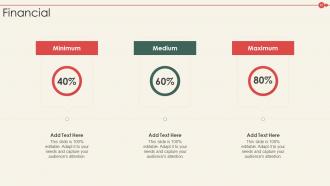
Slide 45: This is a Financial slide. Show your finance related stuff here.
Slide 46: This is a Thank You slide with address, contact numbers and email address.
New business model of a consulting company case competition powerpoint presentation slides with all 51 slides:
Use our New Business Model Of A Consulting Company Case Competition Powerpoint Presentation Slides to effectively help you save your valuable time. They are readymade to fit into any presentation structure.






FAQs for New business model of a consulting company case competition
Honestly, start with who your ideal client is - that's everything. Most people skip this and wonder why they're struggling. Once you've got that locked down, figure out what specific problem you solve for them. Don't try to be everything to everyone, it never works. Your pricing should match the value you're creating. Could be hourly, project rates, or monthly retainers - whatever fits. Then think about delivery. Are you running workshops? Giving ongoing advice? Actually implementing stuff yourself? The trick is making sure it all connects. Your delivery method needs to support your pricing, and both should make sense for your target client. Pretty straightforward once you map it out.
Honestly, you've gotta stay plugged into everything - industry reports, what clients are actually saying, even their cringey LinkedIn posts. Set up Google alerts for your niche and actually pay attention to competitor moves. The magic happens when you connect random dots between trends. Like if there's new regulations hitting while everyone's going digital? Boom - compliance automation services. I always tell people to test small pilot programs first though, because you never know if the market actually wants what you think they want. Sometimes I'll spend way too much time scrolling industry Twitter, but that's where you catch the early signals everyone else misses.
Tech is totally changing the consulting game right now. AI handles all that boring research stuff that used to eat up weeks - now you can jump straight to the big picture strategy work. Remote collaboration tools are huge too (thanks COVID, I guess?). What's really smart is how some firms are building their own software and selling it as a separate income stream. Don't just chase every new app though. Figure out what actually helps your specific type of consulting first, then invest there.
Look at it from their angle, not yours. What's this problem actually costing them each month? That's your starting point. Map everything back to numbers leadership cares about - revenue, costs, whatever keeps them up at night. I used to obsess over deliverables (total waste of time) instead of focusing on real outcomes they'd see in 3-6 months. Here's what works: dig into their pain points first, then show a simple before/after ROI calc. Run it by your contact before you pitch the big bosses - saves you from looking like an idiot if your numbers are off.
Honestly, you gotta pick one thing and own it completely. Like, become THE person everyone calls for AI in healthcare or whatever your thing is. Most consultants spread themselves way too thin - makes them forgettable. Build some frameworks that are actually yours, write stuff that shows how you think differently. Oh, and ditch hourly billing if you can. Charge based on results instead. Shows you're not just another time-waster. Start by figuring out what actually makes you different from the other hundred consultants in your city, then go all-in on that angle. The riches are in the niches, as they say.
Honestly, client feedback is pure gold for new ideas. They're literally telling you what's broken or missing - why not listen? I'd set up surveys and casual check-ins during projects to catch this stuff. Exit interviews work too, though people are sometimes more honest mid-project when they're not being polite. Look for patterns in complaints or requests. What keeps coming up? Those pain points are your next service offerings. Test new solutions with a few willing clients first before going all-in. You'll save yourself headaches that way. Start collecting feedback systematically - like, actually this month instead of putting it off.
Honestly, your biggest headache will be clients freaking out about anything that isn't hourly billing. They get super nervous about value-based stuff. Your own team won't love it either - people hate change, what can I say? Defining what value actually means for new services gets messy fast. ROI tracking becomes this whole thing when you're trying different approaches. Oh, and cash flow during transitions? Total nightmare since you're juggling old and new models at once. My advice? Test everything small first. Don't blow up your whole business model on day one.
Build your services like Lego blocks - standardized core stuff you can snap together differently for each client. Map out what you're already doing that's actually repeatable versus the one-off custom work. Most clients want the same foundational processes anyway, so nail those down first. Then you add the specialized pieces on top. Honestly, I think of it like ordering at a restaurant - everyone gets the same quality kitchen and ingredients, but you're picking different combinations. Keeps your costs sane while clients still feel special. Don't reinvent everything from scratch each time.
Track revenue per client, profit margins, and acquisition costs first - that's where the money actually is. Then check utilization rates, project cycle times, and client retention. Pipeline stuff like conversion rates from new services matter too. Honestly, I've watched so many consultants obsess over metrics that look impressive but mean nothing for their bottom line. Pick maybe 4-5 metrics tops and check them monthly. More than that? You're just creating busy work for yourself.
Working with startups is honestly one of the smartest moves you can make. You'll get access to their cool new tech without spending a fortune on R&D. They get your credibility and client connections. Win-win, right? The revenue potential is pretty solid too - joint services, co-developed products, that kind of stuff. I'd start small though. Find maybe 2-3 startups whose tools actually solve problems your clients are complaining about. Then just pitch a pilot partnership. Way less risky than going all-in from day one.
Honestly, remote work changed everything for consulting. No more flying teams everywhere - now you can tap talent from anywhere and cut those crazy overhead costs. Clients want faster results and digital solutions, which works out perfectly. Most firms are doing hybrid models now, some even subscription services instead of the old hourly billing thing. What's wild is how much better async collaboration can be than those endless in-person meetings. You'll probably need to rethink your whole delivery approach - focus on outcomes rather than face time. The geographic limits are basically gone, which is huge.
Honestly, data analytics is a game changer for making your consulting way more targeted. Your clients' actual data will show you specific problems instead of you just guessing what's wrong. I've watched consultants blow people away just by walking in with real insights instead of those boring theoretical frameworks everyone uses. You can track actual ROI and customize everything based on their unique patterns. Learn something basic like Tableau or Power BI - doesn't have to be fancy. Then you're the consultant who shows up with proof, not just opinions. Makes a huge difference in credibility.
Honestly, go after retainers first - recurring revenue beats random projects every day. Pick a niche where you can be *the* person people think of, not just another generalist competing on price. I made that mistake early on and it sucked. Build some frameworks and templates so you're not reinventing everything each time. Oh, and definitely hire junior people when you can - you can't scale just doing everything yourself. Document your processes too because you'll want to reuse that stuff. Track which clients actually pay well and find more like them.
Honestly, people won't try new stuff if they're terrified of screwing up - psychological safety is huge. Give your team actual time for weird side projects, maybe 10% to start. We've had some random brainstorms turn into our biggest wins. Set up regular sessions where everyone shares what they're tinkering with, then actually DO something with the good ideas instead of just nodding along. This might sound counterintuitive, but celebrate the failures too. That's where the real learning happens. Start small and see what bubbles up naturally.
Honestly, client education is huge for innovation - it's how you create demand for new stuff. When you teach clients about trends or new methods, you're basically building smarter partners who can actually work with you on creative approaches. I always tell people to map out what their clients don't know yet, then create workshops around those gaps. Educated clients are way easier to work with too, which is a nice bonus. The trick is framing it as strategic, not just "here's some free info." Most of the time it leads straight to new projects anyway.
-
Great quality product.
-
Awesome use of colors and designs in product templates.