


New Product Assessment Powerpoint Presentation Slides





Try Before you Buy Download Free Sample Product
 Impress Your
 Audience
 100%
100% Editable
 Save Hours
 of Time


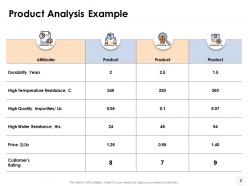
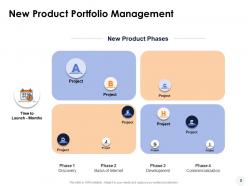
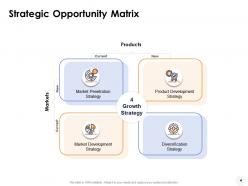
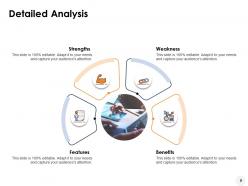
This professionally designed New Product Assessment PowerPoint Presentation Slides spares you countless man-hours that go into creating the perfect presentation. The well-structured new product review PPT theme helps you analyze products based on various parameters like durability and customer rating. Take advantage of strong data visualization tools featured in this new product evaluation PowerPoint slideshow. Elaborating new product portfolio management with the help of this product performance assessment PPT presentation has never been more convenient. Similarly, elucidating growth strategy through the strategic opportunity matrix is also possible with the help of new product analysis PowerPoint theme. Further, You can use this product opportunity assessment PPT slideshow to present an in-depth product analysis based on strengths, weaknesses, features. Weigh the performance of your product against the products of your competitor using the subject-oriented new product review PowerPoint presentation. So download this comprehensive new product performance analysis PPT template and elaborate category analysis, and Porter’s five forces model.
People who downloaded this PowerPoint presentation also viewed the following :
Content of this Powerpoint Presentation
Slide 1: This slide introduces New product Assessment. State Company name and begin.
Slide 2: This slide presents Product Analysis Example.
Slide 3: This slide describes New Product Portfolio Management.
Slide 4: This slide shows Strategic Opportunity Matrix.
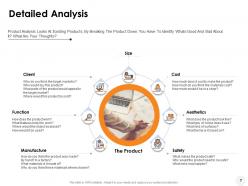
Slide 5: This slide shows Detailed Analysis
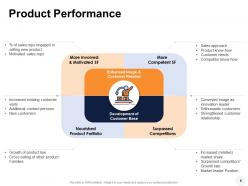
Slide 6: This slide depicts Product Performance
Slide 7: This slide displays Detailed Analysis of product. Product Analysis Looks At Existing Products, By Breaking The Product Down. You Have To Identify Whats Good And Bad About It? What Are Your Thoughts?
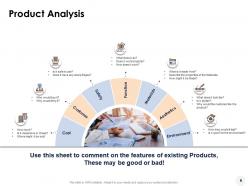
Slide 8: This slide shows Product Analysis. Use this slide to comment on the features of existing Products, These may be good or bad!
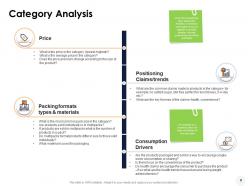
Slide 9: This slide showcases Category Analysis.
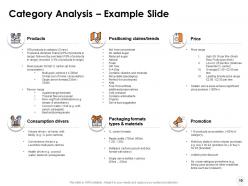
Slide 10: This is Category Analysis – Example Slide.
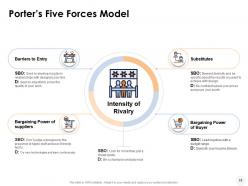
Slide 11: This slide depicts Porter’s Five Forces Model.
Slide 12: This slide is titled as Additional Slides for moving forward.
Slide 13: This is Our Team slide with Names and Designations.
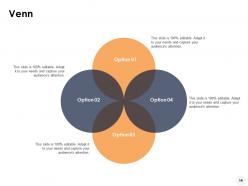
Slide 14: This is Venn slide.
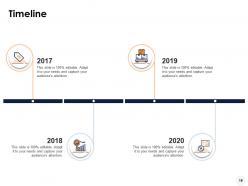
Slide 15: This slide shows Timeline process.
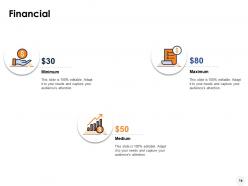
Slide 16: This is Financial slide. Showcase finance related stuff.
Slide 17: This slide shows Targets of the business.
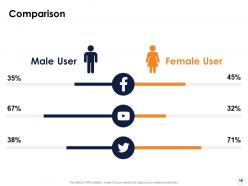
Slide 18: This is Comparison slide showcasing Comparison between Male and Female Users.
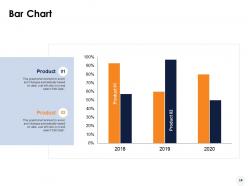
Slide 19: This slide displays Bar Chart chart with products Comparisons.
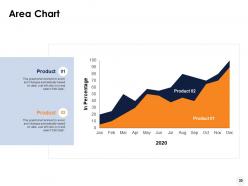
Slide 20: This slide displays Area Chart with product comparison.
Slide 21: This is Puzzle slide.
Slide 22: This is Thank You slide with Address, Contact number and Email address.
New Product Assessment Powerpoint Presentation Slides with all 22 slides:
Use our New Product Assessment Powerpoint Presentation Slides to effectively help you save your valuable time. They are readymade to fit into any presentation structure.




FAQs for New Product Assessment
Key criteria include market size and growth potential, target audience demographics, competitive landscape analysis, pricing strategy viability, and regulatory requirements. Through comprehensive market research, companies can assess demand patterns, identify differentiation opportunities, and evaluate resource requirements, with many organizations finding that early-stage feasibility studies significantly reduce launch risks while maximizing competitive advantage.
Competitive analysis informs new product assessment by identifying market gaps, pricing strategies, feature differentiation opportunities, and potential positioning challenges within existing landscapes. Through comprehensive competitor evaluation, businesses can refine product specifications, optimize go-to-market approaches, and develop strategic advantages, with many organizations finding that thorough competitive insights significantly enhance launch success rates and market penetration.
Key metrics include customer acquisition cost, monthly recurring revenue, user engagement rates, market penetration, and customer lifetime value. These measurements enable organizations to assess financial performance, user adoption, and market traction, with many companies finding that combining leading indicators like engagement with lagging indicators like revenue ultimately delivers comprehensive insights for strategic decision-making.
Customer feedback plays a critical role in new product assessment by providing market validation, identifying design flaws, revealing user preferences, and guiding feature prioritization throughout development cycles. Through surveys, focus groups, and beta testing programs, companies like tech startups and consumer goods manufacturers can minimize product risks, enhance user experiences, and accelerate time-to-market, ultimately delivering solutions that resonate with target audiences.
SWOT analysis enhances new product viability understanding by systematically evaluating internal strengths and weaknesses alongside external opportunities and threats, providing comprehensive market positioning insights. This strategic framework enables organizations to identify competitive advantages, anticipate market challenges, and optimize resource allocation, with many companies finding that structured SWOT assessments significantly improve launch success rates and minimize costly oversights.
Risk mitigation strategies include comprehensive market research, phased rollout approaches, competitive analysis, customer feedback integration, and financial contingency planning. These methodologies enable organizations to minimize potential losses by validating demand early, adjusting positioning based on real data, and maintaining operational flexibility, with many companies finding that systematic risk assessment ultimately delivers higher success rates and sustainable market entry.
Consumer behavior trends significantly impact new product assessment by influencing market demand forecasting, feature prioritization, pricing strategies, and go-to-market approaches. These insights enable companies to validate product-market fit, identify emerging opportunities, and mitigate risks, with many organizations finding that behavior-driven assessments ultimately deliver higher success rates and stronger competitive positioning.
**INPUT**: What are the implications of regulatory compliance on new product evaluation? **OUTPUT**: Regulatory compliance significantly impacts new product evaluation through extended development timelines, increased documentation requirements, mandatory testing protocols, and substantial cost considerations across multiple approval stages. These requirements ultimately deliver market credibility and competitive advantage, with many organizations in pharmaceuticals, medical devices, and financial services finding that early compliance integration streamlines approval processes while minimizing costly redesigns. **Word count: 54 words**
Cross-functional collaboration is essential in new product assessment, bringing together diverse expertise from marketing, engineering, finance, operations, and customer service to evaluate viability comprehensively. This strategic combination enables organizations to identify potential roadblocks early, streamline development timelines, and ensure market alignment, with many companies finding that collaborative assessment reduces costly revisions and accelerates successful product launches.
**INPUT**: What tools and frameworks are most effective for conducting a new product assessment? **OUTPUT**: Effective new product assessment tools include SWOT analysis, business model canvas, market sizing frameworks, competitive analysis matrices, and financial modeling templates. These frameworks streamline evaluation by examining market viability, competitive positioning, and revenue potential, with many organizations finding that combining multiple assessment methods delivers comprehensive insights, ultimately enabling more strategic product decisions and reducing launch risks.
Brand positioning significantly influences new product assessment by shaping consumer perceptions, determining market expectations, and establishing competitive differentiation criteria. Through strategic positioning, companies can align product features with target audience needs, communicate unique value propositions effectively, and set premium pricing strategies, ultimately enabling stronger market entry and sustainable competitive advantage.
When evaluating a new product, pricing strategy analysis should examine competitive positioning, cost structure, target market willingness to pay, value proposition alignment, and profit margin sustainability. These components work together to determine optimal pricing models, with companies increasingly finding that strategic pricing decisions directly impact market penetration, customer acquisition costs, and long-term profitability across diverse market segments.
Prototyping and testing enable businesses to validate functionality, identify design flaws, gather user feedback, and optimize performance metrics before costly market launches. Through iterative testing phases, companies can refine features, reduce development risks, and enhance user experience, with many organizations finding that comprehensive prototyping ultimately delivers stronger market positioning and significantly higher success rates.
Digital marketing plays a crucial role in measuring new product awareness and interest through social media analytics, search engine data, email engagement metrics, and online advertising performance indicators. These digital channels enable businesses to track real-time consumer behavior, measure campaign reach and conversion rates, and gather immediate feedback, ultimately delivering actionable insights that help optimize product positioning and marketing strategies before full market launch.
Performance benchmarks for newly launched products should combine market research data, competitor analysis, industry standards, internal capabilities assessment, and customer feedback metrics. These benchmarks enable organizations to track adoption rates, revenue targets, and customer satisfaction scores while adjusting expectations based on real-world performance, with many companies finding that flexible, data-driven benchmarks ultimately deliver more accurate success measurements and strategic insights.
-
Professional and unique presentations.
-
Very unique, user-friendly presentation interface.
-
Very unique, user-friendly presentation interface.