


New Product Development Scheme Powerpoint Presentation Slides





Try Before you Buy Download Free Sample Product
 Impress Your
 Audience
 100%
100% Editable
 Save Hours
 of Time


Bring innovation to the market by utilizing New Product Development Scheme Powerpoint Presentation Slides. Showcase the stages in new product development processes such as idea generation, idea screening, business analysis, etc by using product planning PPT visuals. Take the advantage of this product management PPT layouts to showcase the purposes, challenges, SWOT analysis, and action plan for a specific product or service. Present the challenges that arise in new product development and also showcase the ways to resolve them. You can also mention the product branding strategies with the use of our professionally designed product development strategy PowerPoint graphics. Also, mention the reasons for the failure of new product development with the help of product development strategy PowerPoint complete deck. Employ this product design PowerPoint deck and find out the best manner to launch your unique product in the market. Thus, describe your goals and objectives for a new product by downloading our ready to use NPD PowerPoint Presentation
People who downloaded this PowerPoint presentation also viewed the following :
Content of this Powerpoint Presentation
Slide 1: This slide introduces New Product Development Scheme. State Your Company name and Begin.
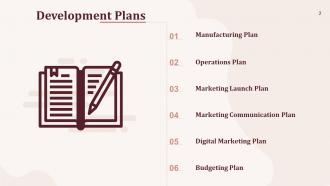
Slide 2: This slide showcases Development Plans Manufacturing Plan, Operations Plan, Marketing Launch Plan, Marketing Communication Plan, Digital Marketing Plan, Budgeting Plan.
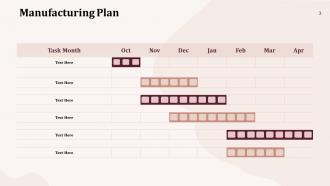
Slide 3: This slide shows Manufacturing Plan.
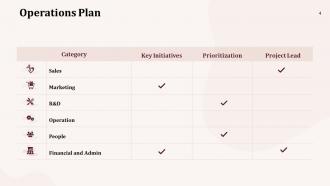
Slide 4: This slide describes Operations Plan.
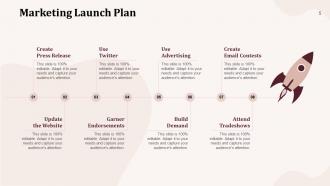
Slide 5: This slide represents Marketing Launch Plan.
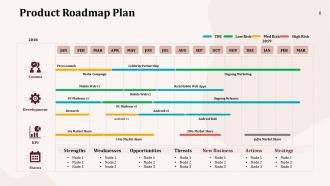
Slide 6: This slide showcases Product Roadmap Plan.
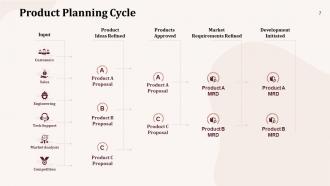
Slide 7: This slide depicts Product Planning Cycle with- Input, Customers, Engineering, Tech Support, Market Analysis, Competition, Sales, etc.
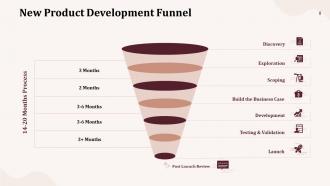
Slide 8: This slide describes New Product Development Funnel.
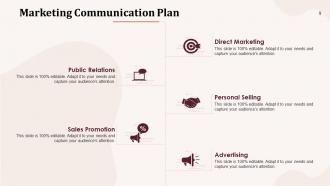
Slide 9: This slide showcases Marketing Communication Plan such as- Direct Marketing, Public Relations, Personal Selling, Advertising, Sales Promotion.
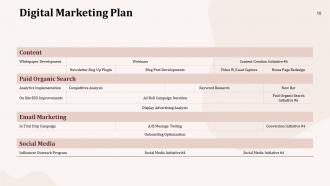
Slide 10: This slide showcases Digital Marketing Plan.
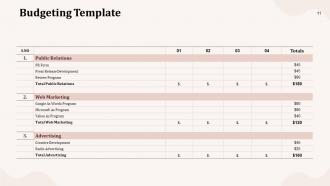
Slide 11: This slide represents Budgeting Template.
Slide 12: This is New Product Development Scheme Icons Slide.
Slide 13: This slide is titled as Additional Slides for moving forward.
Slide 14: This slide represents Stacked Column with- Sales in Percentage(%)
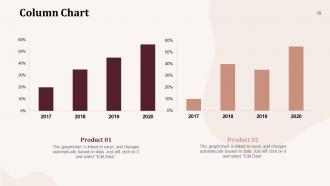
Slide 15: This slide shows Column Chart with product comparisons.
Slide 16: This is About Us slide to showcase Company specifications.
Slide 17: This is Our Team slide with Names and Designations.
Slide 18: This slide shows Vision, Goal and Mission.
Slide 19: This is Financial slide.
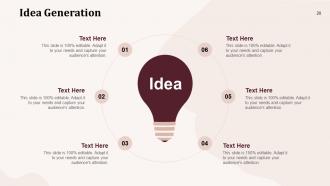
Slide 20: This is Idea Generation slide to highlight important information.
Slide 21: This is Puzzle slide.
Slide 22: This is Thank You slide with Address, Contact Number and Email address.
New Product Development Scheme Powerpoint Presentation Slides with all 22 slides:
Enhance employee education with our New Product Development Scheme Powerpoint Presentation Slides. Get them all fit for the future.









FAQs for New Product Development Scheme
The key stages in new product development include idea generation, concept development, market research, product design, prototyping, testing, and commercialization. These stages enable organizations to systematically transform innovative concepts into market-ready products by validating customer needs, refining functionality, and minimizing risks, with companies across industries finding that structured processes ultimately deliver faster time-to-market and competitive advantage.
Market research informs new product development strategy by identifying customer needs, analyzing competitor offerings, and validating market demand before significant investment. Through surveys, focus groups, and data analytics, companies like tech startups and consumer goods manufacturers can minimize development risks, optimize product features, and accelerate time-to-market, ultimately delivering solutions that resonate with target audiences.
Customer feedback plays a crucial role in validating market demand, identifying feature gaps, refining functionality, and reducing development risks before launch. Through surveys, focus groups, and beta testing, companies like tech startups and consumer goods manufacturers can iterate designs, prioritize features, and enhance user experience, ultimately delivering products that better meet customer needs and achieve stronger market adoption.
Companies effectively manage risks during new product development through comprehensive market research, iterative prototyping, cross-functional collaboration, and staged gate processes that allow for early course corrections. These strategic approaches enable organizations to identify potential issues before costly production phases, with many technology and consumer goods companies finding that systematic risk assessment ultimately reduces development costs while accelerating time-to-market and enhancing competitive positioning.
Key metrics for measuring new product launch success include market penetration rates, customer acquisition costs, revenue growth, customer satisfaction scores, and time-to-profitability benchmarks. These indicators work together to provide comprehensive performance insights, with many organizations finding that tracking both financial metrics like sales velocity and operational metrics like customer retention rates ultimately delivers clearer visibility into long-term viability and competitive positioning.
Cross-functional teams contribute to successful product development by combining diverse expertise, accelerating decision-making, and reducing development cycles through integrated collaboration. These teams streamline communication between engineering, marketing, design, and operations, enabling faster iterations, better market alignment, and reduced time-to-market, with many organizations finding that this collaborative approach ultimately delivers more innovative products and stronger competitive advantage.
Common challenges in new product development include market uncertainty, resource constraints, technical complexities, timeline pressures, and cross-functional coordination difficulties. These obstacles often result in budget overruns, delayed launches, and misaligned product-market fit, with many organizations finding that inadequate market research and poor communication between teams ultimately compromise competitive positioning and revenue potential.
Prototyping is crucial in new product development, enabling teams to test concepts, identify design flaws, gather user feedback, and refine functionality before full-scale production. Through rapid prototyping technologies, companies across manufacturing, tech, and consumer goods can reduce development costs, accelerate time-to-market, and minimize risks, ultimately delivering products that better meet customer needs and expectations.
Strategies include cross-functional collaboration, design thinking workshops, rapid prototyping, customer co-creation sessions, and dedicated innovation time allocation. These approaches enhance creativity by encouraging diverse perspectives, accelerating experimentation cycles, and integrating market feedback early, with many organizations finding that structured innovation processes ultimately deliver faster time-to-market and competitive differentiation.
Organizations leverage agile methodologies in new product development through iterative sprints, cross-functional collaboration, continuous customer feedback integration, and rapid prototyping cycles. These approaches enable faster time-to-market, reduced development costs, and enhanced product-market fit, with many companies finding that agile frameworks deliver significantly improved innovation outcomes and competitive responsiveness.
Competitive analysis significantly impacts product development by identifying market gaps, revealing consumer preferences, and highlighting differentiation opportunities that guide feature prioritization and positioning strategies. Through comprehensive competitor research, organizations can avoid saturated markets, capitalize on unmet customer needs, and accelerate time-to-market, ultimately delivering products with stronger competitive advantage and higher success rates.
Effective branding and marketing strategies enhance new product acceptance by creating compelling value propositions, building market awareness through targeted campaigns, and establishing emotional connections with target audiences. Through strategic positioning and consistent messaging, companies accelerate market penetration, reduce customer acquisition costs, and achieve faster adoption rates, with many organizations finding that integrated branding approaches ultimately deliver stronger competitive differentiation and sustained market success.
Technologies shaping new product development include artificial intelligence for market analysis, 3D printing for rapid prototyping, IoT for real-time product testing, virtual reality for design visualization, and machine learning for consumer behavior prediction. These innovations streamline development cycles by reducing time-to-market, minimizing prototyping costs, and enhancing customer feedback integration, with manufacturing companies finding faster iteration and competitive advantage.
Sustainability considerations influence new product design by driving material selection toward eco-friendly alternatives, optimizing energy efficiency throughout product lifecycles, and minimizing waste during manufacturing processes. These approaches enable companies to reduce environmental impact while meeting consumer demand for responsible products, with many organizations in automotive, electronics, and consumer goods finding that sustainable design ultimately delivers cost savings and competitive differentiation.
Best practices for A/B testing during product development include defining clear hypotheses, testing single variables, ensuring adequate sample sizes, running tests for sufficient duration, and establishing statistical significance thresholds. These methodologies streamline decision-making by reducing guesswork, validating user preferences, and optimizing features before full launch, with many tech companies and e-commerce platforms finding that systematic testing delivers higher conversion rates and enhanced user experiences.
No Reviews