


Next Year Strategic Sales Plan




Try Before you Buy Download Free Sample Product
 Impress Your
 Audience
 100%
100% Editable
 Save Hours
 of Time


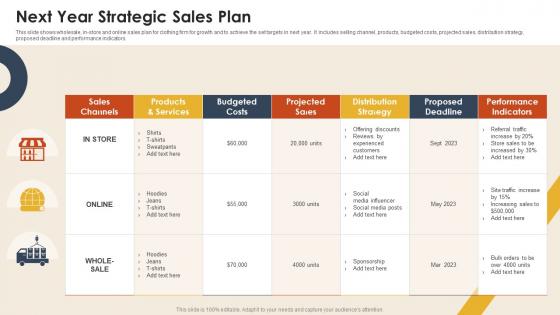
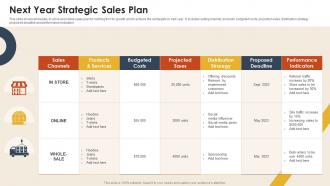
This slide shows wholesale, in-store and online sales plan for clothing firm for growth and to achieve the set targets in next year. It includes selling channel, products, budgeted costs, projected sales, distribution strategy, proposed deadline and performance indicators.
People who downloaded this PowerPoint presentation also viewed the following :
Next Year Strategic Sales Plan with all 6 slides:
Use our Next Year Strategic Sales Plan to effectively help you save your valuable time. They are readymade to fit into any presentation structure.





FAQs for Next Year
Look, you need four things for a sales plan that actually works. Start with your ideal customer profile - seriously, nail this first because everything else depends on it. Then set clear revenue targets with realistic deadlines (don't be overly optimistic here). Map out your entire sales process step by step, like what happens at each stage. Finally, figure out your specific tactics for finding leads, nurturing them, and closing deals. Most people totally bomb this because they skip researching their market and just... hope for the best? That's where plans usually fall apart.
Honestly, you can't just wing your sales strategy without watching market trends. They show you where demand's going and what actually matters to customers right now. I made that mistake once - total disaster. Spot trends early and you'll know when to switch up your messaging or target new segments. Like if everyone suddenly cares about sustainability, your team better start talking about eco-friendly features. Short bursts work better than long pitches sometimes. Check market data every quarter and adjust as needed. Sounds boring but it's literally how you stay relevant instead of chasing deals that don't exist anymore.
Look, customer segmentation is honestly what makes or breaks your whole sales game. You can't pitch a Fortune 500 company the same way you'd talk to some startup working out of a garage - that's just common sense. Break your market into maybe 3-4 solid groups based on size, industry, whatever their main headaches are. Then figure out what each segment actually gives a damn about. Your messaging gets way more targeted, you stop wasting time on dead-end prospects, and resources go where they'll actually pay off. I've seen too many people skip this step and wonder why their conversion rates suck.
Honestly, forecasting is like having a GPS for your sales strategy instead of just hoping you'll find your destination. Look at your historical data first - that's where the gold is. You can actually set targets that make sense and figure out which products or segments will bring in real money. Way too many sales teams just go with their gut and then wonder why they missed their numbers (been there, seen that disaster). It helps you spot problems early too. Plus your whole team stays on the same page about what you're trying to hit. Don't spread yourself thin - focus where the data shows you'll win.
Honestly, you need both the forward-looking stuff and the results. Track conversion rates at each stage, average deal size, how long deals take to close. Pipeline velocity is huge too. Customer acquisition cost vs lifetime value - that's the money shot right there. Shows if you're actually making this profitable. Activity metrics matter more than people think... calls made, meetings booked, all that predicts what's coming. Win/loss rates by competitor can tell you where your pitch is falling flat. Pick maybe 4-5 key ones to check weekly and build your dashboards around those. Don't go overboard with too many metrics at first.
Your sales plan needs to actually match what your company's trying to do - sounds obvious but you'd be surprised how often it doesn't happen. Like if you're expanding into new markets, focus your reps on those areas instead of just going after easy wins in existing territory. Want better customer lifetime value? Then prioritize upselling over chasing random new deals. I've watched teams hit their numbers but completely miss the bigger picture. Pretty frustrating honestly. The trick is connecting your daily sales stuff to real business outcomes, not just revenue targets. Quick gut check: look at your company's goals and see if your sales strategy would actually drive those results.
Look at your past performance first - what actually happened vs what you hoped for? That data tells the real story. Break those big annual numbers into smaller monthly chunks so they don't feel crushing. I swear, nothing kills motivation faster than setting impossible "stretch goals" that nobody believes in. Consider your team's bandwidth and what's happening in the market too. Oh, and try the 80% rule - basically set targets your team could realistically hit 8 times out of 10 with decent execution. You want goals that push people but won't make them want to quit when Q1 numbers come in.
Honestly, you gotta start sharing your pipeline data and what customers are actually saying. Marketing needs that feedback - like what objections keep coming up, which content pieces actually work when you're trying to close. I used to think it was just busy work but it really does make a difference. Weekly check-ins help too, where you can talk through lead quality and work on those follow-up sequences together. Oh and don't let it be one-sided - they shouldn't just dump content on you without hearing what's working in the field.
Start with a good CRM - Salesforce or HubSpot are solid choices. They'll handle your lead tracking and automate follow-ups so you don't lose deals. For prospecting, ZoomInfo and LinkedIn Sales Navigator are pretty clutch for finding contacts and connections. Oh, and PandaDoc is great for proposals if you're tired of wrestling with Word docs. There's honestly a crazy amount of sales software out there now. Analytics tools help too, but don't go overboard initially. Pick your CRM first, then add other stuff as you figure out what's actually slowing you down.
Okay so first thing - figure out what they're actually doing better. Better prices? Features you don't have? Just executing way cleaner than you? Most companies freak out and immediately slash prices, which honestly just kills your margins for no reason. Bad move. Instead, play to your strengths - what makes you different that they can't copy easily? Sometimes you fight them head-on, sometimes you just... don't. Pick your battles strategically. Like, maybe cede the budget market but own the premium space, you know? Start by stalking your top 3 competitors this week and see what they're actually up to.
Honestly, the worst thing you can do is set targets that are completely unrealistic - kills morale instantly. Also, don't be vague about who you're actually selling to. I swear half the sales plans I see basically target "anyone breathing" which helps nobody. Your forecasting needs to match your actual sales cycle too, not some fantasy timeline. Oh, and stop obsessing over new leads when you've got warm prospects just sitting there. The thing that really gets me though? Teams that create these plans in isolation without talking to their reps. Those are the people actually having conversations with customers every day. Start with auditing what's already in your pipeline first.
So feedback loops are game-changers for sales - you're constantly adjusting instead of wondering why nothing's working after three months. Collect info from your team and customers, then actually use it to tweak your approach. It's like having GPS for your strategy, always finding better routes. I'd set up monthly reviews where you dig into what's bombing and what's crushing it. The key is making real changes, not just talking about problems. Your team will thank you for actually listening to their input instead of ignoring it.
Honestly, training makes or breaks everything. Your strategy can look amazing on paper, but if your team doesn't get the new processes or messaging? Total disaster. I've watched this happen so many times it's not even funny. Start by figuring out what skills your reps are actually missing - maybe they're struggling with consultative selling or they have no clue how to use CRM data properly. Then build training around those gaps. Without it, you'll have everyone doing their own thing instead of working toward the same goals. It's really that simple.
Dude, forget the boring feature lists - nobody cares. Tell stories instead. Find a customer who dealt with the exact same mess your prospect is facing. Same industry ideally, same headaches. Walk them through what happened: the problem, what you actually did to fix it, and the real numbers afterward. People totally zone out during pitch mode, but they actually listen when you're just telling a story. I swear it works every time. Make sure they're thinking "oh shit, that's literally us" by the end. Then just connect it back to their situation and you're golden.
Dude, pricing is huge for sales - like, way more than people think. Price too high and your reps burn through leads crazy fast. Too low? You're basically teaching customers your stuff isn't worth much. I've watched sales teams struggle for months when really their pricing was just off. It messes with everything - conversion rates, how long deals take, even which prospects are worth chasing. Oh and definitely dig into your win/loss data around pricing pushback. You'll probably find some obvious patterns you can fix right away.
-
“Ample and amazing variety of templates available, really helpful for making professional PPT for day to day workings.”
-
Use of different colors is good. It's simple and attractive.