


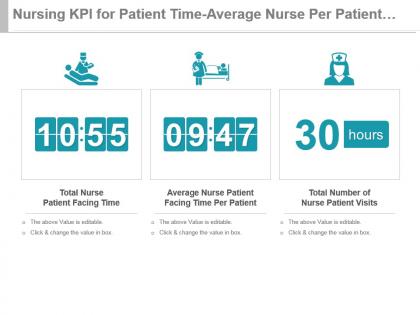
Nursing kpi for patient time average nurse per patient total visits presentation slide




Try Before you Buy Download Free Sample Product
 Impress Your
 Audience
 100%
100% Editable
 Save Hours
 of Time


Acquaint folks with aspects that call for immediate actions with our Nursing Kpi For Patient Time Average Nurse Per Patient Total Visits Presentation Slide. Identify the enemy at the gates.
People who downloaded this PowerPoint presentation also viewed the following :
Nursing kpi for patient time average nurse per patient total visits presentation slide with all 6 slides:
Counsel journalists with our Nursing Kpi For Patient Time Average Nurse Per Patient Total Visits Presentation Slide. Advise them about figuring out fact from fiction.





FAQs for Nursing kpi for patient time average nurse per patient total
Patient satisfaction and nurse-to-patient ratios are definitely your starting point. Medication errors and fall rates too - those will get leadership's attention fast. Hospital-acquired infections are honestly the big one everyone freaks out about, so you'll want that tracked. Staff turnover really matters because burned-out nurses = terrible patient care (and your budget gets wrecked). Call light response times are good to watch if you can swing it. Oh, and 30-day readmissions - insurance companies hate those. Start with maybe 3 that actually matter to your specific unit first. You don't want to drown in data right away.
Figure out what your hospital's leadership actually loses sleep over - patient satisfaction scores, readmission rates, whatever their current obsession is. Map your nursing KPIs straight to those priorities. Like if they're panicking about readmissions, track discharge education completion or follow-up calls instead of boring generic stuff. Honestly, half the battle is just speaking their language. Grab your manager and literally connect the dots between what you're measuring and what the C-suite cares about. When budget time rolls around, you'll sound way more strategic than just throwing around random nursing metrics.
So patient outcomes are really the whole point of nursing KPIs, right? You're looking at stuff like infection rates, how often people get readmitted, patient satisfaction, med errors - the real deal. These numbers actually show if your nursing care is working or needs work. Honestly, tracking processes is fine but if patients aren't getting better, you're missing something. The trick is choosing KPIs that clearly connect to patient results. That way when you're staring at those dashboards (ugh, so many dashboards), you can see your team's real impact on people's health.
Honestly, the automation piece is huge - dashboards pull everything straight from your EHRs so you're not digging through charts anymore. Instant alerts pop up when things like patient satisfaction dip below your targets. Predictive stuff catches problems early too, which saves headaches later. Your team can update metrics through mobile apps right on the floor (way better than going back to a computer every time). Everything syncs automatically, so way less number crunching. I'd start by figuring out which metrics currently eat up most of your time tracking manually.
First things first - dig into what's actually causing the problem with your KPIs. I'd set up weekly check-ins with your team to go over the numbers and get their ideas (trust me, if they're not on board, nothing's gonna work). Look at training gaps, maybe shuffle staffing around if that makes sense. Oh and definitely create some standard processes so everyone's doing things the same way. Don't try fixing everything at once though - pick one or two KPIs max. Check progress weekly and make sure to celebrate the small wins. Keeps people motivated.
Honestly, it's pretty obvious when you think about it - fewer nurses means everything goes to hell. Response times get longer because everyone's running around like crazy. Patients feel ignored, which tanks satisfaction scores. Safety stuff like falls and med errors go up too since nobody has time to double-check anything. I've seen it happen so many times when management decides to "optimize" staffing (aka cut costs). When you actually have enough people on the floor, nurses can spend real time with patients and catch problems before they blow up. You should definitely track your nurse-to-patient ratios next to those other metrics - makes it way easier to show leadership why staffing matters.
Start with the scary stuff - unplanned extubations, catheter infections, pressure ulcers, med errors. That's your bread and butter for patient safety. The data's gonna feel like drinking from a fire hose initially, but those are non-negotiables. Operational stuff comes next: nurse ratios, length of stay, 48-hour readmissions. Staff metrics matter too since burned-out nurses = worse outcomes. Track turnover and overtime hours religiously. Pick maybe 5-7 core things and actually stick with them. I've seen too many units try monitoring everything and end up tracking nothing well.
Honestly? Monthly reviews work best for the day-to-day stuff - patient satisfaction, staffing ratios, things that can change fast. Quarterly makes more sense for bigger metrics like readmission rates since they need time to show real patterns. I've watched teams burn themselves out trying to review every single KPI monthly (total waste of energy). Your frontline numbers need quick attention so you can fix problems early. The strategic stuff though - like annual patient safety goals - those can wait for yearly check-ins. Start with maybe 3-5 key metrics monthly and adjust from there.
First thing - join NDNQI or Press Ganey for solid benchmarking data. Just make sure you're comparing similar facilities (same bed size, acuity levels, unit types). Otherwise it's pointless, honestly. Pick maybe 3-5 key metrics like fall rates, pressure injuries, patient satisfaction - don't go crazy trying to benchmark everything at once. Get quarterly reports and track trends over time instead of obsessing over single months. Oh, and set up regular leadership reviews to actually discuss what the numbers mean and make action plans when you're lagging behind benchmarks.
Look, solid nursing education makes a huge difference in hitting your KPIs. Your staff gets way better at evidence-based care, infection control, med safety - all that stuff that directly impacts patient satisfaction and readmission rates. Confidence goes up too, which honestly shows in how they communicate with patients. The trick is connecting your training to whatever metrics you're actually tracking. Don't just do random continuing ed because you have to. I've seen places where targeted education cuts medication errors by like 30%. Make it relevant to what you're measuring and you'll see real results pretty fast.
Track your medication error KPIs monthly - they're honestly game-changers for catching patterns early. Look at near-miss reports, error rates by shift, and how well staff follow double-check protocols. The data will show you exactly where things go wrong. Shift changes are usually a hot spot (no surprise there), plus certain high-risk meds tend to cause more issues. Once you see the trends, you can actually focus your training where it matters most instead of just doing generic safety talks that nobody remembers anyway.
Ugh, staffing shortages are the worst - you're constantly stretched thin. Then there's all the charting that just eats up your time when you'd rather be with patients. Time management becomes everything, honestly. Talk to your team about what's actually realistic instead of just nodding along to impossible targets. Delegate what you can and don't feel guilty about it. Also, figure out which metrics are hitting your unit the hardest first. Work with management on real solutions instead of just accepting the chaos. I know it sounds obvious but streamlining your documentation process saves more time than you'd think.
So the trick with nursing KPIs is picking metrics that actually resonate with your staff. Track stuff they care about - patient outcomes they influence, whether workloads are fair, growth opportunities. When nurses see their hard work reflected in better patient satisfaction or fewer readmissions, honestly it makes such a difference in morale. Share those numbers openly and celebrate the wins as a team. Oh, and definitely track retention indicators like career advancement and work-life balance metrics - then actually do something with that data. I've watched teams transform when they felt heard through the right measurements. It's pretty amazing what happens when people see their impact quantified.
So patient-to-nurse ratios are basically the backbone of all your nursing KPIs - they affect everything else you're measuring. High ratios? You'll see it show up in patient satisfaction, med errors, readmissions, the whole nine yards. Response times get longer, more falls happen, and your staff burnout numbers just explode. Honestly, I've seen units where the ratio goes up and suddenly every metric tanks. Use your ratios to predict what other KPIs might do. Track them together so you can spot the patterns and actually have data when you're fighting for better staffing.
Look, your floor nurses are gonna give you the real deal on whether those KPIs actually make sense. They're the ones living it every shift while you're looking at spreadsheets. Like, they'll tell you straight up if your patient satisfaction scores are missing obvious safety red flags, or if those staffing numbers don't factor in how sick patients actually are. I've seen metrics that look perfect on paper but are completely useless in reality. Monthly check-ins with your floor staff will save you from chasing meaningless data. Trust me, they'll catch the blind spots you're missing from your office.
-
Wonderful templates design to use in business meetings.
-
Excellent Designs.