


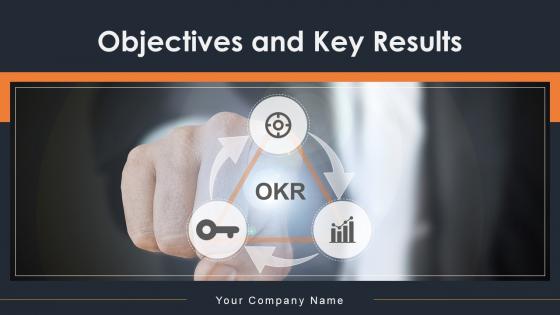
Objectives And Key Results Powerpoint Ppt Template Bundles




Try Before you Buy Download Free Sample Product
 Impress Your
 Audience
 100%
100% Editable
 Save Hours
 of Time


Our Objectives And Key Results Powerpoint Ppt Template Bundles are topically designed to provide an attractive backdrop to any subject. Use them to look like a presentation pro.
People who downloaded this PowerPoint presentation also viewed the following :
Objectives And Key Results Powerpoint Ppt Template Bundles with all 19 slides:
Use our Objectives And Key Results Powerpoint Ppt Template Bundles to effectively help you save your valuable time. They are readymade to fit into any presentation structure.









FAQs for Objectives And Key Results Powerpoint
Common implementation challenges include unclear objective setting, lack of leadership alignment, insufficient employee training, poor progress tracking systems, and resistance to cultural change. Organizations often struggle with balancing ambitious goals against realistic targets, while many companies find that successful OKR adoption requires consistent communication, regular check-ins, and gradual organizational buy-in to ultimately deliver enhanced focus and measurable performance improvements.
Teams effectively align individual goals with organizational OKRs by cascading objectives from company level to department and individual levels, ensuring transparent communication of strategic priorities, and establishing regular check-ins to track progress. Through quarterly alignment sessions and collaborative goal-setting workshops, organizations streamline accountability, enhance cross-functional coordination, and deliver measurable outcomes, with many teams finding that this structured approach ultimately drives both personal growth and collective success.
Best practices for setting Key Results include making them specific and quantifiable, time-bound with clear deadlines, ambitious yet achievable, and directly linked to strategic objectives. Organizations across sectors like retail, healthcare, and financial services find that effective Key Results focus on outcomes rather than activities, use concrete metrics such as revenue growth or customer satisfaction scores, and maintain quarterly review cycles, ultimately enabling teams to track progress transparently while driving meaningful business impact.
Organizations should review OKRs quarterly for formal updates while conducting monthly check-ins to track progress and address emerging challenges or opportunities. This cadence enables teams to maintain alignment with strategic priorities, respond to market changes, and course-correct when necessary, while avoiding the disruption of overly frequent revisions, ultimately ensuring OKRs remain relevant and actionable throughout dynamic business cycles.
Company culture plays a pivotal role in OKR adoption by fostering transparency, accountability, and alignment across organizational levels. Organizations with collaborative cultures, open communication, and growth mindsets find that OKRs enhance team coordination, strategic focus, and performance measurement, while cultures resistant to change may struggle with the transparency and regular check-ins that effective OKR implementation requires.
OKRs integrate with existing performance management systems by aligning quarterly objectives with annual performance reviews, connecting key results to individual KPIs, and synchronizing goal-setting cycles across departments. Many organizations find that combining OKRs with traditional appraisal systems creates comprehensive performance visibility, while maintaining separate cadences for strategic planning and employee development, ultimately delivering enhanced accountability and clearer career progression pathways.
OKR tracking tools include Weekdone, 15Five, Lattice, Monday.com, and Asana, which streamline goal management through automated progress updates, real-time dashboards, and integrated reporting features. These platforms enhance organizational alignment by enabling transparent progress visibility, facilitating regular check-ins, and delivering comprehensive analytics, with many companies finding that centralized OKR management significantly improves team accountability and strategic execution.
Organizations can ensure ambitious yet achievable OKRs by setting stretch goals with 70-80% confidence levels, establishing clear measurement criteria, and aligning objectives with available resources and capabilities. Through regular quarterly reviews and cross-functional collaboration, companies like Google and Intel balance aspiration with realism, enabling teams to push boundaries while maintaining accountability, ultimately delivering sustainable growth and measurable progress toward strategic priorities.
Effective OKR communication strategies include cascading workshops, visual dashboards, regular town halls, cross-functional alignment sessions, and transparent progress tracking systems. These approaches streamline organizational clarity by establishing clear connections between individual contributions and company objectives, enabling consistent messaging across departments, and fostering accountability, with many organizations finding that combining multiple communication channels ultimately delivers enhanced engagement and strategic alignment.
OKRs integrate seamlessly with Agile methodologies by providing strategic direction for sprint planning, feature prioritization, and iterative development cycles. This combination enables development teams to align daily standups, sprint reviews, and retrospectives with broader business objectives, while maintaining Agile's flexibility and responsiveness, ultimately delivering both tactical execution and strategic value.
Leadership can foster OKR accountability by establishing clear ownership through individual goal alignment, conducting regular check-ins and progress reviews, creating transparent tracking systems, and implementing peer accountability mechanisms. Through consistent feedback loops and recognition programs, leaders enable teams to take ownership of their objectives while providing necessary support, ultimately delivering enhanced performance and stronger organizational alignment with strategic priorities.
Google transformed from a startup to tech giant using OKRs to align teams and drive ambitious goals, while Intel pioneered the framework to enhance focus and accountability across departments. Companies like LinkedIn, Spotify, and Adobe have leveraged OKRs to streamline strategic execution, improve cross-functional collaboration, and accelerate growth, with many organizations finding that this goal-setting methodology delivers measurable performance improvements and competitive advantage.
Feedback loops enhance OKR processes through regular check-ins, transparent progress dashboards, cross-functional reviews, and structured retrospectives that identify both achievements and obstacles. These mechanisms enable teams to course-correct quarterly objectives, share insights across departments, and refine goal-setting methodologies, with many organizations finding that consistent feedback cycles ultimately deliver improved alignment, faster problem-solving, and enhanced team accountability.
Key Results benefit from both quantitative measures, which provide clear numerical targets and progress tracking, and qualitative measures, which capture nuanced outcomes like customer satisfaction or team engagement. While quantitative metrics deliver precise accountability and measurable progress, qualitative indicators enable organizations to assess strategic impact and cultural shifts, ultimately ensuring comprehensive performance evaluation across diverse business objectives.
Organizations balance short-term objectives and long-term goals in OKRs by creating cascading timeframes, with quarterly objectives supporting annual strategic outcomes, multi-year vision alignment, and progress milestones that connect immediate actions to broader aspirations. This strategic layering enables companies across sectors like technology and retail to maintain operational focus while building sustainable competitive advantage, ultimately delivering both immediate results and long-term organizational growth.
-
Enough space for editing and adding your own content.
-
Informative design.