

Online shopping process powerpoint slide graphics




Try Before you Buy Download Free Sample Product
 Impress Your
 Audience
 100%
100% Editable
 Save Hours
 of Time


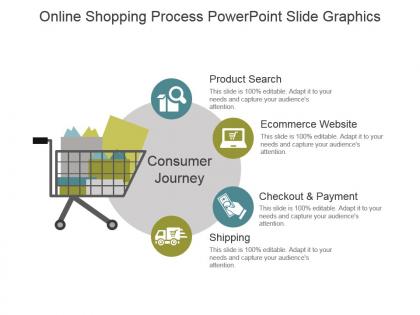
This readymade online shopping process PowerPoint slide graphics will prove to be an essential tool for your customer related presentations. The online customer journey PPT template helps you understand various phases of consumer journey and thus assists you in identifying their behavior. Through this illustration you can create presentations on internet shopping procedure, e-commerce, shopping process flow, online transaction, online retailing, digital customer journey, consumer journey map, online shopping experience, and many other related topics. The design includes a shopping cart with icons in a circular manner. The various stages of the process are product search, ecommerce website, checkout & payment, and shipping. You can edit the text as well as the visual elements according to your needs. You can even use the icons provided on the last slide. Download online shopping process presentation slide to make the buying experience seamless for your customers. Encourage everyone to function carefully with our Online Shopping Process Powerpoint Slide Graphics. They help keep casualties at bay.
People who downloaded this PowerPoint presentation also viewed the following :
Online shopping process powerpoint slide graphics with all 5 slides:
Get the crowd behind you with our Online Shopping Process Powerpoint Slide Graphics. Big gatherings will not deter you.
FAQs for Online shopping process
Honestly, everyone's going mobile-first now - like, your site better work perfectly on phones or you're dead. AI personalization is everywhere too, showing people exactly what they want to buy. Instagram and TikTok selling is blowing up way faster than I expected. People can literally buy stuff without leaving the app. Sustainability isn't just trendy anymore, customers genuinely want eco-friendly packaging and ethical brands. Voice shopping through Alexa is growing but... meh, not as fast as they predicted. Dynamic pricing with AI though? That's where the real money is. Start with mobile optimization first, then add social shopping features if you can swing it.
Honestly, you gotta do what Amazon can't - get super personal with your customers. Pick one specific thing and become THE person everyone thinks of for it. Reply to emails fast with actual humans (crazy concept, right?). Small shops kill it when they build real communities around their stuff through Instagram or whatever. Plus you can change direction in like a week while Amazon takes months to do anything. Find your thing - maybe it's handmade quality or you know everything about vintage whatever - then go all in on that angle. The personalization thing is huge because people are tired of feeling like just another order number.
Honestly, social media has become like your main storefront these days. People discover products through posts and stories, then they'll check out reviews and user content before buying - that social proof thing is huge. What's crazy is you don't even need to leave Instagram or Facebook anymore to complete a purchase. They've got shopping features built right in. I'd definitely set up those shopping tools on your business profiles first. Then just stay consistent with posting your products. It's both marketing AND actual sales now, which is pretty smart when you think about it.
Dude, email campaigns and loyalty programs are total game-changers - we're talking 20-30% boost in repeat sales. Post-purchase stuff matters too. Follow-up emails, smooth returns, random discounts here and there. Most companies just ghost customers after they buy once, which is honestly insane when you think about how expensive it is to find new people. Oh, and abandoned cart emails are basically free money if you're not doing those yet. Segment your list by what people actually bought so you can hit them with stuff they'd want.
Honestly, data analytics is a game changer for tracking what customers actually do vs what they say they want. Start with Google Analytics - it's free and shows you conversion rates plus where people bail from their carts. Heat mapping tools are pretty cool too once you get the hang of basic stuff. Watch for products people browse but never buy, then test different prices or product descriptions. The seasonal trend thing is huge - I still cringe thinking about all that unsold winter inventory sitting around in summer. Focus on customer lifetime value and abandonment patterns. It's like having insider info on your own business.
Okay so the main things - make sure it works great on phones first. Buttons need to be big enough to actually tap, text you can read without squinting. Speed is huge too since everyone's super impatient on mobile. Compress your images and ditch unnecessary plugins. Put the search bar somewhere obvious and cut down checkout forms - nobody wants to fill out 20 fields on their phone. Oh and definitely add Apple Pay/Google Pay options. Here's the thing though - test on real devices, not just your browser's mobile view. Trust me, you'll find weird issues that way.
So basically, personalized marketing just makes people feel like you get them instead of spamming everyone with random stuff. Show them products based on what they've actually looked at before, or send emails about things they care about. I mean, nobody wants dog ads when they're clearly a cat person, you know? It cuts through all that noise and makes shopping way less overwhelming. Plus it speeds things up - they find what they want faster. Oh, and it's honestly just less annoying for everyone. Start simple though - maybe personalize email subject lines first or tweak your homepage based on what people bought before.
Dude, the shopping game is changing so fast right now. AI does all the personalized recommendations and those chatbots that actually don't suck anymore. AR is where it gets really cool though - people can try on clothes virtually or see if that couch fits their living room before buying. Honestly, some of the makeup try-on stuff is getting scary accurate. Voice shopping through Alexa is picking up steam too. Even blockchain's making supply chains less sketchy, which is random but whatever. If you're not testing at least one of these, your competitors probably are.
Dude, UX can totally make or break your online store. I've literally watched sites tank because their navigation was a mess - like 40% of sales just gone. Customers bail if they can't find stuff or if checkout's a nightmare. Most people shop on mobile now too, so that better work smoothly. You want dead simple product discovery and checkout that doesn't make people want to throw their phone. Oh, and test your own site first - if you're struggling to buy something, your customers definitely are. Good UX keeps people coming back instead of rage-quitting to Amazon.
Ugh, international shipping is such a pain at first. Customs delays will drive you crazy, plus shipping costs are brutal and every country has different rules. Currency stuff changes constantly too, and customers get confused about who pays duties. Here's what actually works though - stick with DHL or FedEx since they deal with all the paperwork headaches. Show shipping costs upfront with calculators so there's no surprises. Maybe try fulfillment centers in your biggest markets? Honestly just pick 2-3 countries to start instead of trying to conquer the world immediately.
Dude, start with the obvious stuff - secure checkout, clear return policy, and get those customer reviews visible everywhere. Professional product photos are huge too, nobody trusts blurry iPhone pics anymore. Be upfront about shipping times instead of being vague about it. Make your contact info super easy to find and actually respond fast when people email you. SSL certificates and trust badges are nice but honestly most customers don't even notice them. The real game-changer? Plaster genuine customer testimonials all over your homepage and product pages - that's what actually converts browsers into buyers.
Dude, your payment gateway can totally make or break sales. Customers will literally bounce if checkout feels sketchy or doesn't have their preferred method. You need PayPal, Apple Pay, Google Pay - the whole lineup basically. I've ditched so many purchases when sites force me to create accounts instead of letting me use quick options. Security badges help too since people get nervous entering card info. Oh, and make sure it works smoothly on mobile - that's where most shopping happens now anyway. Keep it simple and give options.
Dude, sustainability stuff is seriously driving sales now. Younger people especially will dig deep into a company's values before they buy anything - like they're doing detective work or something. Wild, right? They want eco-friendly packaging, carbon-neutral shipping, all that good stuff. But here's what's cool: these same customers will actually pay more for products that match their values. So if you're selling online, you gotta showcase your green efforts. It's not just nice PR anymore - people expect it and won't stick around without it.
Honestly, nail down who you're actually selling to first - like really dig into their problems and where they spend time online. Most people mess up by trying every channel at once, but pick one (maybe email or social) and get good at it before moving on. Your website better not suck though - I've seen so many businesses lose sales because their checkout process is a nightmare. Track what's working vs what just makes you feel busy. Oh, and don't forget about SEO and paid ads once you've got the basics down. The conversion stuff is huge too.
Honestly, subscriptions are pretty sweet for cash flow - you get that steady monthly money instead of scrambling for sales constantly. Way less stressful than the usual feast-or-famine thing. But here's the catch: losing subscribers stings like hell compared to losing random customers. You've gotta baby them more, keep them happy constantly. Regular sales are simpler in some ways - get the upfront cash, move on. Though I guess it depends what you're selling and how desperate you are for predictable income right now. Maybe try both? See what people actually want instead of guessing.
-
Qualitative and comprehensive slides.
-
Attractive design and informative presentation.