


Open RAN Alliance Powerpoint Presentation Slides





Try Before you Buy Download Free Sample Product
 Impress Your
 Audience
 100%
100% Editable
 Save Hours
 of Time


This Open RAN Alliance PowerPoint presentation offers an overview of the evolution of telecommunication networks, with a specific focus on the transition from 1G to 5G. The deck introduces the concept of Open RAN, including relevant terminology and its benefits. Furthermore, it explores the components and building blocks of Open RAN, highlighting its three main pillars and comparing them. The Open RAN technology PPT covers the operational aspects of Open RAN, including the reference architecture, functions, and framework, along with various aspects of Open RAN. In addition, the presentation addresses the importance of security in Open RAN standards, the O-RAN risk-based approach to cybersecurity, and the role of artificial intelligence and machine learning. The template explores the current status, organizations involved, challenges, limitations, and the relationship between Open RAN technology and Open RAN 5G. This template is 100 percent editable and compatible with Google Slides for easy customization.
People who downloaded this PowerPoint presentation also viewed the following :
Content of this Powerpoint Presentation
Slide 1: This slide displays the title Open RAN Alliance.
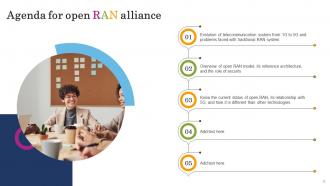
Slide 2: This slide displays the title Agenda for open RAN.
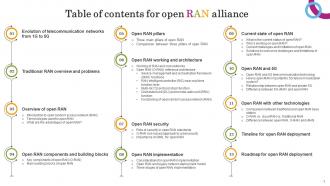
Slide 3: This slide exhibit table of content.
Slide 4: This slide exhibit table of content- Evolution of telecommunication networks from 1G to 5G
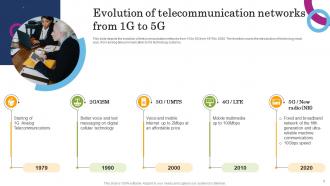
Slide 5: This slide depicts the evolution of telecommunication networks from 1G to 5G from 1979 to 2020.
Slide 6: This slide exhibit table of content- Traditional RAN overview and problems.
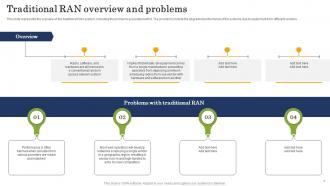
Slide 7: This slide represents the overview of the traditional RAN system, including the problems associated with it.
Slide 8: This slide exhibit table of content- Overview of open RAN.
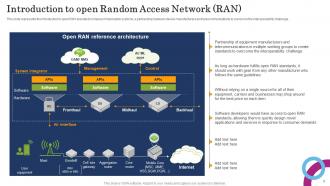
Slide 9: This slide represents the introduction to open RAN standards in telecommunication systems.
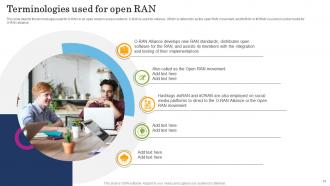
Slide 10: This slide depicts the terminologies used for O-RAN in an open random access network.
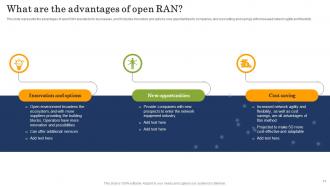
Slide 11: This slide represents the advantages of open RAN standards for businesses.
Slide 12: This slide exhibit table of content- Open RAN components and building blocks.
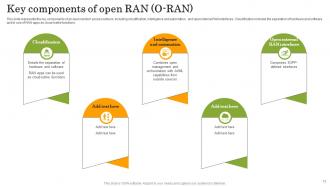
Slide 13: This slide represents the key components of an open random access network.
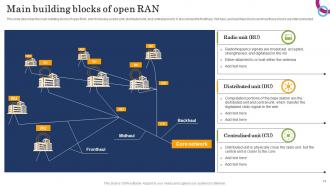
Slide 14: This slide describes the main building blocks of open RAN, and it includes a radio unit, distributed unit, and centralized unit.
Slide 15: This slide exhibit table of content- Open RAN pillars
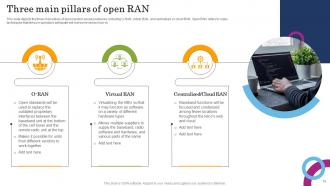
Slide 16: This slide depicts the three main pillars of open random access networks, including O-RAN, virtual RAN, and centralized or cloud RAN.
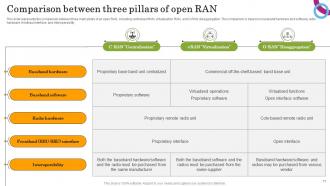
Slide 17: This slide represents the comparison between three main pillars of an open RAN, including centralized RAN, virtualization RAN, and O-RAN disaggregation.
Slide 18: This slide exhibit table of content- Working of RAN and core networks
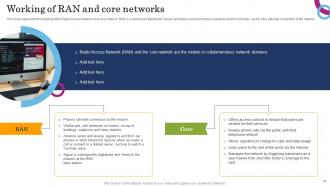
Slide 19: This slide represents the working of the Radio Access Network and core network.
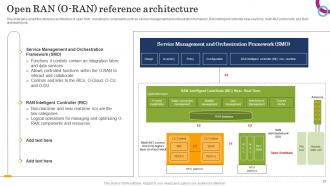
Slide 20: This slide talks about the reference architecture of open RAN.
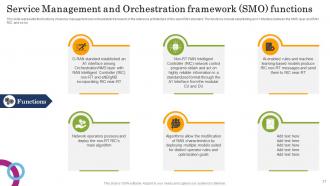
Slide 21: This slide represents the functions of service management and orchestration framework in the reference architecture of the open RAN standard.
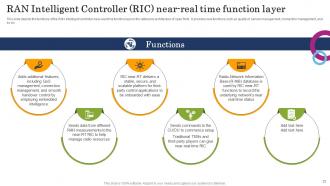
Slide 22: This slide depicts the functions of the RAN intelligent controller near-real time function layer in the reference architecture of open RAN.
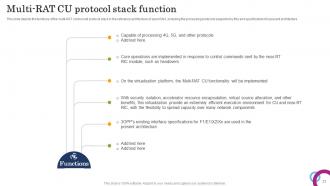
Slide 23: This slide depicts the functions of the multi-RAT control unit protocol stack in the reference architecture of open RAN.
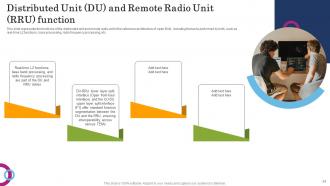
Slide 24: This slide represents the functions of the distributed unit and remote radio unit in the reference architecture of open RAN.
Slide 25: This slide represents the functioning of an open random access network.
Slide 26: This slide exhibit table of content- Open RAN security.
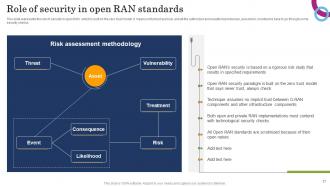
Slide 27: This slide represents the role of security in open RAN, which is built on the zero trust model.
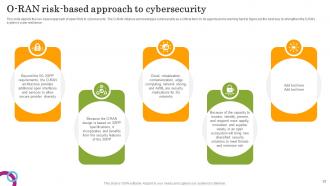
Slide 28: This slide depicts the risk-based approach of open RAN to cybersecurity.
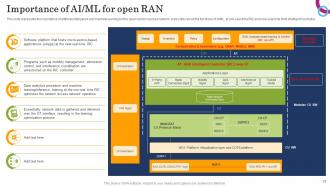
Slide 29: This slide represents the importance of artificial intelligence and machine learning for the open random access network.
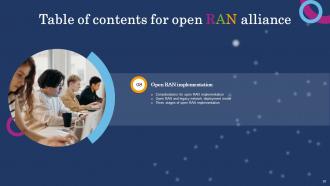
Slide 30: This slide exhibit table of content- Open RAN implementation.
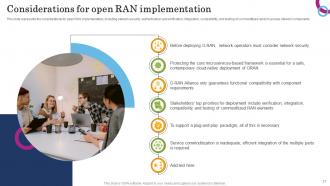
Slide 31: This slide represents the considerations for open RAN implementation.
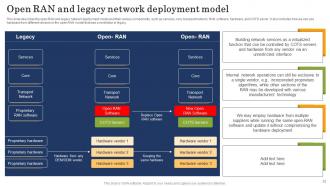
Slide 32: This slide describes the open RAN and legacy network deployment model and their various components.
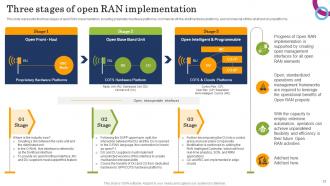
Slide 33: This slide represents the three stages of open RAN implementation.
Slide 34: This slide exhibit table of content- Current state of open RAN.
Slide 35: This slide talks about the current status of open random access networks.
Slide 36: This slide outlines the organizations or groups working on open RAN.
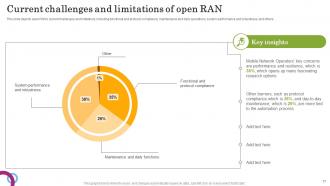
Slide 37: This slide depicts open RAN's current challenges and limitations.
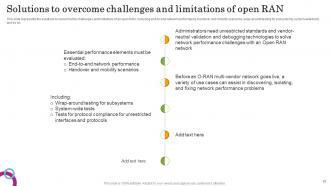
Slide 38: This slide represents the solutions to overcome the challenges and limitations of an open RAN.
Slide 39: This slide exhibit table of content- Open RAN and 5G.
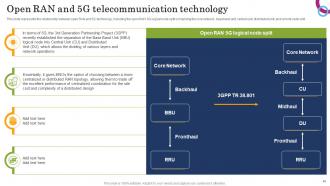
Slide 40: This slide represents the relationship between open RAN and 5G technology.
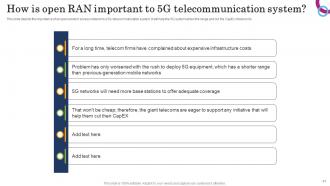
Slide 41: This slide depicts the importance of an open random access network to a 5G telecommunication system.
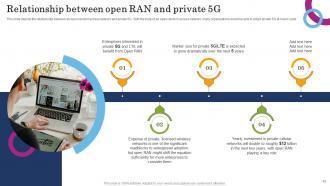
Slide 42: This slide depicts the relationship between an open random access network and private 5G.
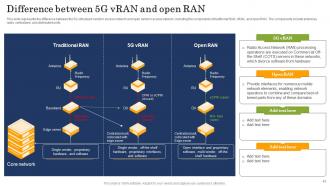
Slide 43: This slide represents the difference between the 5G virtualized random access network and open random access network.
Slide 44: This slide exhibit table of content- Open RAN with other technologies.
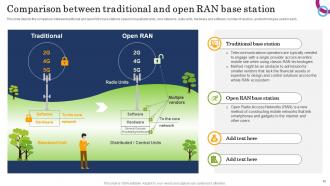
Slide 45: This slide depicts the comparison between traditional and open RAN base stations.
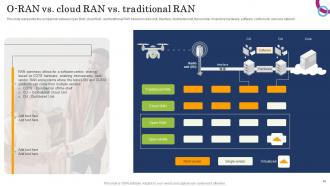
Slide 46: This slide represents the comparison between open RAN, cloud RAN, and traditional RAN based on radio unit, interface, distributed unit, the number of vendors hardware, software, control unit, and core network.
Slide 47: This slide represents the difference between open RAN, O-RAN, and vRAN.
Slide 48: This slide exhibit table of content- Timeline for open RAN deployment.
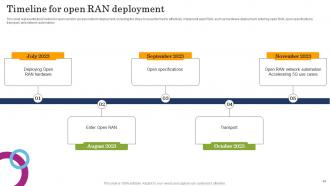
Slide 49: This slide represents the timeline for open random access network deployment.
Slide 50: This slide exhibit table of content- Roadmap for open RAN deployment.
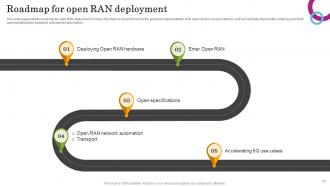
Slide 51: This slide represents the roadmap for open RAN deployment.
Slide 52: This is the icons slide.
Slide 53: This slide presents title for additional slides.
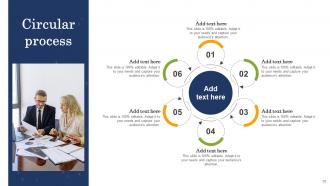
Slide 54: This slide presents Circular process.
Slide 55: This slide presents Area chart for different products.
Slide 56: This slide display Venn diagram.
Slide 57: This slide shows puzzle for displaying elements of company.
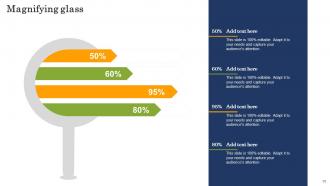
Slide 58: This slide display Magnifying glass.
Slide 59: This slide display Our goal.
Slide 60: This is thank you slide & contains contact details of company like office address, phone no., etc.
Open RAN Alliance Powerpoint Presentation Slides with all 65 slides:
Use our Open RAN Alliance Powerpoint Presentation Slides to effectively help you save your valuable time. They are readymade to fit into any presentation structure.

























FAQs for Open RAN Alliance
So Open RAN Alliance is trying to shake up telecom by making networks way more flexible. Instead of being stuck with one vendor's whole system, you can mix different companies' hardware and software together. It's like building a custom PC versus buying everything from one brand - way better options. They're pushing standardized interfaces and cloud-based stuff, plus AI for smarter networks. Honestly, their specs are becoming pretty huge in the industry. If you're doing any 5G work, you'll probably want to look into what they're putting out there since most deployments are heading this direction now.
So basically Open RAN ditches the whole "you're married to one vendor" thing that's been driving everyone nuts. You can actually mix components from different suppliers now - radio units from one company, other parts from wherever. Traditional setups locked you into Nokia or Ericsson's entire world, which honestly sucked for pricing. Now there's real competition happening, plus innovation moves way faster when companies have to actually fight for business. If you're looking at RAN upgrades, the flexibility alone makes it worth considering. Being able to swap vendors without ripping everything out? That's huge for your budget down the road.
So basically Open RAN lets you mix and match gear from different vendors instead of getting stuck with one company's whole setup. Way more flexibility that way. Costs usually go down too since suppliers actually have to compete for your business - crazy concept, right? Innovation happens faster because the whole ecosystem is more open. New features roll out quicker. Oh and you can ditch those nightmare proprietary systems finally. I'd definitely run a pilot first though to make sure everything plays nice together before you go all in.
So basically Open RAN lets you mix and match network gear from different vendors instead of buying everything from one company. It's like how you can plug any USB device into your laptop - the interfaces are standardized. This means smaller companies can actually compete with the big guys like Ericsson and Nokia now, which is pretty cool. You'll get better prices and more innovation since there's real competition. Plus way more flexibility when you're designing your network. I'd start by figuring out which parts of your current setup could work with this disaggregated approach.
So SDN and NFV are what actually make Open RAN's disaggregation work. Basically SDN gives you central software control instead of being locked into proprietary hardware setups. NFV virtualizes network functions so they run on standard servers - not specialized gear. Here's the thing - without these, you're stuck with monolithic vendor-specific stuff that won't play nice together. NFV especially matters for those cloud-native RAN functions everyone keeps hyping up (though honestly half the vendors oversell this part). When you're looking at Open RAN options, check if they're really using SDN/NFV or just slapping new labels on old approaches.
So basically Open RAN breaks up those crazy vendor monopolies that have been bleeding telecom companies dry. You can finally mix components from different suppliers instead of getting locked into one expensive ecosystem. The standardized interfaces are a game changer - no more paying through the nose for custom integration work. Smaller innovative companies can actually compete now, which speeds up development cycles. My advice? Start with pilot projects in non-critical areas first. You'll build up expertise and - this part's key - get way more negotiating power with your current vendors when they realize you've got options.
Look, the big problem with Open RAN is you're juggling multiple vendors instead of one system. More vendors = more attack points, especially at those connection interfaces between components. Some of these newer Open RAN companies honestly don't have the security chops of the big established players yet. You'll want strong security frameworks right from the start. End-to-end encryption is a must. Do thorough security checks on every vendor - I can't stress this enough. Zero-trust architecture works well here, and definitely include security testing when you're validating integrations. It's manageable but takes more work upfront.
So basically, Open RAN lets you mix and match different vendors instead of being stuck with one company's setup. You can slice your network way more flexibly since everything talks through standard interfaces. Edge computing gets really interesting here - you can stick apps super close to the radio units, which is huge for anything that needs crazy low latency. The APIs work with anyone's gear too. Honestly? Just start playing around with xApps if you want to see what I'm talking about. That's where the real magic happens.
So Open RAN is basically letting telecom companies build networks like Lego blocks instead of buying everything from one vendor. You can mix parts from different suppliers, which makes things way cheaper and pushes innovation faster. Smaller tech companies can actually compete now instead of getting crushed by the big players. The flexibility is insane - when 6G rolls around (or whatever comes next), networks won't need complete rebuilds to adapt. Honestly think this could be huge for bringing costs down globally. It's like the difference between building your own PC versus buying a pre-built one from Dell.
Look, Open RAN basically tears down those huge proprietary systems and makes everything work together with standard parts. So instead of trying to compete with Nokia's entire massive setup, you can just focus on what you're actually good at - maybe that's specialized software or AI stuff. The cool thing is operators aren't stuck with one vendor's whole ecosystem anymore. They can mix and match now, which honestly changes everything. My advice? Pick one piece of the puzzle and absolutely crush it, then use those open standards to plug into everyone else's gear. Way smarter than trying to build the whole thing yourself.
Getting different vendors' equipment to play nice together is gonna be your biggest headache - trust me on that one. Costs are brutal upfront since this tech is still pretty new. Your team will need training on all these different systems too, which takes forever. Security gets messy when you're dealing with multiple vendors instead of just one. Oh, and good luck coordinating updates across platforms. Start with small test runs first though. Don't go all-in until you know everything actually works together - I've seen that backfire spectacularly.
So Open RAN basically makes all the network parts speak the same language through standardized interfaces. No more getting stuck with one vendor's proprietary stuff - you know how Apple does with their cables? It's the opposite of that. Different companies' hardware can actually work together now using these standard APIs. You could run Samsung gear with Nokia software and some random cloud platform, and they'll all play nice. Pretty cool actually. Just make sure to look up which vendors near you are already O-RAN certified before diving in.
Track your network basics first - latency, throughput, coverage quality. You don't want your Open RAN performing worse than the old setup, obviously. Then measure how well different vendors' gear actually works together (that's kinda the whole point). Business-wise, watch for cost savings from increased vendor competition and faster deployments. I'd also track how quickly you can roll out new features - that innovation speed is huge. Oh, and definitely establish baselines before you deploy anything. Trust me, you'll need those numbers later when executives start asking if this Open RAN thing was worth it.
Yeah, tons of big players are doing this now. Vodafone rolled it out across Europe, and Rakuten went totally Open RAN for their whole Japan network - honestly pretty gutsy. DISH is building their US 5G network the same way from scratch. Deutsche Telekom's running pilots in Germany, Orange has stuff going in France and Romania. It's cool seeing both approaches work - some companies retrofitting old networks, others starting fresh. Oh, and if you're looking into this for work or whatever, definitely check Rakuten's case studies. They've shared way more technical details than anyone else.
So Open RAN basically lets you mix and match network gear from different companies instead of getting locked into one expensive vendor - kinda like building your own PC vs buying Apple. Way cheaper and more flexible. Rural areas really benefit since they can actually afford to build networks now without breaking the bank. The terrain out there is always a pain too, so having options helps. There's some cool pilot programs happening in underserved areas that are showing solid results. Honestly think this could be a game-changer for closing the digital divide.
-
Satisfied with the way SlideTeam resolved my query regarding the right business PPTs that I was having difficulty finding. I found the perfect match with their assistance.
-
Thank you for showering me with discounts every time I was reluctant to make the purchase.