


Operational Structure Of Food And Beverage Service Department Training Ppt




Try Before you Buy Download Free Sample Product
 Impress Your
 Audience
 100%
100% Editable
 Save Hours
 of Time


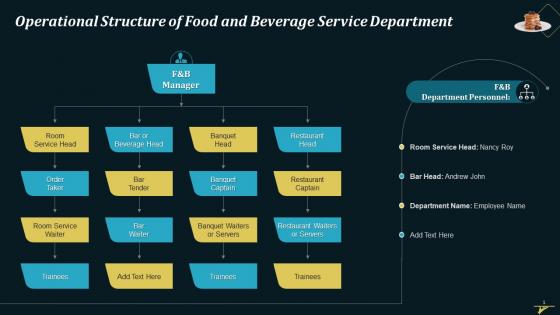
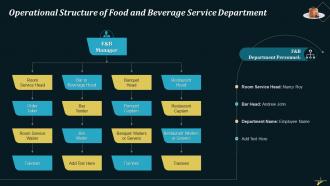
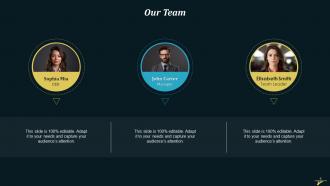
This slide represents the sub-departmental heads under the food and beverage manager. These could be room service head, bar head, banquet head, restaurant head and so on.
People who downloaded this PowerPoint presentation also viewed the following :
Operational Structure Of Food And Beverage Service Department Training Ppt with all 19 slides:
Use our Operational Structure Of Food And Beverage Service Department Training Ppt to effectively help you save your valuable time. They are readymade to fit into any presentation structure.










FAQs for Operational Structure Of Food And Beverage Service
Key components include front-of-house management, kitchen operations, inventory control, staff scheduling, quality assurance protocols, and customer service systems. These elements work together by streamlining workflow processes, optimizing resource allocation, and maintaining consistent service standards, with many restaurants and hospitality businesses finding that integrated operational structures ultimately deliver faster service times, reduced costs, and enhanced customer experiences.
Restaurant layout significantly impacts operational efficiency by optimizing workflow patterns, minimizing staff movement distances, and enhancing communication between kitchen and service areas. Strategic design elements like centralized service stations, clear traffic flows, and accessible storage areas enable faster order fulfillment, reduce labor costs, and improve customer experiences, with many establishments finding that well-planned layouts increase table turnover rates by twenty to thirty percent.
Technology revolutionizes food and beverage operations through automated inventory management, digital ordering systems, POS integration, kitchen display systems, and real-time analytics platforms. These solutions streamline workflows by reducing manual errors, accelerating order processing, and optimizing staff allocation, with many restaurants and hotels finding that technology delivers faster service, lower operational costs, and enhanced customer experiences.
Staff training enhances operational structure by standardizing service protocols, improving efficiency workflows, and reducing costly errors across all service touchpoints. Well-trained teams in restaurants, hotels, and catering operations deliver faster order processing, seamless kitchen-to-table coordination, and consistent customer experiences, ultimately driving revenue growth while minimizing operational disruptions.
**INPUT**: What are the best practices for inventory management in food and beverage operations? **OUTPUT**: Best practices include automated tracking systems, first-in-first-out rotation, regular audits, supplier relationship management, and demand forecasting analytics. These approaches streamline operations by minimizing waste, reducing costs, and ensuring freshness, with many restaurants and hotels finding that strategic inventory control ultimately delivers improved profit margins and enhanced customer satisfaction.
Different service styles significantly reshape operational workflows through varying staffing patterns, kitchen timing requirements, customer flow management, and resource allocation strategies. Buffet services streamline labor costs while demanding extensive food preparation and replenishment systems, whereas à la carte operations require precise order management and synchronized kitchen-to-table coordination, with many restaurants finding that hybrid approaches ultimately deliver enhanced operational flexibility and improved customer experiences.
Effective communication strategies include regular team briefings, standardized service protocols, digital communication platforms, cross-training programs, and structured feedback systems. These approaches streamline operations by ensuring consistent service delivery, reducing errors, and enhancing coordination between kitchen and front-of-house staff, with many restaurants finding that improved communication ultimately delivers faster service times and better customer experiences.
Seasonal menu changes impact restaurant operations by requiring recipe standardization, staff retraining, supply chain adjustments, and inventory management modifications. These transitions streamline costs through local sourcing, enhance customer experiences with fresh offerings, and ultimately deliver competitive advantages, with many establishments finding that strategic seasonal rotations reduce food waste while increasing profitability and brand differentiation.
Key metrics include revenue per available seat hour, food cost percentage, labor cost ratio, customer satisfaction scores, and inventory turnover rates. These measurements streamline operational efficiency by identifying bottlenecks, optimizing staff scheduling, and enhancing menu profitability, with many restaurants and hotels finding that comprehensive tracking ultimately delivers improved margins and competitive advantage.
Guest feedback can be structured through systematic collection points, digital platforms, staff training protocols, and regular analysis cycles that integrate seamlessly into daily operations. This framework enables restaurants to identify service gaps, menu preferences, and operational bottlenecks, with many establishments finding that structured feedback loops reduce complaints by 40% while enhancing customer retention and competitive positioning.
Standardized operating procedures ensure consistent service quality, food safety compliance, efficient staff training, and streamlined operations across all service points. These protocols enable restaurants and hospitality businesses to maintain brand standards, reduce operational costs, and deliver reliable customer experiences, with many food service chains finding that systematic procedures significantly enhance scalability and competitive positioning.
Cross-departmental collaboration enhances food and beverage operational structure by streamlining communication between kitchen, service, and management teams, reducing order errors, and accelerating service delivery. Through integrated workflows, restaurants and hotels achieve faster table turnover, improved customer satisfaction, and enhanced inventory management, with many establishments finding that coordinated operations ultimately deliver significant cost reductions and competitive advantage.
High-volume food and beverage operations face challenges including inventory management complexities, staff coordination difficulties, quality consistency maintenance, equipment capacity limitations, and customer wait time pressures. These operational hurdles often impact service speed and accuracy, with many restaurants and hotels finding that streamlined workflows, automated ordering systems, and strategic staffing models ultimately deliver improved efficiency and enhanced customer experiences.
Casual dining establishments prioritize efficiency through streamlined service models, flexible staffing, and technology integration, while fine dining focuses on specialized roles, extensive staff training, and personalized guest experiences. Through strategic operational design, casual restaurants achieve faster table turnover and cost efficiency, whereas fine dining delivers premium service quality and higher profit margins, with many establishments finding that their structural choices directly impact customer satisfaction and competitive positioning.
Customer experience serves as the primary driver in food and beverage operational strategy, influencing menu design, service delivery methods, staff training protocols, technology integration, and facility layout optimization. Restaurants increasingly align kitchen workflows, inventory management, and quality control systems with customer preferences and dining expectations, while hotels and catering services streamline ordering processes and customize service approaches, ultimately delivering faster service times, enhanced satisfaction levels, and stronger competitive positioning in an increasingly experience-focused hospitality market.
-
One word for SlideTeam–Versatile!
-
SlideTeam is the best in the business. Their templates are engaging and customizable. You can rely on them.