


Opportunities and challenges roadmap race hurdle powerpoint slide influencers




Try Before you Buy Download Free Sample Product
 Impress Your
 Audience
 100%
100% Editable
 Save Hours
 of Time


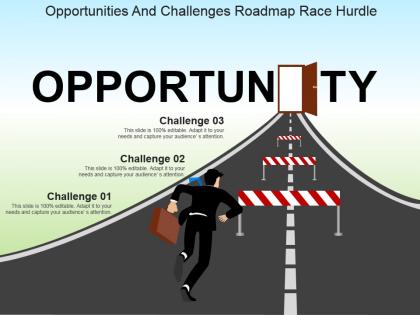
Highlight major challenges and opportunities for future prosperous business with our professionally drafted opportunities and challenges roadmap race hurdle PowerPoint slide influencers presentation template. This problems and solutions PowerPoint template is one of the most unique presentations among a variety of slides to show challenges and their solutions as it uses combination of wonderful visuals and graphics to display crucial challenges towards business goals. Showcasing major barriers and opportunities with sports race person running PowerPoint slide is the very helpful in making strategic business plans. You can analyze and compare business performances under different circumstances and find most suitable solution for jumping over hurdles to enhance business productivity and performance. The slideshow is helpful in deciding strategic business goals and techniques to achieve those goals. Design structure is simple and can easily be understood by your audience. So, don’t wait, just download this powerful, high quality challenge and hurdles PowerPoint graphics and use in your future presentations. High quality Opportunities And Challenges Roadmap Race Hurdle Powerpoint Slide Influencers lets your presentations capture the attention they deserve. Makes sure you're ready to shine.
People who downloaded this PowerPoint presentation also viewed the following :
Opportunities and challenges roadmap race hurdle powerpoint slide influencers with all 5 slides:
Our Opportunities And Challenges Roadmap Race Hurdle Powerpoint Slide Influencers will make them cheer for you. Your game will be delightful.
FAQs for Opportunities and challenges roadmap race hurdle
So influencers are basically like having that one friend whose taste you actually trust, you know? When they post about stuff, people don't see it as ads - it feels more like a genuine recommendation. They're really good at turning random moments into "oh I need that" shopping situations. Honestly, the micro-influencers with smaller followings sometimes work way better than big celebrities because their engagement is insane. People trust them more since they've built real relationships with their audience. It's wild how they've changed the whole game - now everyone's basically a potential salesperson just living their life online.
Honestly, influencers work because people feel like they're getting advice from a friend instead of watching some corporate ad. When someone you follow actually uses a product and talks about it naturally, you trust their opinion way more than traditional marketing - which is kinda crazy if you think about it, but that's just how our brains work now. The key is finding influencers who genuinely fit your brand. If the partnership feels forced or fake, people see right through it and it'll backfire hard. Let them create content in their own voice. That authentic connection is what builds real loyalty.
Follower count gives you reach, but honestly engagement rate matters way more - just divide likes + comments by total followers. Comments per post shows if people actually care about the content. Don't get sucked into vanity metrics though, I've seen too many brands chase follower numbers when engagement tells the real story. Story views and saves are gold since they show genuine interest. For campaigns, track click-throughs and set up UTM links to see what's actually working. Ask influencers for their media kit first, then double-check everything on Social Blade because... well, you know how these things go.
Here's the thing - micro-influencers are usually the way to go. They get like 2-5% engagement while the big names only hit 1-2%. People actually trust them because they seem real, not like some celebrity pushing random stuff. Way cheaper too. Sure, macro-influencers reach tons of people, but honestly? It's kinda like the difference between your friend telling you about a product versus seeing it in a TV ad. I'd rather work with 3-4 smaller accounts than blow the budget on one famous person. Better bang for your buck most of the time.
Honestly, just be real with your followers about sponsored stuff - legally you have to disclose it anyway. Only push products you'd actually buy yourself, because once people think you're fake, you're done. I've watched influencers completely destroy their reputation shilling random crap they obviously don't use. Also maybe don't promote anything sketchy? Like those weird diet pills or crypto schemes that'll probably screw over your audience. Quick tangent - it's wild how many people skip the disclosure part and think nobody will notice. But yeah, basically treat your followers like friends and be honest about when you're getting paid.
Honestly, forget the mega-influencers with millions of followers - they're overrated anyway. You want to find people whose audience actually matches your customers. Age, location, interests, spending habits, all that stuff matters way more than follower count. Micro-influencers usually have better engagement rates too. I'd scroll through their recent posts manually (or use HypeAuditor if you're fancy). Look for real comments, not bot spam. Their content quality should be solid, and their values can't clash with your brand. The whole point is finding someone whose followers actually trust them enough to buy what you're selling.
Honestly, most people overthink this stuff. Find influencers whose followers actually match your customers - I don't care if they have 10K or 100K followers. Set clear goals first though, like are you trying to get sales or just brand awareness? The content part is huge - let them do their thing instead of giving them a script. People can smell fake sponsored content from a mile away. Oh and definitely track your results so you're not just throwing money around. Build relationships with the good ones for repeat campaigns instead of constantly hunting for new people.
Honestly, social media changed everything - anyone can blow up now without needing some fancy media background. Instagram, TikTok, YouTube... if your content's good, you can hit millions. Zero barrier to entry (besides actually being interesting, which is harder than it sounds lol). Problem is everyone's doing it now. You're fighting for attention with literally millions of creators, plus algorithms are moody as hell - your reach can tank overnight for no reason. I'd spread across multiple platforms and definitely start collecting emails. That way you're not totally screwed if TikTok decides to hate you.
Honestly? The hardest part is not selling out your audience with fake sponsorships. People can tell when you're just pushing random products for cash. I only work with brands I actually use - learned that the hard way lol. Algorithm pressure is real too. It wants you chasing trends instead of being yourself. Plus there's this weird thing where you feel like everything has to look perfect, but authenticity actually performs better anyway. Set boundaries early about what you'll promote. Don't lose sight of why you started creating in the first place.
Oh man, cultural differences can make or break your influencer campaigns! What crushes it in the US might totally bomb somewhere else. Japanese audiences want super subtle product placement, but Brazilians? They're all about that high-energy, in-your-face content. Don't even get me started on hand gestures and colors - I've seen brands accidentally offend entire markets over stuff like that. Platform choice matters too. WhatsApp stories are massive in India but nobody cares about them in Europe. My advice? Do your homework on local culture first, then find influencers who actually get those nuances.
So basically you gotta be super clear about partnerships - like
-
Visually stunning presentation, love the content.
-
Informative design.