


Optimizing Talent Management Through Workforce Staffing Powerpoint Presentation Slides




Try Before you Buy Download Free Sample Product
 Impress Your
 Audience
 100%
100% Editable
 Save Hours
 of Time


Grab our completely designed Optimizing Talent Management Through Workforce Staffing template. Its main goal is to inspire, involve, and keep employees to boost output. Our Workforce deck displays essential talent management challenges the organization confronts and global talent data like employee experience, turnover rate, talent retention, etc. This performance management system evaluates employee selection, orientation, leadership development, talent gap analysis, and planning while addressing organizational efficacy, workforce staffing, development, and staff management. A budget plan, the effects of integrating an employee management system, showing an increase in productivity and a low employee turnover rate, and a metric dashboard to evaluate talent performance, round out the list. Download our Google Slides compatible design, which is entirely editable and configurable.
People who downloaded this PowerPoint presentation also viewed the following :
Content of this Powerpoint Presentation
Slide 1: This slide introduces Optimizing Talent Management Through Workforce. Commence by stating Your Company Name.
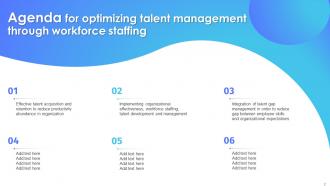
Slide 2: This slide depicts the Agenda of the presentation.
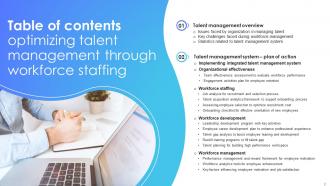
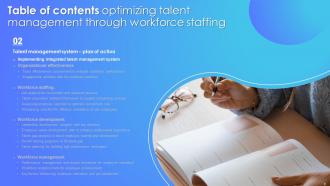
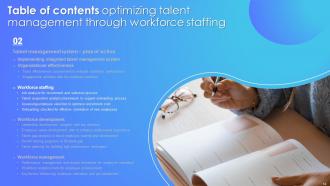
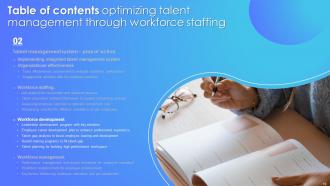
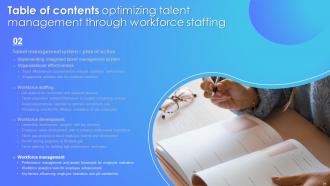
Slide 3: This slide incorporates the Table of contents.
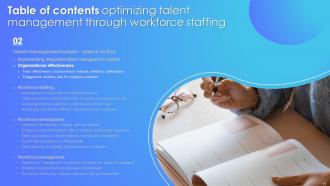
Slide 4: This is yet another slide continuing the Table of contents.
Slide 5: This slide states the Title for the Topics to be covered further.
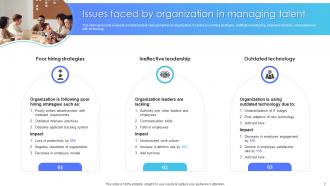
Slide 6: This slide represents issues faced during talent management in an organization.
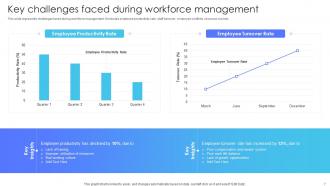
Slide 7: This slide exhibits the Key challenges faced during workforce management.
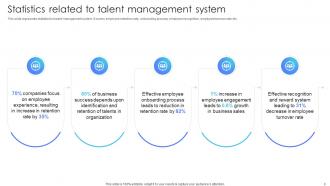
Slide 8: This slide represents statistics for talent management system.
Slide 9: This slide elucidates the Heading for the Contents to be discussed next.
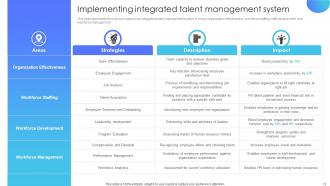
Slide 10: This slide deals with Implementing integrated talent management system.
Slide 11: This slide portrays the Title for the Ideas to be discussed further.
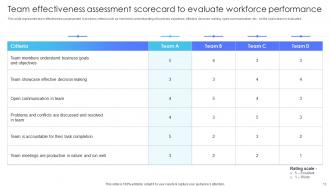
Slide 12: This slide showcases Team effectiveness assessment scorecard to evaluate workforce performance.
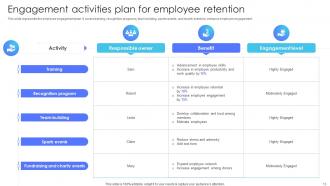
Slide 13: This slide represents the employee engagement plan.
Slide 14: This slide elucidates the Heading for the Ideas to be covered next.
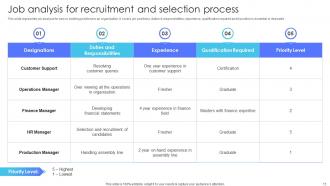
Slide 15: This slide presents the Job analysis for recruitment and selection process.
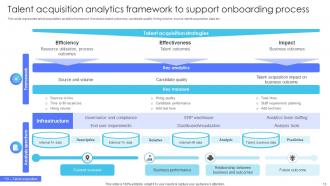
Slide 16: This slide reveals the Talent acquisition analytics framework to support onboarding process.
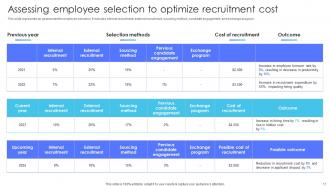
Slide 17: This slide focuses on Assessing employee selection to optimize recruitment cost.
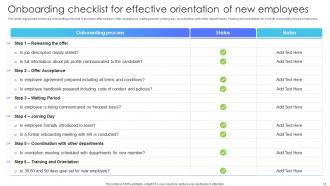
Slide 18: This slide shows the Onboarding checklist for effective orientation of new employees.
Slide 19: This slide highlights the Title for the Contents to be discussed further.
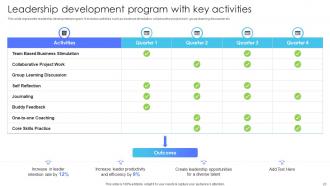
Slide 20: This slide represents leadership development program.
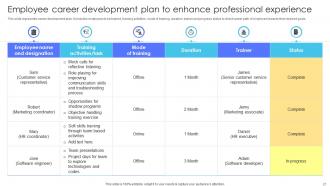
Slide 21: This slide talks about the Employee career development plan to enhance professional experience.
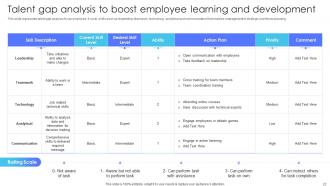
Slide 22: This slide portrays the Talent gap analysis to boost employee learning and development.
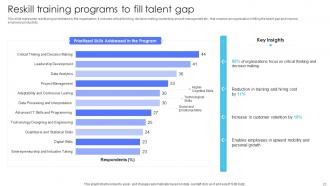
Slide 23: This slide elucidates the Reskill training programs to fill talent gap.
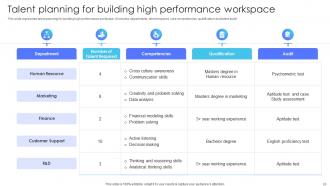
Slide 24: This slide talks about the Talent planning for building high performance workspace.
Slide 25: This slide depicts the Heading for the Topics to be coveerd in the following template.
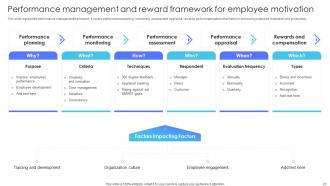
Slide 26: This slide highlights the Performance management and reward framework for employee motivation.
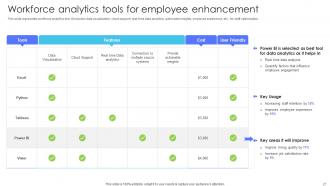
Slide 27: This slide talks about the Workforce analytics tools for employee enhancement.
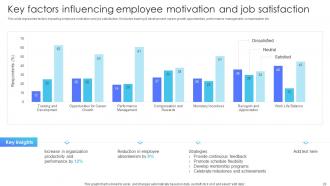
Slide 28: This slide states the Key factors influencing employee motivation and job satisfaction.
Slide 29: This slide incorporates the Title for the Ideas to be discussed next.
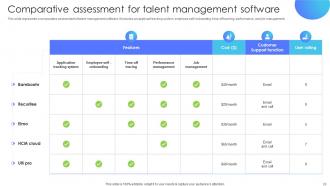
Slide 30: This slide reveals the Comparative assessment for talent management software.
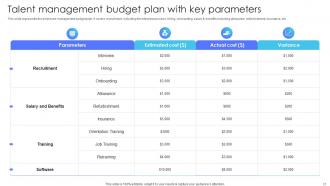
Slide 31: This slide represents the employee management budget plan.
Slide 32: This slide mentions the Heading for the Ideas to be covered further.
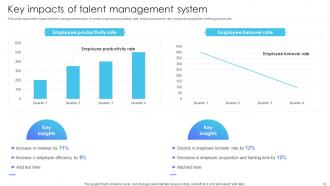
Slide 33: This slide states the Key impacts of talent management system.
Slide 34: This slide includes the Title for the Components to be discussed next.
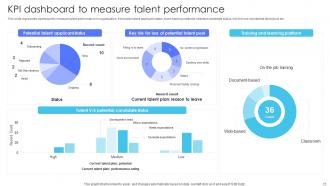
Slide 35: This slide illlustrates the KPI dashboard to measure talent performance.
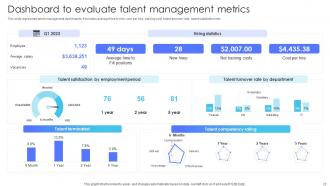
Slide 36: This slide presents the Dashboard to evaluate talent management metrics.
Slide 37: This is the Icons slide containing all the Icons used in the plan.
Slide 38: This slide depicts some Additional information.
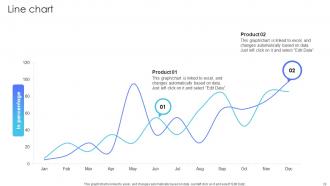
Slide 39: This slide reveals the Line chart.
Slide 40: This is the Puzzle slide with related imagery.
Slide 41: This is Our target slide. State your company-targets here.
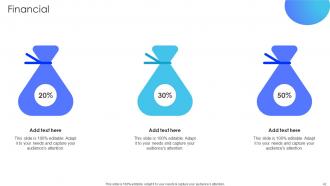
Slide 42: This slide elucidates information related to the Financial topic.
Slide 43: This slide contains Post It notes for reminders and deadlines.
Slide 44: This is the Thank you slide for acknowledgement.
Optimizing Talent Management Through Workforce Staffing Powerpoint Presentation Slides with all 49 slides:
Use our Optimizing Talent Management Through Workforce Staffing Powerpoint Presentation Slides to effectively help you save your valuable time. They are readymade to fit into any presentation structure.







FAQs for Optimizing Talent Management Through Workforce Staffing
You'll need talent acquisition, development, performance management, succession planning, and retention strategies. Picture it like a pipeline - constantly bringing people in, growing skills, tracking performance, prepping for what's next. Most companies screw this up by treating each piece separately instead of connecting them. Your retention should link to development programs, succession planning needs to shape who you hire. Oh and start by mapping your current processes first - you'll probably find weird gaps everywhere. Honestly the companies that nail this stuff treat it like one big system, not five random HR tasks.
Honestly, most companies mess this up because they don't start with the basics. Figure out your business goals first - like, actually write them down. Then work backwards to see what roles and skills you'll need. Map out the key competencies for each position and build your hiring around that. I've watched so many businesses just wing the talent stuff and wonder why they're struggling later. You need real pipelines for critical roles, not just posting jobs when someone quits. Oh, and regularly check if your people strategy is actually helping you hit those business goals. Treat it like strategy, not just paperwork. Start by looking at what talent you have now versus what you'll need.
So employer branding is just how people see your company as a workplace, right? Good reputation means top candidates will actually apply to YOU instead of you desperately hunting them down. Makes total sense when you think about it - who wants to work somewhere with terrible reviews? Your brand shows up everywhere: job posts, social media, what employees say at happy hour (honestly that's probably the most honest feedback). Start by asking your favorite employees why they stick around, then blast those reasons everywhere potential hires hang out online. It's way easier than you'd think.
Honestly, data analytics is a game-changer for talent stuff. You'll actually see patterns instead of just guessing - like who's about to quit or which employees have crazy potential they don't even realize yet. Plus you can figure out if your training programs are actually worth the money (spoiler: sometimes they're not). The recruiting side gets way better too when you track which job boards or whatever bring in people who stick around. Performance tracking becomes less awkward since you have real numbers to point to. I'd start with something basic like tracking turnover first though.
Performance matters, but don't just chase your superstars. Watch for people who adapt quickly and stay curious about new stuff. Those folks who jump on tough projects without being asked? Total gems. Same with people who naturally mentor others - they're usually leadership material. I'd suggest doing those 9-box grids to map performance vs potential, though honestly they can feel a bit corporate sometimes. Get feedback from multiple managers so you're not missing anything. Here's the thing though - actually ask people what they want! Not everyone's dying to climb the ladder. Have real conversations with them every few months to keep things moving.
Honestly, most companies totally blow this because they treat learning like some once-a-year checkbox thing. What actually works? Build it into people's regular routine - even just 30 minutes weekly makes a difference. Your managers need to walk the walk too, not just talk about it. Give people real incentives: let them go to conferences, try stretch projects, take actual courses. Oh and lunch-and-learns are clutch for getting started. Cross-department shadowing is pretty cool too - people love seeing how other teams work. The whole "learning culture" thing sounds fancy but it's really just about creating opportunities and rewarding curiosity.
Honestly, engagement is like your best bet for stopping people from quitting. People stick around when they actually feel valued and connected to what they're doing. Makes total sense, right? Who wants to stay somewhere they feel like a ghost? Engaged employees get emotionally attached to the company - they won't bolt at the first better offer. They're also way more productive and end up being great recruiters for you. Oh, and if you're dealing with tons of turnover right now, check engagement levels first. That's probably where your problem is hiding.
Look at where your industry's going first - AI, automation, whatever's hitting your sector. Build learning that mixes real projects with formal training because people actually retain stuff when they're doing it, not just listening. Cross-functional projects work great for spreading knowledge around naturally. Don't forget the human skills either - critical thinking, adaptability, that kind of thing. Those won't get replaced by robots anytime soon. Skip the annual training dump approach though, that's pretty much useless. Make it ongoing instead. Oh, and actually measure what's working so you're not just guessing.
Honestly, communication is your biggest headache with remote teams. People feel super disconnected from company culture too. Performance tracking gets weird - nobody wants to micromanage but you still need results, you know? Work-life boundaries become a mess when home is the office (trust me on this one). Weekly one-on-ones help a ton. Set clear expectations from day one. Those cheesy virtual team activities? Skip 'em unless they're actually fun. Focus on what people deliver, not when they're online. Good tools make everything smoother. You've gotta be really intentional about staying connected - it won't just happen naturally.
Make succession planning part of your regular talent talks instead of some once-a-year thing. During performance reviews, spot key roles and who might fill them someday. Most companies treat this like it's rocket science - honestly, it's not that complicated. Build it into your current mentoring and career planning stuff. Keep tabs on your high-potential people and map out how they'll grow into bigger roles. My old boss was terrible at this and we got burned when people left unexpectedly. The trick is making it ongoing so you're always ready, not panicking when someone gives notice.
Look, everyone's obsessed with the AI screening stuff like HireVue and Pymetrics right now - they're solid for initial filtering. But honestly? Don't ignore basic 360 feedback tools. They still work. For the bigger picture, you'll want an HRIS like Workday or BambooHR that actually connects with learning platforms. Cornerstone OnDemand is decent for this. Here's the thing though - pick ONE good system first instead of going crazy with five different tools that don't talk to each other. I learned that the hard way at my last job. Build from there.
Honestly, start with auditing your job descriptions and review processes for bias - that stuff's everywhere. Your leadership team needs to actually look like the diversity you're trying to build, which is tough but crucial. Employee resource groups can be game-changers if you give them real budgets and power, not just token gestures. When people point out barriers, don't sit on it - act fast. The biggest mistake I see? Making this just HR's problem instead of everyone's job. Pick one process this quarter and really dig into it. That's way better than trying to fix everything at once and burning out.
Honestly, I'd focus on the basics first - retention rates and how long it takes to fill positions. Those tell you a lot right away. Internal promotions are solid indicators too, plus engagement scores (which honestly predict most other stuff anyway). Manager ratings matter more than people think - bad managers kill everything. If you're doing training programs, track completion rates and actual skill growth. Keep it simple though. Pick maybe 3-5 things max and check quarterly. Otherwise you'll drown in data and never actually see what's working.
Dude, most companies are terrible at this honestly. Start by just asking people what they actually want to do in 2-3 years, then figure out how to get them there. Don't wait for annual reviews - do quarterly check-ins about their goals. Mentoring helps, plus give them projects outside their usual stuff. I know it sounds obvious, but you'd be surprised how many managers never have these conversations. The trick is actually following through instead of just talking about it. Map out realistic steps together and check in regularly.
Honestly, start by mapping out clear career paths so people can actually see where they could go next. Cross-functional projects are huge - that's how employees discover opportunities they didn't even know existed. Get some mentorship programs going between departments too. Your managers probably suck at career convos, so train them on that. Oh, and don't wait until someone quits to think about who could fill their role - be proactive with succession planning. Do a talent audit first though. Figure out who's ready to move up or sideways, because those high-potential people are usually your best internal candidates anyway.
-
SlideTeam was so customer-centric and quick service-provider that I doubted the amount I was paying and literally re-checked the transaction.
-
Great product, helpful indeed!