


Order to cash process pre sales activities and order processing




Try Before you Buy Download Free Sample Product
 Impress Your
 Audience
 100%
100% Editable
 Save Hours
 of Time


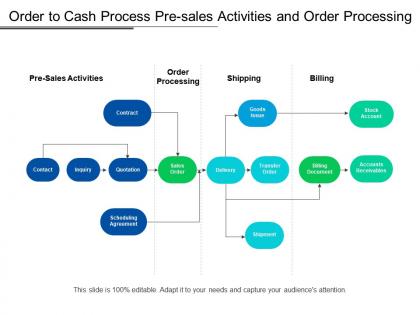
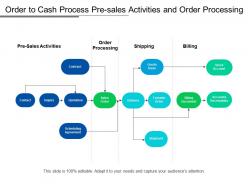
Are you planning to craft a PPT presentation for showcasing the procedure of work process related to the picking, packing, and transportation of the product to a shipping carrier? Do not worry! Download our predesigned order to cash process pre-sales activities and order processing PowerPoint template slide outlined by a team of presentation and PowerPoint experts. This editable order processing management PPT template slide represents four phases which are pre-sales activities, order processing, shipping, and billing. This predesigned template design allows you to explain each aspect of the order process separately to the audience. This template slide highlights various internal steps such as contact, inquiry, schedule agreement, contract, sales order, delivery, goods issue, transfer order, shipment, billing document, accounts receivable, and stock account conducted during order processing. Using this order to cash or OTC presentation template slide, you can showcase the notion of sales tasks, order processing, procurement process, selling-buying process, enterprise resource planning, and more. Leave a significant impact on the audience with this predesigned order to cash process pre-sales activities and order processing template slide. Serve up your thoughts in a pleasant way. Dish them out on our Order To Cash Process Pre Sales Activities And Order Processing.
People who downloaded this PowerPoint presentation also viewed the following :
Order to cash process pre sales activities and order processing with all 5 slides:
Our Order To Cash Process Pre Sales Activities And Order Processing are a great form of expression. They allow you to articulate clearly.


FAQs for Order to cash process pre sales activities
So basically you've got six main steps: order entry, credit check, fulfillment, shipping, invoicing, and collecting payment. First thing is when someone places an order. Then you check if they can actually pay - learned that one the hard way! After that you pick and pack everything, ship it out, send the bill, and hunt down your money. It's pretty straightforward from sale to cash in hand. Each step can get jammed up though, so I'd map out what you're doing now first. That way you'll spot where things usually go sideways.
Dude, automation will totally transform your O2C process. Manual bottlenecks just disappear when you automate order processing, invoicing, and payment matching. Your team stops wasting time on data entry and can actually handle the tricky stuff that needs human judgment. Cash comes in faster, fewer mistakes happen, and you get these real-time dashboards that show everything at a glance. Honestly, collections becomes way less painful too - though that might just be me being overly optimistic about anything that reduces customer awkwardness. Start with whatever manual task is currently driving everyone crazy. Those are usually the best wins.
Think of your CRM as command central for everything customer-related in the O2C process. Sales logs opportunities there, finance tracks credit limits and payment terms, customer service pulls up full relationship history when problems come up. Honestly, it saves your butt when customers call asking random questions about their orders - everything's just sitting right there. You can see payment history, preferences, past conversations, the whole deal from quote to final payment. But here's the thing - if your team doesn't keep it updated consistently, you're basically working blind. Which happens more often than you'd think, unfortunately.
Good inventory management is like the secret sauce for faster Order to Cash cycles. You've got the right stock? Orders fly from "received" straight to "shipped" - boom, done. No waiting for restocks or hunting down missing items. Real-time tracking systems cut down on those manual screwups that mess with invoicing too. Honestly, I've watched companies slash their O2C time by 50% just by getting their inventory visibility sorted out. Start there first - kills most of those order delays that tick off customers and tank your cash flow. Worth the effort.
Ugh, data silos are the worst - sales uses one system, finance another, and nothing talks to each other. Manual approvals slow everything down too. Customers get annoyed when they can't track their orders (honestly can't blame them). Credit checks for new customers add another layer of delays. Oh, and those handoff points between departments? Total mess usually. Start by actually mapping your whole process - you'll spot the worst bottlenecks pretty quick. Then just fix whatever's costing you the most time and money first. Don't try to solve everything at once.
Honestly, just automate everything you can - templates, auto-generation after delivery, electronic sending. Your invoicing system should connect to your CRM and fulfillment stuff so you're not entering data twice (seriously, life's too short). Get your payment terms crystal clear upfront with detailed line items. Disputes are such a pain to deal with later. The faster you invoice after delivery, the quicker you get paid. Oh, and make sure everything's accurate the first time - nobody wants to chase down corrections when they could be doing literally anything else with their day.
DSO is your main number - shows how fast cash actually hits your account. Order fulfillment time and invoice accuracy matter too, but honestly don't go crazy tracking everything right away. Collection effectiveness tells you if customers are actually paying on time (spoiler: they're probably not). Your cash conversion cycle is huge since that's literally how fast you turn orders into money. I'd throw in some customer payment patterns and watch for approval bottlenecks that slow things down. Maybe start with just 3 metrics? Otherwise you'll drown in data.
B2B is way more complicated - you're dealing with purchase orders, net payment terms, credit checks, the whole nine yards. Takes forever too, like weeks sometimes. B2C? Complete opposite. Everything's automated and happens fast. Credit card, boom, done in minutes. The volume's totally different as well. B2C processes thousands of small transactions while B2B handles fewer but way more complex deals. Custom pricing, relationship stuff, invoicing that makes your head spin. Honestly, B2C is just easier to set up if you can swing it. Figure out which customers you're actually serving first though - that'll tell you which direction to go.
Honestly, the biggest thing is setting credit policies and then NOT caving when your "best" customer wants special treatment - happens way too often. Do proper financial analysis for credit limits instead of just winging it. Run credit checks regularly, especially for your big accounts. Automate collections with reminders at 30, 60, 90 days so you're not chasing people manually. Your sales team needs to know the credit rules too, otherwise they'll promise payment terms you can't actually offer. First step though? Pull your AR aging report and see which accounts are already screwing you over.
So basically, connecting all your systems (CRM, ERP, billing) eliminates tons of manual data entry - which is honestly where most teams waste time anyway. Online payments are clutch because everything updates automatically when customers pay. But the biggest win? Automated invoicing and follow-ups will slash your collection times. I'd start by figuring out what repetitive stuff your team hates doing most, then tackle those integrations first. Don't try to automate everything at once though - pick your battles and you'll see results way faster.
Honestly, your pricing setup is probably making everything way harder than it needs to be. All those discounts, rebates, and weird variable terms? They're just creating more invoicing mistakes and payment delays. Customers get confused about what they actually owe, which slows everything down. Simple pricing gets you paid faster - shocking, I know. Dynamic pricing sounds fancy but it kills your order processing speed since sales reps have to get approval for anything non-standard. My advice? Take a hard look at how complicated you've made things and cut out the unnecessary stuff. You'll be surprised how much smoother your cash flow gets.
So here's the thing - good demand forecasting basically fixes your whole order-to-cash process. You can predict what customers actually want instead of guessing. No more stockouts screwing up deliveries, and you won't have tons of inventory just sitting there eating up your cash. Your procurement people will definitely thank you for the heads up too. Orders get filled faster and more accurately since you're not panic-buying random stuff to meet surprise demand. Customers pay quicker when they get their orders on time. Start with your historical data and look for seasonal patterns - that's honestly the easiest first step.
Ugh, late payments are the worst for cash flow - you literally can't predict when money's gonna show up. One day you think you have $10k coming in, next week it's still nowhere to be found. Makes planning anything impossible since you're always wondering if you can actually afford that new equipment or marketing push. I learned this the hard way last year, honestly. You end up keeping way more cash sitting around "just in case" instead of growing your business. Best thing I did was start hounding people after 30 days - set up automatic reminders and don't feel bad about following up. Your business depends on it.
Track your days sales outstanding and order processing times - that data will show you exactly where things get stuck. Most companies just ignore all this info they're already collecting, which is crazy to me. Set up dashboards so you can catch problems early instead of scrambling later. Look at payment patterns to figure out which customers are gonna be late payers. Seasonal spikes always mess things up too, so watch for those. Once you start seeing the patterns in delays and bottlenecks, you'll know where to focus your energy.
Honestly, start with ASC 606 for revenue recognition - that's your foundation. SOX compliance matters if you're public or planning to be. Tax stuff gets messy fast, especially when you're selling across different states or countries (I swear tax laws were designed by sadists). Don't sleep on GDPR if you've got international customers. Fair debt collection practices are crucial for your credit team. Oh, and if you're in healthcare or finance, there's probably industry-specific stuff too. Build this into your process from day one - retrofitting compliance is way harder.
No Reviews