


Organizational Change Management Training Program Powerpoint Presentation Slides




Try Before you Buy Download Free Sample Product
 Impress Your
 Audience
 100%
100% Editable
 Save Hours
 of Time


Introducing our Organizational Change Management Training Program Template designed to assist businesses in implementing and dealing with organizational changes. This program provides a systematic approach to equip employees with the necessary knowledge, skills, tools, and resources to effectively implement changes in the organization. The template covers the seven change management models and five types of changes implemented in the enterprise. It showcases different types of organizational changes and training plans to implement them. The Strategic Change Management PPT module incorporates strategies to overcome challenges faced by organizations during implementation, benefits of implementing changes, and gap analysis. The Change Implementation Training Plan module discusses the roles and responsibilities of multiple stakeholders, cost of facilitating training, and various benefits of implementing change management training programs. Lastly, it presents the impact of change management training on enterprises and employees through a dashboard to track and analyze performance. Enhance your organizations change management processes and get access to our template now.
People who downloaded this PowerPoint presentation also viewed the following :
Content of this Powerpoint Presentation
Slide 1: This slide introduces Organizational Change Management Training Program. State your company name and begin.
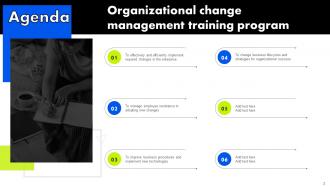
Slide 2: This slide depicts the Agenda of the presentation.
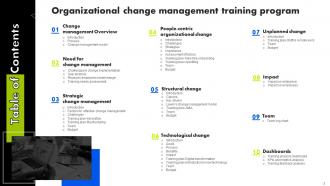
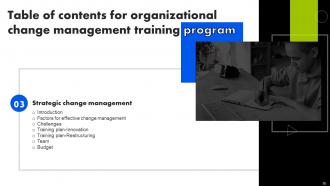
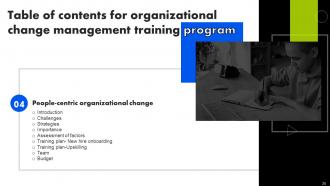
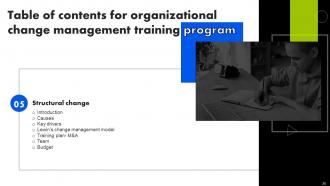
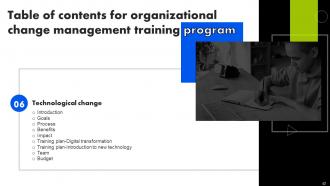
Slide 3: This slide shows Table of Content for the presentation.
Slide 4: This slide highlights the Title for the Topics to be discussed further.
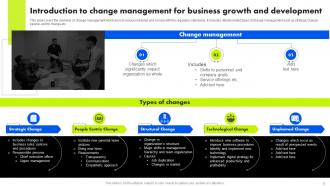
Slide 5: This slide covers the overview of change management which aims to reduce incidents and comply with the regulatory standards.
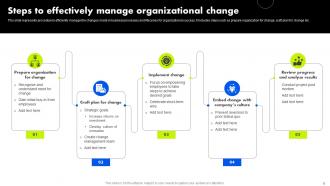
Slide 6: This slide showcases the Steps to effectively manage organizational change.
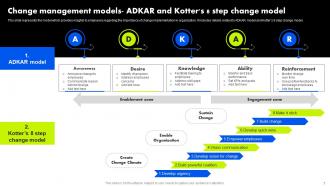
Slide 7: This slide represents the model which provides insights to employees regarding the importance of change implementation in organization.
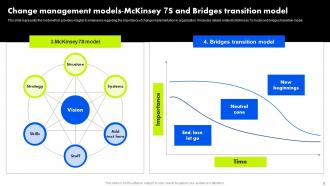
Slide 8: This slide presents the Change management models-McKinsey 7S and Bridges transition model.
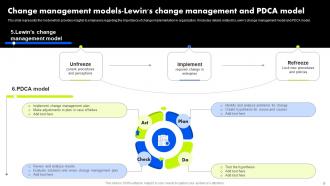
Slide 9: This slide exhibits the Change management models-Lewin's change management and PDCA model.
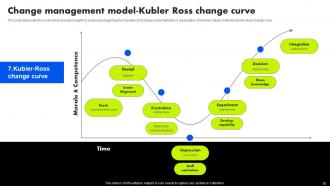
Slide 10: This slide deals with the Change management model-Kubler Ross change curve.
Slide 11: This slide portrays the Heading for the Contents to be discussed further.
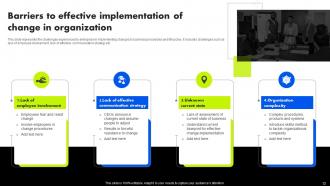
Slide 12: This slide shows the Barriers to effective implementation of change in organization.
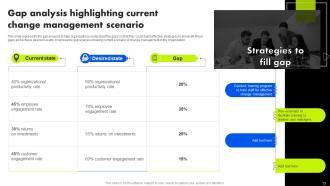
Slide 13: This slide reveals the Gap analysis highlighting current change management scenario.
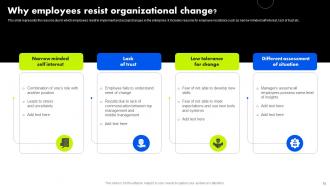
Slide 14: This slide represents the reasons due to which employees resist to implement and accept changes in the enterprise.
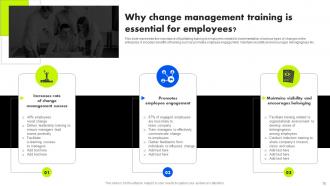
Slide 15: This slide talks about the importance of facilitating training to employees related to implementation of various types of changes in the enterprise.
Slide 16: This slide indicates the Title for the Ideas to be covered in the following template.
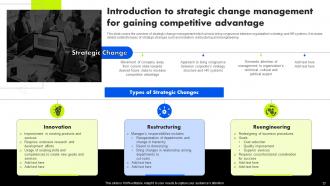
Slide 17: This slide covers the overview of strategic change management which aims to bring congruence between organization’s strategy and HR systems.
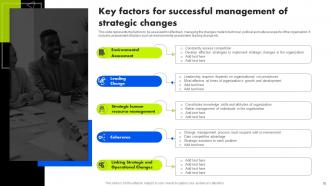
Slide 18: This slide states the Key factors for successful management of strategic changes.
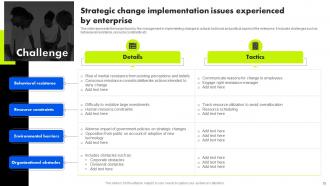
Slide 19: This slide exhibits the Strategic change implementation issues experienced by enterprise.
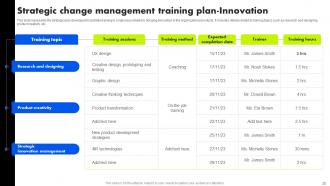
Slide 20: This slide illustrates the Strategic change management training plan-Innovation.
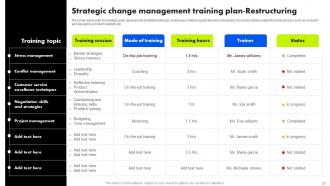
Slide 21: This slide deals with the Strategic change management training plan-Restructuring.
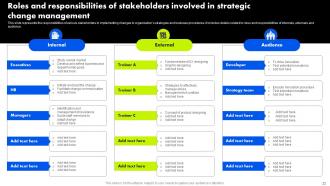
Slide 22: This slide highlights the Roles and responsibilities of stakeholders involved in strategic change management.
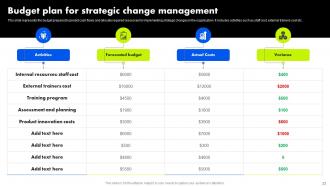
Slide 23: This slide presents the Budget plan for strategic change management.
Slide 24: This slide states the Heading for the Ideas to be discussed further.
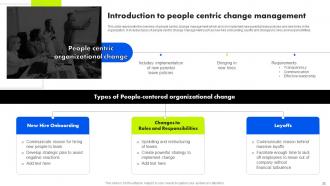
Slide 25: This slide reveals the overview of people centric change management which aims to implement new parental leave policies and new hires in the organization.
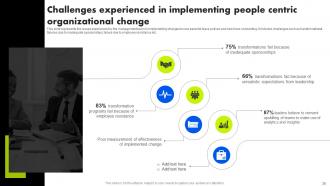
Slide 26: This slide talks about the Challenges experienced in implementing people centric organizational change.
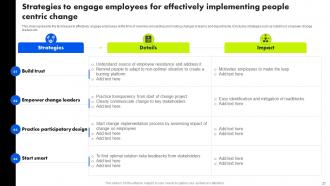
Slide 27: This slide focuses on the Strategies to engage employees for effectively implementing people centric change
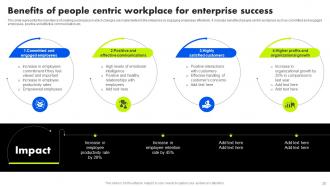
Slide 28: This slide portrays the Benefits of people centric workplace for enterprise success.
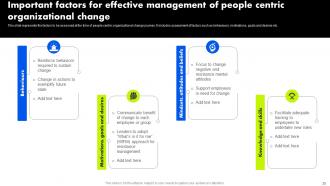
Slide 29: This slide highlights the Important factors for effective management of people centric organizational change.
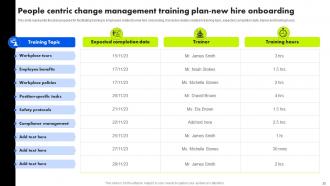
Slide 30: This slide represents the plan prepared for facilitating training to employees related to new hire onboarding.
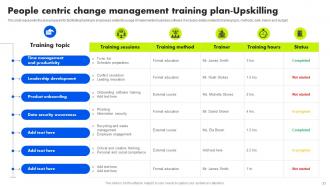
Slide 31: This slide showcases the People centric change management training plan-Upskilling.
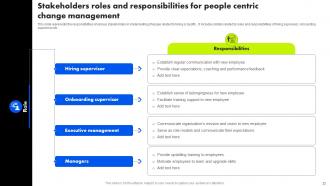
Slide 32: This slide depicts the Stakeholders roles and responsibilities for people centric change management.
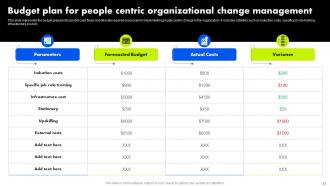
Slide 33: This slide presents the Budget plan for people centric organizational change management.
Slide 34: This slide indicates the Title for the Components to be covered in the forth-coming template.
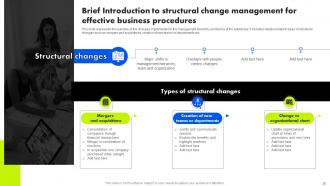
Slide 35: This slide gives a Brief Introduction to structural change management for effective business procedures.
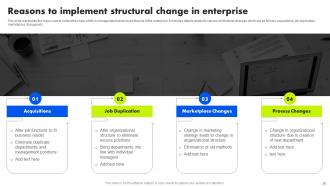
Slide 36: This slide exhibits the major causes behind the major shifts in management hierarchy and teams of the enterprise.
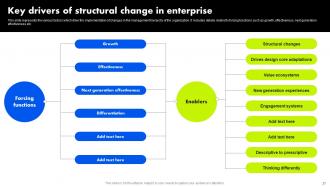
Slide 37: This slide states the Key drivers of structural change in enterprise.
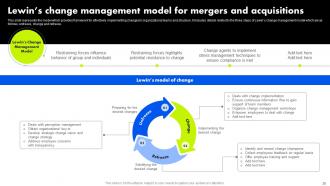
Slide 38: This slide represents the model which provides framework for effectively implementing changes to organizational teams and structure.
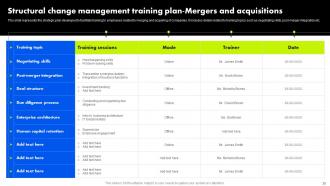
Slide 39: This slide provides information about the Structural change management training plan-Mergers and acquisitions.
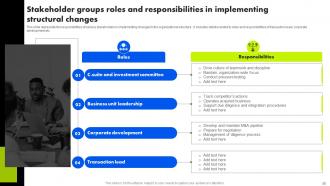
Slide 40: This slide talks about the Stakeholder groups roles and responsibilities in implementing structural changes.
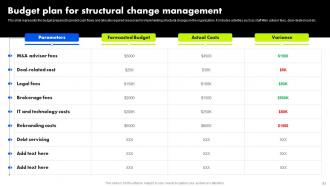
Slide 41: This slide displays the Budget plan for structural change management.
Slide 42: This slide incorporates the Heading for the Topics to be further discussed.
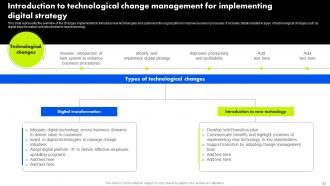
Slide 43: This slide gives an Introduction to technological change management for implementing digital strategy.
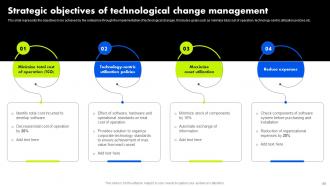
Slide 44: This slide reveals the objectives to be achieved by the enterprise through the implementation of technological changes.
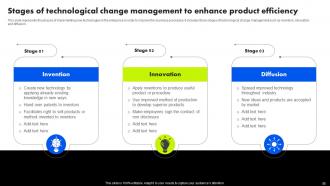
Slide 45: This slide depicts the phases of implementing new technologies in the enterprise in order to improve the business processes.
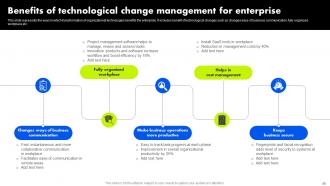
Slide 46: This slide includes the Benefits of technological change management for enterprise.
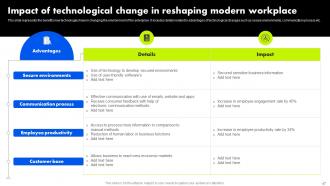
Slide 47: This slide highlights the Impact of technological change in reshaping modern workplace.
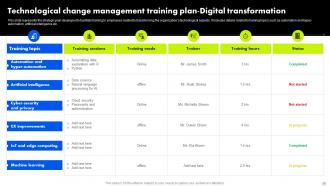
Slide 48: This slide talks about the Technological change management training plan-Digital transformation.
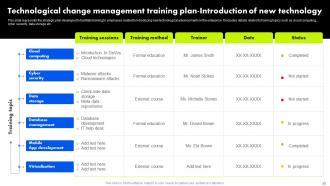
Slide 49: This slide portrays the Technological change management training plan-Introduction of new technology.
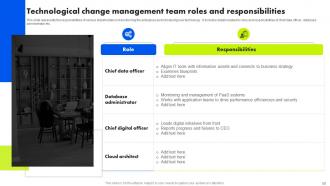
Slide 50: This slide showcases the responsibilities of various stakeholders in transforming the enterprise and introducing new technology.
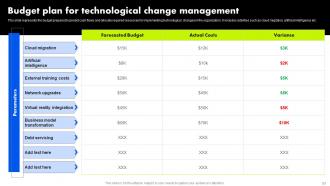
Slide 51: This slide displays the Budget plan for technological change management.
Slide 52: This slide mentions the Title for the Topics to be covered further.
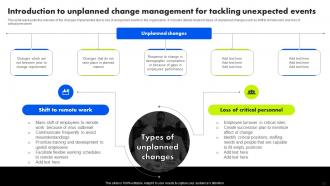
Slide 53: This slide gives an Introduction to unplanned change management for tackling unexpected events.
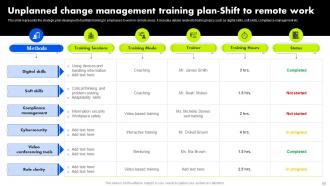
Slide 54: This slide talks about the Unplanned change management training plan-Shift to remote work.
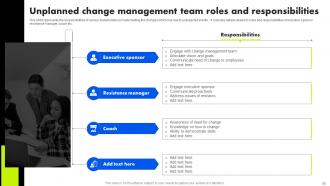
Slide 55: This slide portrays the Unplanned change management team roles and responsibilities.
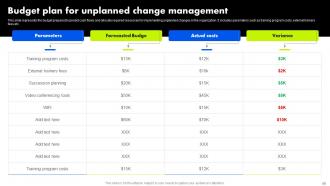
Slide 56: This slide represents the budget prepared to predict cash flows and allocate required resources for implementing unplanned changes in the organization.
Slide 57: This slide mentions the Heading for the Contents to be covered further.
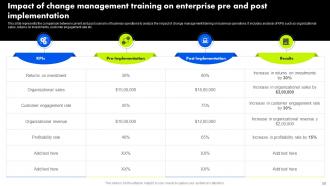
Slide 58: This slide reveals the Impact of change management training on enterprise pre and post implementation.
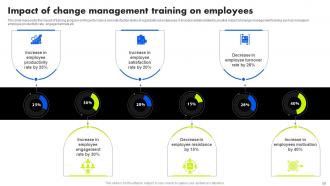
Slide 59: This slide showcases the Impact of change management training on employees.
Slide 60: This slide indicates the Title for the Ideas to be discussed in the following template.
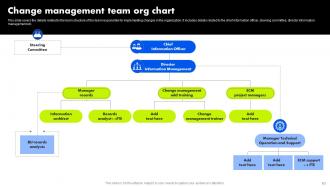
Slide 61: This slide covers the details related to the team structure of the team responsible for implementing changes in the organization.
Slide 62: This slide depicts the Heading for the Ideas to be covered further.
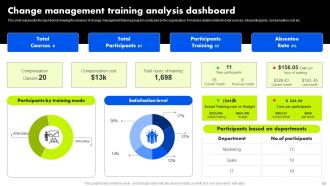
Slide 63: This slide represents the dashboard showing the analysis of change management training program conducted by the organization.
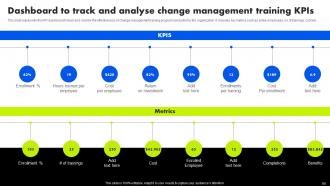
Slide 64: This slide elucidates the Dashboard to track and analyse change management training KPIs.
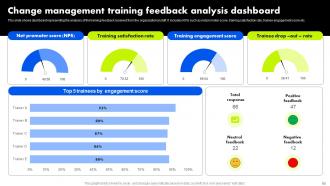
Slide 65: This slide displays the Change management training feedback analysis dashboard.
Slide 66: This is the Icons Slide containing all the Icons used in the plan.
Slide 67: This slide is used for showcasing some Additional information.
Slide 68: This slide contains Puzzle with related icons and text.
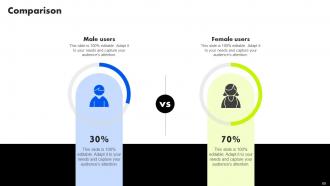
Slide 69: This is a Comparison slide to state comparison between commodities, entities etc.
Slide 70: This slide provides 30 60 90 Days Plan with text boxes.
Slide 71: This slide showcases Magnifying Glass to highlight information, specifications etc
Slide 72: This slide shows Post It Notes. Post your important notes here.
Slide 73: This is a Thank You slide with address, contact numbers and email address.
Organizational Change Management Training Program Powerpoint Presentation Slides with all 78 slides:
Use our Organizational Change Management Training Program Powerpoint Presentation Slides to effectively help you save your valuable time. They are readymade to fit into any presentation structure.







FAQs for Organizational Change Management Training Program
Organizational change drivers include globalization, technological disruption, evolving customer expectations, and increased competition, alongside economic shifts and regulatory pressures. These forces necessitate agile adaptation by organizations, streamlining processes through digital transformation, enhancing customer experiences, and fostering innovation, ultimately delivering competitive advantage and sustained growth with many institutions finding that proactive change management is crucial for survival.
Leaders can effectively communicate a change vision to stakeholders by utilizing multiple channels, fostering transparent dialogue, and consistently reinforcing key messages. While clear articulation of goals is crucial, it also requires empathetic listening, addressing concerns from employees, customers, and investors, with many organizations finding that regular updates build trust. These approaches streamline buy-in, minimize resistance, and ultimately deliver enhanced collaboration and accelerated adoption, fostering a competitive advantage in an increasingly dynamic landscape.
Employee engagement significantly impacts change initiatives by fostering acceptance, reducing resistance, and accelerating adoption through open communication, active participation, and transparent leadership. While change presents both challenges and opportunities, highly engaged employees champion new processes, ultimately delivering improved productivity and enhanced customer experiences. With many organizations finding that engaged teams navigate disruption with greater agility, sustained success hinges on prioritizing employee voice and wellbeing.
Organizational change encounters barriers like employee resistance, communication breakdowns, lack of training, insufficient resources, and conflicting priorities. These challenges present both opportunities and risks, however, proactive leadership can mitigate them by fostering transparent communication, providing adequate training, and securing necessary resource allocation. With many institutions finding that addressing these hurdles streamlines transitions, ultimately delivering enhanced operational efficiency and a competitive advantage in an increasingly dynamic landscape.
Organizations can measure change management success through adoption rates, employee satisfaction scores, and quantifiable improvements in key performance indicators like productivity and profitability. These technologies streamline assessment by tracking training completion, monitoring sentiment analysis, and evaluating project milestones, ultimately delivering enhanced operational efficiency and a stronger return on investment.
Organizational change management strategies include clear communication, employee involvement, training programs, and supportive leadership, alongside incentives for adoption. These approaches streamline transitions by addressing concerns, fostering understanding, and building buy-in, with many institutions finding that proactive engagement minimizes disruption and ultimately delivers enhanced operational efficiency and competitive advantage.
Organizational culture impacts change management effectiveness by shaping employee perceptions, behaviors, and resistance levels through shared values, beliefs, and norms. While a collaborative culture helps facilitate smooth transitions, a hierarchical one presents both challenges and opportunities, requiring tailored communication and stakeholder engagement. Ultimately delivering increased adoption rates and minimized disruption, with many institutions finding that aligning change initiatives with existing cultural elements streamlines implementation and enhances long-term success.
Developing a change management strategy best practices include stakeholder analysis, clear communication, leadership alignment, training programs, and robust feedback mechanisms. These approaches streamline transitions by fostering buy-in, minimizing resistance, and ensuring skill development, with many financial services institutions finding that proactive planning delivers smoother implementations and sustained operational efficiency.
Organizational change management ensures alignment with business strategy by integrating initiatives with strategic objectives, key performance indicators, and resource allocation. These approaches streamline communication, foster stakeholder buy-in, and monitor progress against defined goals, with many institutions finding that proactive alignment delivers enhanced operational efficiency and competitive advantage.
Organizational Change Management benefits from tools like communication platforms, project management software, and data analytics dashboards, alongside specialized change impact assessment platforms and resistance management systems. These technologies streamline workflows by facilitating transparent communication, tracking progress, and identifying potential roadblocks, with many institutions finding that integrated solutions enhance employee engagement and ultimately deliver faster adoption and minimized disruption.
Training and development programs facilitate smoother transitions during organizational change by equipping employees with new skills, fostering adaptability, and reinforcing desired behaviors. While addressing skill gaps, these initiatives also build confidence and reduce resistance, with many institutions finding that proactive learning enhances employee engagement. Ultimately delivering increased operational efficiency and minimized disruption, these programs enable organizations to navigate change with greater agility and maintain a competitive advantage.
Change management models, like Kotter’s 8-Step Process and the ADKAR model, provide structured frameworks for leading transitions, encompassing awareness, desire, knowledge, ability, and reinforcement. These approaches streamline organizational shifts by fostering employee buy-in, minimizing disruption, and maximizing adoption rates, with many institutions finding that structured change delivers significantly enhanced project success and operational efficiency.
Feedback loops enhance adaptability in change management by consistently gathering insights, analyzing responses, and implementing adjustments throughout the process. These loops—including surveys, focus groups, and one-on-one meetings—streamline communication, identify roadblocks, and foster employee buy-in, with many organizations finding that proactive feedback minimizes resistance. Ultimately delivering improved project outcomes and a more agile, responsive organizational culture, especially within financial services and healthcare institutions navigating rapid market shifts.
Successful and unsuccessful organizational change reveals that clear communication, strong leadership, and employee engagement are critical, while neglecting these areas presents both challenges and opportunities. Banks and hospitals, for instance, demonstrate that proactive stakeholder involvement streamlines transitions, yet resistance often arises from unclear vision or insufficient training, ultimately delivering enhanced efficiency and competitive advantage.
Human Resources evolves during organizational change by facilitating communication, managing talent transitions, and fostering employee resilience. These functions streamline workforce adaptation through reskilling initiatives, change impact analyses, and proactive engagement strategies, while banks and hospitals find that dedicated HR support minimizes disruption. Ultimately delivering enhanced employee experiences and sustained operational efficiency, with many institutions recognizing the critical link between people and successful transformation.
-
One-stop solution for all presentation needs. Great products with easy customization.
-
Thank you SlideTeam for such an excellent service.