


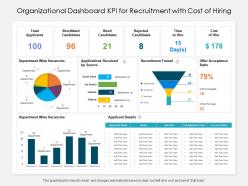
Organizational dashboard kpi for recruitment with cost of hiring





Try Before you Buy Download Free Sample Product
 Impress Your
 Audience
 100%
100% Editable
 Save Hours
 of Time


Our Organizational Dashboard KPI For Recruitment With Cost Of Hiring are topically designed to provide an attractive backdrop to any subject. Use them to look like a presentation pro.
People who downloaded this PowerPoint presentation also viewed the following :
Organizational dashboard kpi for recruitment with cost of hiring with all 2 slides:
Use our Organizational Dashboard KPI For Recruitment With Cost Of Hiring to effectively help you save your valuable time. They are readymade to fit into any presentation structure.
FAQs for Organizational dashboard kpi for recruitment with
Focus on time-to-hire, cost-per-hire, and quality of hire (90-day retention plus performance ratings). Source of hire matters too - which channels actually work vs just spam you with applications. Most places get obsessed with application volume but honestly? Total waste if they're all garbage candidates. Hiring manager satisfaction is weirdly important since pissed off managers won't cooperate next time. Track these monthly and you'll catch problems early. Oh, and skip the fancy dashboards at first - a simple spreadsheet works fine until you get the hang of it.
Honestly, the biggest game-changer is building your talent pipeline before you're desperate to fill spots. Keep sourcing and pre-screening people for roles you know come up regularly - having that warm bench ready saves so much time later. Speed up your phone screens and get hiring managers to actually stick to decision deadlines. Most delays happen because everyone's being weird about scheduling (seriously, just pick a time!). Oh, and don't lower your standards obviously, just move through each step faster. It's really about staying proactive instead of reactive.
Oh, candidate satisfaction scores are super telling about your hiring process. When candidates have a good experience - even the ones you don't hire - they'll actually refer people to you later. It's like free marketing, honestly. Poor scores usually mean your process drags on forever, communication is spotty, or your interviewers showed up unprepared. The coolest part? Happy candidates become walking advertisements for your company. Just send a quick 2-question survey after interviews. Seriously, even something that basic will show you exactly where you're dropping the ball.
So quality of hire - you're basically tracking how new people perform in their first 6-12 months, plus whether they actually stick around. Performance ratings, retention rates, time until they're fully productive. That stuff. It sounds simple but honestly gets complicated quick. Your screening process matters a ton, plus how good your interviews actually are. Oh and whether you oversold the role during hiring (guilty as charged lol). I'd start simple - track who's still there at 90 days and one year. Way easier to measure. Once you've got that down, then add performance metrics on top.
High turnover is killing your recruiting metrics - time-to-fill goes up, costs skyrocket, and you're constantly hiring. Track your turnover rate next to recruitment numbers. Losing 20% of new hires in year one? You're doing way more recruiting than necessary. It's honestly like being stuck on a hamster wheel. Calculate replacement costs by multiplying average cost-per-hire by annual turnover. Don't forget quality metrics either - rushed hires usually backfire. I'd start tracking 90-day and 1-year retention to spot patterns. Might help you tweak your screening process too.
Honestly, I'd start simple - just track where you're losing diverse candidates in your pipeline. Look at applications vs interviews vs final hires, broken down by demographics. Way more useful than staring at end numbers wondering what went wrong. Set concrete targets too, like "40% of finalists from underrepresented groups" instead of some fuzzy "we value diversity" nonsense. Time-to-hire matters more than people think - dragged out processes usually hit diverse candidates harder. Oh, and don't try measuring everything at once. Pick 2-3 metrics that actually matter to your situation first.
Look at your offer acceptance rates broken down by where you found people, what level role, and how long your process took. Patterns will jump out - like if all your senior devs from LinkedIn keep saying no, you know there's an issue there. Usually it's one of three things: your pay sucks, you're taking forever to make offers, or they're just getting better deals somewhere else. Which honestly happens all the time, don't take it personally. Always ask why people declined though - that's where the real insights are. Way more useful than just comparing yourself to industry benchmarks.
Honestly, data analytics is your best friend here. Track where candidates are dropping off in your funnel - like which job boards actually work vs the ones that just eat your budget (I've watched teams blow money on useless sites for ages). Look at your conversion rates between each step and time-to-hire by stage. Your best hires probably came from specific sources or had certain interview patterns, so dig into that data. Set up dashboards to catch application drop-offs early. Test changes one at a time so you'll know what actually moved the needle. Start with your biggest drop-off point first - that's where you'll see the most impact.
Honestly, tracking source of hire is a game changer. You'll see which channels actually bring in good people vs just flooding you with random applications. Like, maybe that pricey job board you're paying for is trash, but employee referrals keep bringing in rockstars. Once I started pulling this data monthly, the patterns were super obvious - saved me tons of time and budget. You can literally shift your whole recruiting strategy based on what's working. Some channels look busy but deliver garbage candidates, you know?
Honestly, engagement metrics are way more important for recruiting than most people realize. When your job posts get lots of likes and shares, you're hitting better candidates - the ones who actually care about your company. Those people commenting and engaging? They'll probably apply and be decent hires too. Plus all that activity spreads your posts for free, which is pretty sweet. I'd start tracking stuff like engagement rates and how many people click through to your careers page. You might be surprised how well it predicts which candidates will actually follow through. Worth measuring alongside your usual hiring stats.
Look for the obvious stuff first - time-to-fill dragging on forever, candidates giving you bad reviews, people rejecting your offers left and right. When hiring managers won't stop bitching about candidate quality, that's usually your canary in the coal mine. Cost-per-hire going crazy is another big one. Same with your funnel conversion rates tanking (honestly seen way too many teams just ignore this). Early turnover tells the whole story too - means you're probably screwing up somewhere in screening. Just pick whatever metric is bleeding money right now and start digging there.
Honestly, start with where you're finding people - that's gonna save you the most money. Employee referrals are your best friend here since they're basically free and usually work out well. For entry-level stuff, try building connections with local colleges or coding bootcamps instead of paying those crazy agency fees. I swear some of those recruiters charge more than the actual salary. Just make sure you're still tracking the important stuff - like do people stick around after 90 days? Are they actually good at their jobs? Keep an eye on your budget too. You'd be shocked how much random subscription tools add up.
Honestly, I'd start with the big industry reports - SHRM and LinkedIn Talent Insights have solid benchmarking data. Glassdoor's got hiring stuff too. But here's the thing - sometimes just texting other HR friends about their time-to-fill numbers is way more helpful than diving into some 50-page study. Those recruiting platforms like Workable publish benchmark data pretty regularly. Just make sure you're comparing similar company sizes and industries, otherwise the numbers won't mean much. I'd pick maybe 2-3 key metrics first and find good comparison points for those.
So onboarding completion rates are basically whether people actually finish your whole onboarding process or bail early. Track it as percentages at 30, 60, 90 days. Honestly, this metric tells you everything about your hiring - like, are you picking people who actually want to be there? Low rates usually mean your screening sucks, you oversold the role, or your onboarding is just brutal. I had a friend whose company lost half their new hires in week one because their training was a nightmare. Check this monthly and figure out why people are dropping. It'll help you fix your interview process.
Focus on time-to-fill, cost-per-hire, and where your best candidates come from - that source tracking is clutch. Offer acceptance rates matter too. But honestly? The retention and hiring manager satisfaction scores will tell you way more than the flashy numbers everyone obsesses over. Track how candidates move through your pipeline stages. Make sure you can filter by department and date ranges so you're not flying blind. Charts that update automatically are a lifesaver because who has time to mess with spreadsheets every week, right? Oh, and 90-day retention is huge for measuring if you're actually hiring well.
-
Wonderful templates design to use in business meetings.
-
Easily Editable.
-
Editable templates with innovative design and color combination.