

Panasonic Company Profile Powerpoint Presentation Slides CP CD





Try Before you Buy Download Free Sample Product
 Impress Your
Audience
 100%
Editable
 Save Hours
of Time


Check out our professionally designed Panasonic Company Profile PowerPoint presentation. This Consumer electronics presentation covers the executive summary, company introduction, business model, global presence, historical timelines, product portfolio, affiliated companies, employee base, cultural diversity, shareholding pattern, etc. Also, this Electric appliances PowerPoint presentation shows the Board of Directors, key stats and figures, and revenue growth from 2018 to 2022. Moreover, this Corporate overview PowerPoint outlines business finances such as gross profit, operating profit, net profit, assets and liabilities, cash flow, etc. Additionally, this Company information Template illustrates business performance evaluation with competitor and SWOT analyses. Lastly, Milestones and Achievements PPT shows sustainability facts and CSR activities. Download our 100 percentage editable and customizable Template, also compatible with Google Slides.
People who downloaded this PowerPoint presentation also viewed the following :
Content of this Powerpoint Presentation
Slide 1: The slide introduces PANASONIC Company Profile. State your company name.
Slide 2: The slide displays Table of contents for presentation.
Slide 3: The slide continues Table of contents.
Slide 4: This slide represents the executive summary of Panasonic.
Slide 5: This slide covers company introduction, which includes overview (CEO, industry, founders, etc.).
Slide 6: This slide represents the vision and mission statement which showcases the desired future positioning of the company in the market.
Slide 7: This slide presents business subsidiaries for Panasonic highlighting – Panasonic Corporation which consists of China and Northeast Asia Company.
Slide 8: This slide represents business structure for Panasonic highlighting – automotive systems, entertainment and communication & housing solutions.
Slide 9: This slide presents business structure for Panasonic highlighting – connect corporation, industry, energy and operational excellence.
Slide 10: This slide highlights Panasonic global presence which covers regions.
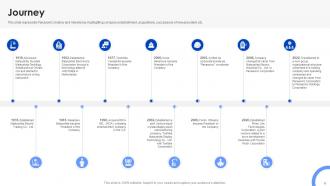
Slide 11: This slide represents Panasonic’s history and milestones, highlighting company establishment, acquisitions, successions of new president, etc.
Slide 12: This slide presents technological overview for Panasonic company, highlighting – AI, sensing technology, network platform and robotics.
Slide 13: This slide provides an overview of Panasonic's major areas in research and development.
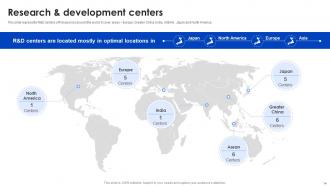
Slide 14: This slide represents R&D centers of Panasonics around the world.
Slide 15: This slide represents the leadership executive of Panasonic, which highlights different designations.
Slide 16: This slide demonstrates business model canvas.
Slide 17: This slide represents the employee count trend of Panasonic from 2018 to 2022, highlighting a slight decline in staff.
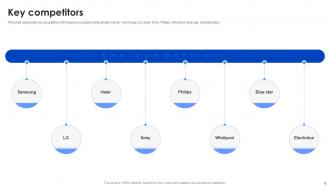
Slide 18: This slide highlights key competitors of Panasonic company in the global market.
Slide 19: This slide presents competitor analysis for Panasonic on the basis of parameters.
Slide 20: This slide displays financial highlights for Panasonic for FY20, 21 and 22.
Slide 21: This slide highlights the profit and loss financials for Panasonic.
Slide 22: This slide presents the balance sheet financials for Panasonic.
Slide 23: This slide represents the cash flow statement financials for Panasonic.
Slide 24: This slide displays the net sales split of Panasonic by geographical regions.
Slide 25: This slide represents an overview of Panasonic’s operating business segments.
Slide 26: This slide provides financial overview of business segment – Lifestyle.
Slide 27: This slide presents financial overview of business segment – Automotive.
Slide 28: This slide represents financial overview of business segment – Connect.
Slide 29: This slide renders financial overview of business segment – Industry.
Slide 30: This slide presents financial overview of business segment – Energy.
Slide 31: This slide displays the supply chain overview for Panasonic company.
Slide 32: This slide represents future goals for company development.
Slide 33: This slide presents a SWOT analysis for Panasonic showcasing its strengths, weaknesses, opportunities, and threats.
Slide 34: This slide displays company’s commitment to achieve a sustainable future.
Slide 35: This slide highlights key solutions offered by Panasonic for environmental causes.
Slide 36: This is a slide with address, contact numbers and email address.
Slide 37: This slide shows all the icons included in the presentation.
Slide 38: This slide is titled as Additional Slides for moving forward.
Slide 39: This slide depicts Venn diagram with text boxes.
Slide 40: This is an Idea Generation slide to state a new idea or highlight information, specifications etc.
Slide 41: This slide displays Mind Map with related imagery.
Slide 42: This slide presents Roadmap with additional textboxes.
Slide 43: This is a Thank You slide with address, contact numbers and email address.
Panasonic Company Profile Powerpoint Presentation Slides CP CD with all 51 slides:
Use our Panasonic Company Profile Powerpoint Presentation Slides CP CD to effectively help you save your valuable time. They are readymade to fit into any presentation structure.
















FAQs for Panasonic Company Profile Powerpoint Presentation
Panasonic's been around forever - started in 1918 making lamp sockets. They crushed it in the 50s-60s with appliances, then had this amazing run in the 80s with camcorders and trying to beat Sony's Walkman. Actually didn't become "Panasonic" officially until 2008, which is kinda crazy when you think about it. These days they've basically ditched consumer electronics for the boring but profitable stuff - car batteries, smart city tech, industrial solutions. Way less sexy than the old days but probably smarter business-wise. For partnerships, you'll want their automotive and industrial divisions. That's where the money is now.
Yeah so Panasonic is weird - they're basically four different companies stuck together. Automotive works with Tesla and stuff, Connect does consumer electronics, Lifestyle handles appliances, and Industry is all B2B. Each division has their own bosses and totally different ways of making decisions. The car people think long-term while Connect chases whatever's trending. Honestly makes sense but it's confusing from the outside. Just make sure you're talking to the right group because they don't really coordinate much between divisions.
So Panasonic's got four big areas now: automotive, industrial stuff, energy storage, and home appliances. Honestly, the automotive side is where they're killing it - think EV batteries and car tech systems. Industrial covers factory automation plus aircraft stuff, which is actually pretty wild. Energy storage's booming too, especially since they're partnered with Tesla and other EV companies. Their appliance business still does okay in some markets, but it's not really their main thing anymore. If you're thinking partnerships or buying from them, I'd definitely look at automotive and industrial - that's where they're throwing most of their money these days.
Yeah so Panasonic basically ditched the whole TV/stereo thing and went hard into car tech and batteries. You know those Tesla batteries? That's them - pretty smart move honestly. They're also doing tons of smart home stuff and industrial automation now. Makes total sense when you think about it, since TV margins are garbage these days. Actually reminds me of how IBM reinvented itself back in the day. But yeah, they saw the writing on the wall with consumer electronics and pivoted to where the real money is. It's working out pretty well for them.
Panasonic's going all-in on carbon neutrality – they want net-zero emissions by 2030 across their whole supply chain. Honestly pretty aggressive timing if you ask me. They're dumping money into solar panels and EV batteries while trying to cut manufacturing waste with some "cradle-to-cradle" thing. Also big on recycling programs and sustainable materials. Oh, their annual sustainability reports are actually readable (weird, I know) and have real numbers if you're thinking about working with them or just want to see what they're up to.
So Panasonic dumps about 4-6% of their revenue into R&D every year, which is honestly pretty impressive for a company that big. They're obsessed with solving real problems - sustainability stuff especially. What's smart is they don't just work in isolation. They partner with startups and universities constantly to stay on top of trends. Their main focus areas are automotive tech, energy solutions, and smart home devices (though that last one feels a bit saturated to me). If you're thinking about working with them or competing against them, I'd definitely track their patent filings and see who they're collaborating with at universities.
So Panasonic basically lives or dies by innovation - that's how they stay ahead. Look at their EV batteries (they supply Tesla) or even their regular home stuff. They don't just improve existing products though. When new tech pops up, they'll completely shift entire divisions around it, which is pretty gutsy if you ask me. The real difference? They get from R&D to actual products way faster than most companies. For your analysis, I'd dig into their patents and see how quick they are at turning lab work into stuff people can actually buy.
Panasonic's huge so they can't just use the same playbook everywhere. What kills it in Japan will totally bomb in Brazil, right? They switch up their messaging, pricing, even which products they highlight based on what each region actually wants. Distribution gets the same treatment - different partners and supply chains depending on local stuff. Asian markets? They're all about compact, techy features for home appliances. North America though - it's durability and family-friendly vibes. Honestly, I'd always ask which regional approach they're using for your specific market before diving in.
Tesla's their biggest thing - they make battery cells for their cars and energy storage stuff. Toyota's another major one, working on car parts and hydrogen fuel cells together. Oh, and Microsoft for cloud IoT solutions, though that's kinda boring compared to the car stuff. Honestly the automotive partnerships are where it gets interesting - feels like that's becoming their main focus now. Toyota and Tesla are pretty different approaches too, which is smart hedging if you ask me. There's probably other partnerships I'm forgetting, but those are the big ones worth watching.
So Panasonic basically spread out their suppliers instead of relying on just a few - smart after that whole COVID mess. They put money into digital tracking systems to catch problems early. Local sourcing became huge for them, especially batteries and car parts. Honestly makes sense when you think about how insane shipping costs got. Building better relationships with suppliers through longer contracts helped too. Oh, and they started mapping backup suppliers ahead of time - that's probably the biggest takeaway if you're dealing with this stuff.
Panasonic's actually pretty solid on the engagement front. They're big on developing people long-term instead of chasing quarterly numbers, which I respect. Heavy investment in training, lots of internal promotions. Keeps people around. The "customer first" thing gives everyone direction, though some folks find it a bit much sometimes. Their whole continuous improvement approach means you're constantly pitching efficiency ideas - can be energizing or exhausting depending on your personality. If you're serious about them, definitely check out their mentorship programs. That's where you'll really see how they invest in growth.
So Panasonic actually has pretty solid ways to collect feedback - they do user testing, dig through support tickets, and run surveys during product development. The cool part is their "customer co-creation" thing where they bring regular users into the design process super early. Smart move tbh. They track feedback patterns across different regions too since what works in Japan might flop elsewhere. Oh and here's the thing - if you want to actually influence what they build next, their official feedback channels and beta programs aren't just for show. People who participate do see their suggestions pop up in later releases.
So Panasonic's got a few main CSR things going on. Environmental stuff is huge for them - carbon neutrality, cutting manufacturing waste, all that. They do tech education programs in underserved areas which is actually pretty neat. Employee volunteer programs too. Oh and they're always jumping in for disaster relief when stuff happens. Their facilities try to support whatever local communities they're in. Honestly if you're thinking about partnering or just want to see how they stack up, grab their annual sustainability report - has all the numbers and targets laid out.
Yeah, Panasonic's gotten pretty good with data security lately. They do the whole multi-layered encryption thing and follow GDPR standards. Their IoT stuff uses end-to-end encryption, which is solid. What I like is they build privacy into products from the start instead of just slapping it on afterward - way smarter approach. They're also good about pushing security updates regularly. If you're looking at them for work, I'd definitely grill them about their compliance certs and what happens if something goes wrong. Better to ask those awkward questions upfront, you know?
So Panasonic's basically betting big on EV batteries right now - that Tesla partnership was huge for them. They're also doing smart home stuff and sustainable energy, plus throwing AI into everything. Honestly, I think most people still see them as just making TVs and cameras, but they've shifted hard into B2B. Factory automation, supply chain tech, that kind of thing. Oh and IoT integration across their whole lineup. If you're looking at investment stuff, their battery division is where the money's at. Way more potential there than their consumer electronics.
-
SlideTeam never fails to surprise me with its amazing PPT designs. Thanks team for providing me with your constant support!
-
“I always have a wonderful experience with SlideTeam. It's my ""go to"" when I need a template.”