


Patent Licensing Powerpoint Ppt Template Bundles




Try Before you Buy Download Free Sample Product
 Impress Your
 Audience
 100%
100% Editable
 Save Hours
 of Time


Our Patent Licensing Powerpoint Ppt Template Bundles are topically designed to provide an attractive backdrop to any subject. Use them to look like a presentation pro.
People who downloaded this PowerPoint presentation also viewed the following :
Patent Licensing Powerpoint Ppt Template Bundles with all 16 slides:
Use our Patent Licensing Powerpoint Ppt Template Bundles to effectively help you save your valuable time. They are readymade to fit into any presentation structure.







FAQs for Patent Licensing Powerpoint
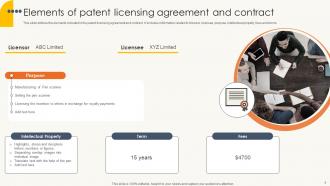
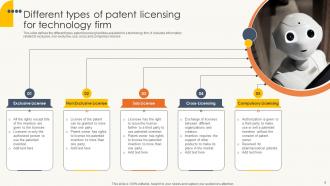
Primary patent licensing agreements include exclusive licenses, non-exclusive licenses, sole licenses, cross-licensing arrangements, and compulsory licenses. These agreements enable patent holders to monetize intellectual property while allowing licensees to access protected technologies, with many organizations finding that strategic licensing delivers new revenue streams, reduced litigation risks, and enhanced competitive positioning across industries.
A compulsory license is government-mandated when patent holders refuse reasonable licensing terms or create market barriers, while voluntary licenses result from direct negotiations between patent owners and licensees. Compulsory licensing typically occurs in pharmaceuticals, telecommunications, and essential technologies, ensuring public access to critical innovations while providing patent holders with statutory compensation, ultimately balancing innovation incentives with broader societal needs.
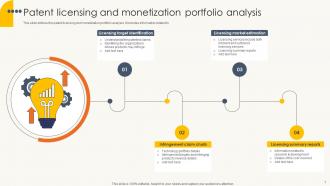
Inventors should consider market demand, patent strength, development costs, competitive landscape, and licensee's revenue potential when determining licensing fees. These factors enable strategic pricing through comprehensive market analysis, intellectual property valuation, and competitive positioning, with many inventors finding that balanced fee structures ultimately deliver sustainable revenue streams while encouraging widespread adoption.
Companies leverage patent licensing to enhance market position by generating revenue streams from unused IP, accessing complementary technologies, and forming strategic partnerships. Through licensing agreements, organizations expand into new markets, reduce R&D costs, and accelerate product development, while building industry relationships that create competitive advantages and sustainable growth opportunities.
Patent licensing agreements present risks including royalty disputes, scope ambiguity, infringement liability, termination clauses, and sublicensing complications that can impact operational continuity. These challenges require careful contract structuring, with many technology companies and pharmaceutical firms finding that comprehensive due diligence, clear performance metrics, and strategic legal review ultimately minimize exposure while preserving competitive advantage.
Territorial restrictions significantly shape global patent licensing strategies by limiting licensees' geographic scope, requiring companies to negotiate multiple regional agreements, and creating complex compliance frameworks across different jurisdictions. While these restrictions present coordination challenges, they also enable strategic market segmentation and pricing optimization, with many multinational corporations finding that territory-specific licensing delivers enhanced revenue control and competitive positioning in key markets.
Patent litigation significantly influences licensing negotiations by creating leverage, establishing precedent values, and accelerating settlement discussions, with patent holders using litigation threats to strengthen their position while potential licensees assess infringement risks and damages exposure. Many companies find that active litigation or credible litigation threats streamline licensing discussions, ultimately delivering faster agreements and clearer valuation frameworks, particularly in technology-intensive industries like pharmaceuticals and telecommunications.
Cross-licensing enables companies in similar technological fields to access each other's patent portfolios, reducing litigation risks, accelerating innovation, and lowering development costs. Through strategic cross-licensing agreements, organizations in sectors like telecommunications, pharmaceuticals, and semiconductors streamline product development, enhance market entry capabilities, and ultimately deliver competitive advantages while minimizing patent infringement concerns.
Key considerations include technology maturity, market potential, regulatory landscapes, infringement risks, and valuation complexities inherent in emerging fields. These factors require strategic evaluation by assessing competitive positioning, licensing scope flexibility, and revenue models, with many technology companies finding that early licensing partnerships ultimately deliver market access advantages and reduced development costs in increasingly dynamic innovation sectors.
Startups can effectively use patent licensing to attract investors by demonstrating strong intellectual property portfolios, establishing recurring revenue streams through licensing agreements, and showcasing strategic partnerships with industry leaders. These licensing arrangements signal market validation and competitive positioning, with many investors finding that patent-backed startups present lower risk profiles and clearer paths to scalability and profitability.
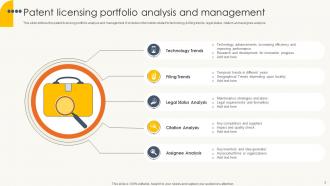
Due diligence should include validating patent ownership and enforceability, assessing scope and territorial coverage, analyzing potential infringement risks, and evaluating the licensor's litigation history. Companies should also examine existing licensing agreements, review patent prosecution files, and conduct freedom-to-operate analyses, with many organizations finding that thorough technical and legal review ultimately prevents costly disputes and ensures strategic licensing alignment.
Patent licensing agreements vary significantly between pharmaceuticals and technology sectors, with pharmaceutical licenses typically featuring longer terms, higher royalty rates, and extensive regulatory compliance requirements, while technology licenses emphasize shorter innovation cycles, cross-licensing arrangements, and rapid market deployment. These industry-specific approaches reflect distinct business models, with pharmaceutical companies investing heavily in long-term R&D recovery and technology firms prioritizing competitive positioning and platform integration.
Patent licensing fosters innovation by enabling technology sharing, reducing research duplication, creating revenue streams for inventors, facilitating cross-industry collaboration, and lowering barriers for startups. Through strategic licensing agreements, companies in pharmaceuticals, technology, and manufacturing access cutting-edge solutions without massive R&D investments, ultimately accelerating product development cycles and delivering enhanced market competition.
Patent licensing presents both challenges and opportunities for open-source development, affecting code sharing, community collaboration, and project sustainability. While restrictive licenses can limit developer participation and create legal uncertainties, permissive licensing approaches enable broader innovation, with many tech companies finding that strategic patent pools and defensive licensing ultimately foster collaborative ecosystems and accelerate software advancement.
Businesses can navigate patent licensing in international trade through comprehensive IP audits, understanding territorial rights under agreements like TRIPS, and establishing clear cross-border licensing frameworks. Many multinational companies streamline this process by leveraging trade agreement provisions, coordinating with local legal experts, and implementing standardized licensing protocols, ultimately reducing compliance costs while accelerating global market entry and maintaining competitive advantage across multiple jurisdictions.
-
They guys always go the extra mile to meet the expectations of their customers. Almost a year has been associated with them.
-
A perfect platform for all your presentation needs. Unlimited products at an affordable price.