


Pepsico competitors 2018




Try Before you Buy Download Free Sample Product
 Impress Your
 Audience
 100%
100% Editable
 Save Hours
 of Time


Adopt a broadminded approach with our Pepsico Competitors 2018. They allow you to break free of convention.
People who downloaded this PowerPoint presentation also viewed the following :
Pepsico competitors 2018 with all 5 slides:
Establish command over core areas with our Pepsico Competitors 2018. Gain control over critical domains.
FAQs for
PepsiCo implemented portfolio diversification through healthier snack acquisitions, expanded its zero-sugar beverage lines, and invested heavily in direct-to-consumer e-commerce platforms. These strategic moves enabled stronger positioning against Coca-Cola and emerging health-focused brands, while delivering enhanced market share in growing wellness segments and improved digital customer engagement capabilities.
The beverage landscape in 2018 shifted toward health-conscious alternatives, craft beverages, and premium products as emerging competitors challenged traditional giants like PepsiCo with innovative offerings. These new entrants streamlined distribution through direct-to-consumer models, enhanced product differentiation with functional ingredients, and accelerated market fragmentation, with many established companies finding that diversification and strategic acquisitions became essential for maintaining competitive advantage in an increasingly crowded marketplace.
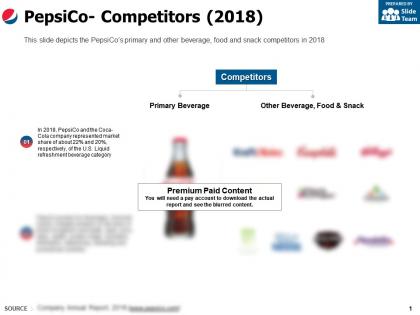
Coca-Cola remained PepsiCo's primary competitor in 2018, alongside Nestlé, Mondelez International, Kellogg Company, and Unilever across various product categories. These companies challenged PepsiCo through aggressive pricing strategies, innovative product launches, and strategic acquisitions in beverages and snacks, with many brands ultimately driving intense competition that accelerated market innovation and consumer choice expansion.
Branding significantly influenced PepsiCo's 2018 competition strategy through strategic repositioning campaigns, targeted demographic messaging, and enhanced digital engagement across multiple platforms. The company leveraged brand differentiation to compete with Coca-Cola and emerging beverage startups, with campaigns like "For the Love of It" enabling stronger emotional connections, increased market share in key demographics, and ultimately delivering enhanced brand loyalty while positioning PepsiCo as more culturally relevant.
Health trends significantly reshaped PepsiCo's portfolio through expanded better-for-you options, reduced sugar formulations, and strategic acquisitions of healthier brands like Bare Snacks and SodaStream. This strategic pivot enabled PepsiCo to compete more effectively against health-focused competitors while maintaining market leadership, with many consumers increasingly choosing their reformulated products over traditional alternatives, ultimately delivering stronger brand loyalty and sustained revenue growth.
International markets served as critical battlegrounds where PepsiCo competed with Coca-Cola, Nestlé, and Unilever through localized product portfolios, strategic acquisitions, and regional partnerships. These global expansions enabled revenue diversification, market share growth in emerging economies like India and China, and competitive positioning against local brands, ultimately delivering geographic resilience and sustained growth opportunities.
PepsiCo's 2018 marketing campaigns emphasized celebrity partnerships and social causes, competing directly with Coca-Cola's happiness-focused messaging and Dr Pepper's quirky personality-driven approach. While PepsiCo leveraged influencers like Beyoncé and focused on cultural moments, competitors like Nestlé and Unilever emphasized product innovation storytelling, with many brands finding that authentic brand purpose resonated more effectively than traditional celebrity endorsements.
**INPUT**: What innovations or product launches did competitors make that challenged PepsiCo in 2018? **OUTPUT**: Competitors launched significant innovations including Coca-Cola's expanded Coca-Cola Energy line, Nestlé's premium coffee partnerships, Dr Pepper Snapple's craft soda acquisitions, and emerging brands' plant-based alternatives. These strategic moves challenged PepsiCo by targeting health-conscious consumers, premium segments, and functional beverages, ultimately forcing accelerated innovation in wellness-focused products and sustainable packaging solutions.
Consumer preferences in 2018 shifted toward healthier, organic, and functional beverages, impacting PepsiCo and rivals like Coca-Cola, Nestlé, and Unilever significantly. These companies responded by reformulating products, reducing sugar content, and expanding portfolios with natural ingredients, ultimately delivering enhanced market positioning and meeting evolving consumer demands in an increasingly health-conscious landscape.
In 2018, PepsiCo's competitors launched significant sustainability initiatives including Coca-Cola's World Without Waste program targeting 100% recyclable packaging, Nestlé's plastic reduction commitments, and Unilever's Sustainable Living Plan expansion. These strategic environmental programs enabled companies to enhance brand reputation, reduce operational costs, and meet growing consumer demand for responsible practices, with many finding that sustainability initiatives ultimately delivered competitive differentiation in an increasingly environmentally-conscious marketplace.
Pricing strategies in 2018 evolved through premium product positioning, value-tier expansions, and dynamic promotional campaigns, with PepsiCo, Coca-Cola, and competitors increasingly leveraging data analytics for market-specific adjustments. These companies balanced inflation pressures with consumer demand by introducing smaller pack sizes, limited editions, and healthier options at premium price points, ultimately delivering enhanced profit margins while maintaining competitive market positioning.
Competitors explored strategic acquisitions targeting health-conscious brands, premium beverages, and emerging market expansion to challenge PepsiCo's dominance. Companies like Coca-Cola pursued kombucha and functional drink brands while Nestlé targeted coffee and wellness segments, ultimately delivering diversified portfolios and enhanced market positioning in rapidly evolving consumer preferences.
Digital transformation reshaped PepsiCo's competitive strategy in 2018 through enhanced data analytics, personalized marketing campaigns, direct-to-consumer platforms, and supply chain automation technologies. These digital initiatives enabled PepsiCo to compete more effectively with agile startups and traditional rivals like Coca-Cola by streamlining operations, accelerating product innovation, and delivering targeted consumer experiences, ultimately strengthening market positioning.
Social media presence significantly influenced competitor dynamics in 2018 by enabling direct consumer engagement, real-time brand positioning, and viral marketing campaigns that could instantly shift market perception. Companies like Coca-Cola and PepsiCo leveraged platforms to showcase brand personality and respond to trends, while emerging beverage brands used targeted social strategies to challenge established players, ultimately delivering enhanced customer loyalty and competitive differentiation.
PepsiCo's 2018 competitive experiences revealed that diversification across beverages, snacks, and healthier product lines provides strategic resilience against single-category competitors like Coca-Cola. The company learned that investing in premium brands, expanding international markets, and accelerating e-commerce capabilities enables sustained growth, with many consumer goods companies finding that omnichannel strategies and health-conscious innovations ultimately deliver competitive advantage in increasingly fragmented markets.
No Reviews