


Personal Care Products Company Profile Powerpoint Presentation Slides CP CD V




Try Before you Buy Download Free Sample Product
 Impress Your
 Audience
 100%
100% Editable
 Save Hours
 of Time


A company profile describes all the relevant elements of a business, which helps the investors and stakeholders evaluate the business's value and performance. Check out our professionally designed Personal Care Products Company Profile PowerPoint presentation. At first, it includes a company overview, vision, mission, and principles with corporate history. It also includes the business structure and segments consumer care, food business, and retail business. Additionally, the PPT shows the product market share leadership position and product portfolio hair care products, healthcare products, home care products, skin care products, oral care products, and food products. Moreover, the module covers product positioning, which covers Indian and international business. It also emphasizes the companys geographic presence, management team, business model, and distribution structure. Furthermore, it covers the financials of Dabur, including revenue, operating profit, PAT, EPS, and market capitalization. It also includes competitor analysis and strategy, highlighting new product launches, risk and mitigation strategies, and expansion strategies. At last, it includes a SWOT analysis and corporate social responsibility of Dabur. Get access to this powerful template now
People who downloaded this PowerPoint presentation also viewed the following :
Content of this Powerpoint Presentation
Slide 1: This slide displays the title Personal Care Products Company Profile.
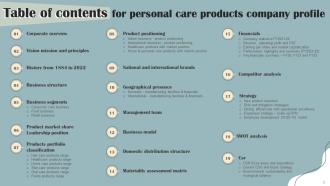
Slide 2: This slide exhibit table of content.
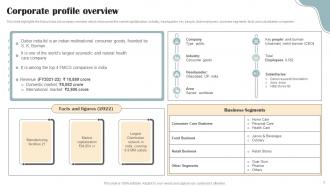
Slide 3: This slide highlights the Dabur India Ltd company overview which showcases the market capitalization, industry, headquarter, key people, total employees.
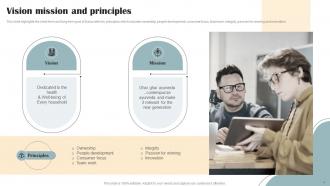
Slide 4: This slide highlights the short-term and long-term goal of Dabur with key principles which includes ownership, people development, consumer focus, teamwork.
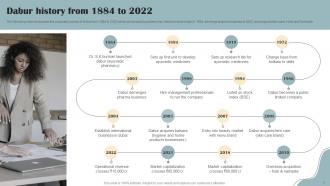
Slide 5: This slide showcases the corporate journey of Dabur from 1884 to 2022 which showcases launched year, listed on stock index in 1994, demerge pharma business in 2003.
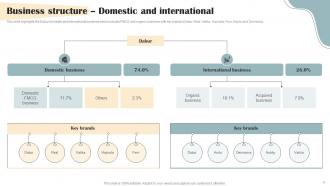
Slide 6: This slide highlights the Dabur domestic and international business which includes FMCG and organic business with key brands.
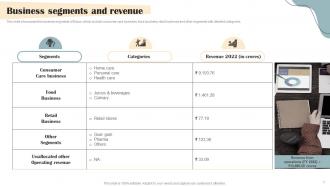
Slide 7: This slide showcases the business segments of Dabur, which include consumer care business, food business, retail business and other segments with detailed categories.
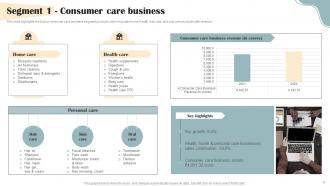
Slide 8: This slide highlights the Dabur consumer care business segment products which includes home, health, hair, skin and oral care products with revenue.
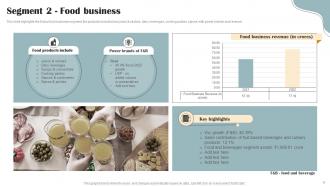
Slide 9: This slide highlights the Dabur food business segment, the products included are juices & nectars, dairy beverages, cooking pastes, spices, with power brands.
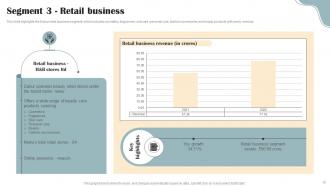
Slide 10: This slide highlights the Dabur retail business segment, which includes cosmetics, fragrances, skincare, personal care, fashion accessories and beauty products.
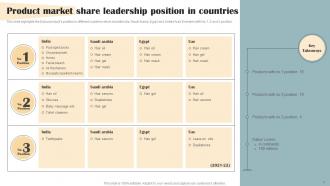
Slide 11: This slide highlights the Dabur product’s position in different countries which include India, Saudi Arabia, Egypt and United Arab Emirates.
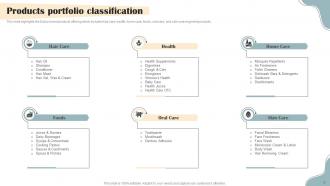
Slide 12: This slide highlights the Dabur brand products offering which includes hair care, health, home care, foods, oral care, and skin care segment products.
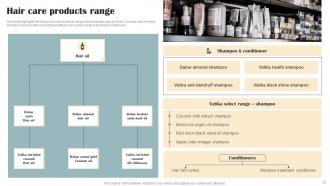
Slide 13: This slide highlights the Dabur hair care products range which includes hair oil, Shampoo and conditioner.
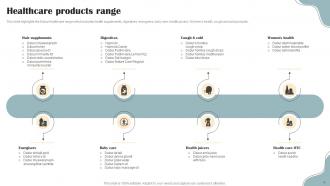
Slide 14: This slide highlights the Dabur healthcare range which includes health supplements, digestives, energizers, health juicers, Women’s health, cough and cold products.
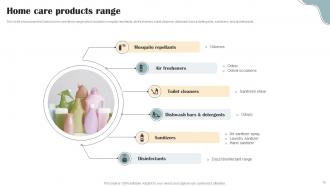
Slide 15: This slide showcases the Dabur home care items range which includes mosquito repellants, toilet cleaners, dishwash bars & detergents, sanitizers, and disinfectants.
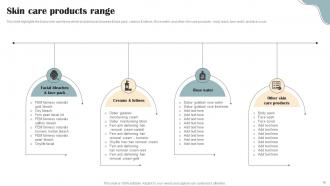
Slide 16: This slide highlights the Dabur skin care items which include facial bleaches & face pack, creams & lotions, Rose water, and other skin care products.
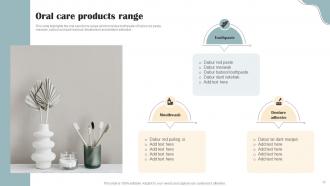
Slide 17: This slide highlights the oral care items range which includes toothpaste of Dabur red paste, meswak, babool and dant rakshak, Mouthwash and denture adhesive.
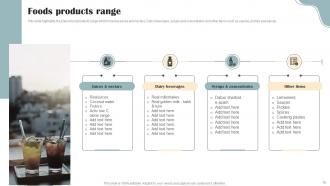
Slide 18: This slide highlights the Dabur food products range which includes juices and nectars, Dairy beverages, syrups and concentrates and other items.
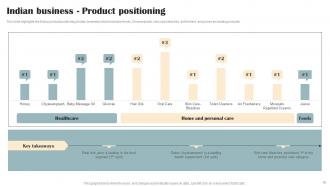
Slide 19: This slide highlights the Dabur product positioning (Indian business) which includes Chawanprash, skin care bleaches, air freshers, and juices as leading products.
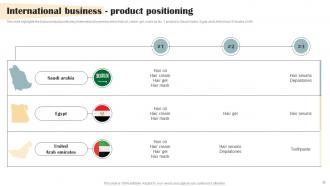
Slide 20: This slide highlights the Dabur product positioning (International business) which Hair oil, cream, gel, mask as No. 1 product in Saudi Arabia, Egypt.
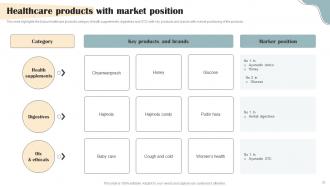
Slide 21: This slide highlights the Dabur healthcare products category with key products and brands with market positioning of the products.
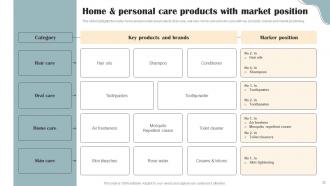
Slide 22: This slide highlights the Dabur home and personal care products (Hair care, oral care, home care and skin care) with key products, brands and market positioning.
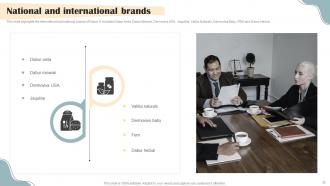
Slide 23: This slide highlights the International and national brands of Dabur. It includes Dabur Amla, Dabur Miswak, Dermoviva USA, Jaquline, Vatika Naturals.
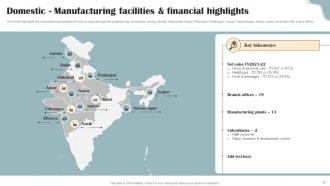
Slide 24: This slide highlights the manufacturing facilities of Dabur in India through the political map.
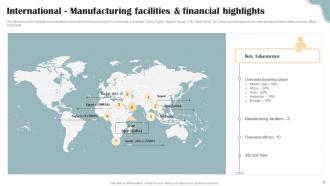
Slide 25: The following slide highlights the manufacturing facilities of Dabur through the world map.
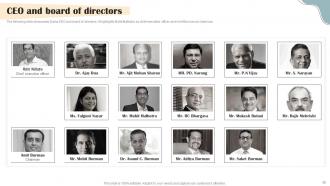
Slide 26: The following slide showcases Dabur CEO and board of directors. It highlights Mohit Malhotra as chief executive officer and Amit Burman as chairman.
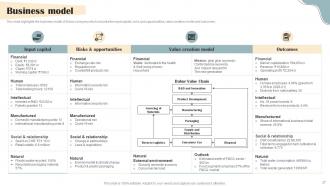
Slide 27: This slide highlights the business model of Dabur company which includes the input capital, risks and opportunities, value creation model and outcomes.
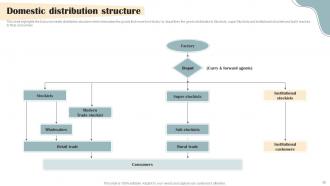
Slide 28: This slide highlights the Dabur domestic distribution structure which showcases the goods first move from factory to depot then the goods distributes.
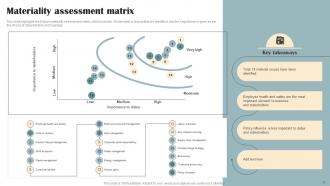
Slide 29: This slide highlights the Dabur materiality assessment matrix, which includes 10 elements or issues that are identified, and the importance is given.
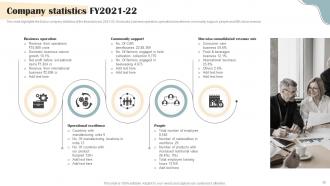
Slide 30: This slide highlights the Dabur company statistics of the financial year 2021-22.
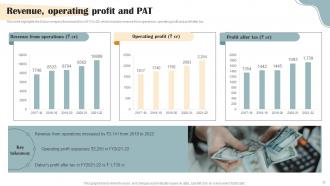
Slide 31: This slide highlights the Dabur company financials (from 2017 to 22) which includes revenue from operations, operating profit and profit after tax.
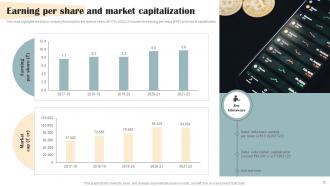
Slide 32: This slide highlights the Dabur company financials for the last five years (2017 to 2022). It includes the earning per share (EPS) and market capitalization.
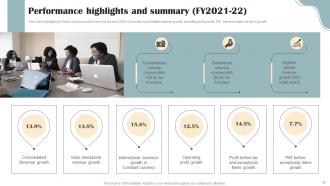
Slide 33: This slide highlights the Dabur company performance for the year 2022.
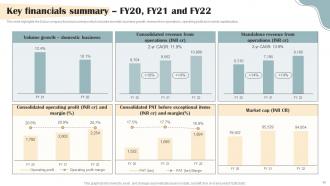
Slide 34: This slide highlights the Dabur company financial summary which includes domestic business growth, revenue from operations, operating profit and market capitalization.
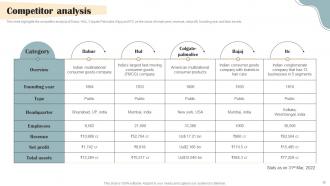
Slide 35: This slide highlights the competitor analysis of Dabur, HUL, Colgate-Palmolive, Bajaj and ITC on the basis of employees, revenue, net profit, founding year.
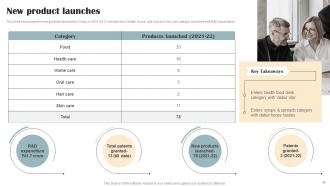
Slide 36: This slide showcases the new products launched by Dabur in 2021-22. It includes food, health, home, oral, hair and skin care category launches with R&D expenditure.
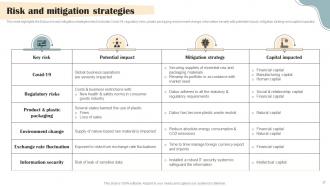
Slide 37: This slide highlights the Dabur risk and mitigation strategies which includes Covid-19, regulatory risks, plastic packaging, environment change.
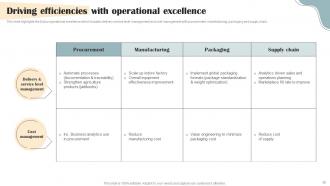
Slide 38: This slide highlights the Dabur operational excellence which includes delivery service level management and cost management.
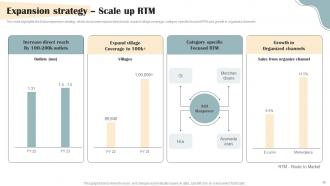
Slide 39: This slide highlights the Dabur expansion strategy, which showcases expand direct reach, expand village coverage, category specific focused RTM and growth.
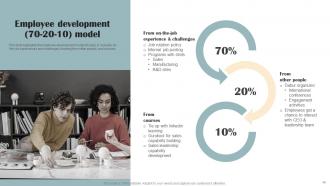
Slide 40: This slide highlights the employee development model of Dabur, It includes on-the-job experiences and challenges, learning from other people, and courses.
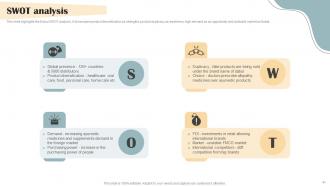
Slide 41: This slide highlights the Dabur SWOT analysis, it showcases product diversification as strengths, product duplicacy as weakness, high demand.
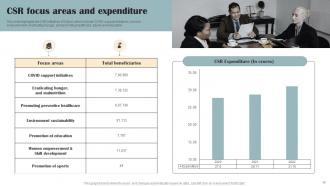
Slide 42: This slide highlights the CSR initiatives of Dabur, which include COVID support initiatives, women empowerment, eradicating hunger, and promoting healthcare.
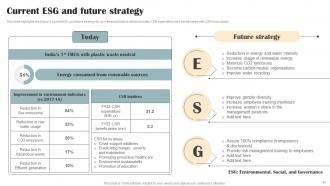
Slide 43: This slide highlights the Dabur’s current ESG and future strategy for non-financial factors which includes CSR expenditure and beneficiaries with CSR focus areas.
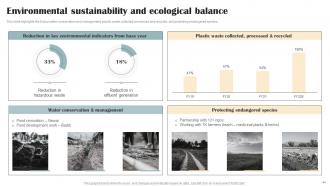
Slide 44: This slide highlights the Dabur water conservation and management, plastic waste collected, processed and recycles, and protecting endangered species.
Slide 45: This is the icons slide.
Slide 46: This slide presents title for additional slides.
Slide 47: This slide presents your company's vision, mission and goals.
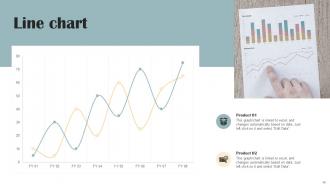
Slide 48: This slide display Line chart for different products.
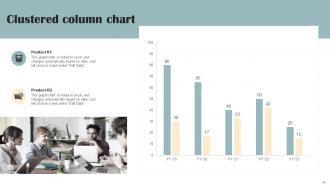
Slide 49: This slide display Clustered column chart for different products.
Slide 50: This slide display Our target.
Slide 51: This slide depicts posts for past experiences of clients.
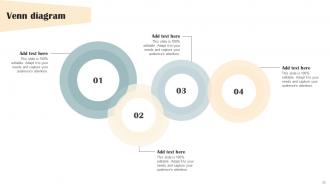
Slide 52: This slide display Venn diagram.
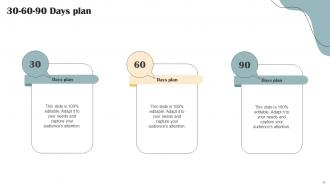
Slide 53: This slide depicts 30-60-90 days plan for projects.
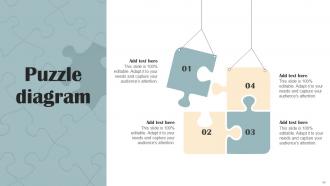
Slide 54: This slide shows puzzle for displaying elements of company.
Slide 55: This is thank you slide & contains contact details of company like office address, phone no., etc.
Personal Care Products Company Profile Powerpoint Presentation Slides CP CD V with all 60 slides:
Use our Personal Care Products Company Profile Powerpoint Presentation Slides CP CD V to effectively help you save your valuable time. They are readymade to fit into any presentation structure.






FAQs for Personal Care Products Company Profile Powerpoint Presentation Slides
Honestly, it's all about five core things. Your values come first - sustainability, whatever matters to you. Visual stuff like logos and packaging obviously matter too. Then there's your voice and how you actually talk to people (this is where most brands mess up IMO). Know your audience inside and out, and yeah... product quality can't be garbage or none of the other stuff matters. Everything needs to feel cohesive though. I'd start with figuring out your unique angle first, then work backwards from there.
Honestly, your target demo is everything when it comes to skincare. Millennials are obsessed with clean ingredients and that perfect packaging for their stories, but Gen X just wants stuff that actually works without the fuss. Teens need gentle formulas that won't wreck their skin, while people in their 40s are hunting for real anti-aging results. Plus you've gotta think about where they're scrolling - TikTok vs Facebook makes a huge difference for marketing. Oh and budget matters too obviously. Really though, once you figure out their specific problems and how they shop, everything else just falls into place.
Dude, sustainability is everywhere in personal care right now. Companies are switching to recyclable packaging, cutting water use, sourcing ingredients better - the whole nine yards. Consumers actually give a shit now, which is honestly refreshing. Your packaging matters most since that's what people see and toss later. The trick is balancing environmental impact with quality and costs (easier said than done, I know). I'd start with auditing your current packaging - usually the quickest way to make a difference without reinventing everything.
Honestly, the whole natural/organic thing isn't going anywhere - consumers are obsessed with "clean" ingredients now. Your R&D takes way longer since you can't just use whatever synthetic stuff is easiest. Natural preservatives are such a headache sometimes, and everything costs more. But people will absolutely pay extra for products they actually trust. The trick is staying ahead of it instead of playing catch-up when everyone else launches their natural lines. I learned this the hard way at my last job - we were so behind the curve it wasn't even funny.
Most personal care brands sell through drugstores, supermarkets, and big box retailers - that's still where the bulk of sales happen. Makes sense since people want to feel that moisturizer before dropping $30 on it, you know? Online's gotten huge too, especially after COVID. Amazon, brand websites, subscription boxes. Department stores and specialty beauty shops are still big players. Oh, and salons obviously. Smart move is spreading across different channels instead of betting everything on one. I'd start by figuring out where your customers actually shop first - sounds obvious but you'd be surprised how many brands skip that step.
Honestly, compliance stuff actually pushes you to innovate more, not less. Your R&D team has to get creative with formulations when regulations get stricter - they'll explore ingredients they never would've touched otherwise. Yeah, testing slows things down, but consumers are so picky about what's in their products now anyway. The trick is baking those requirements into your process from the start instead of scrambling to fix things later. Way less headache that way. It's like... you're designing with the rules in mind rather than fighting them after.
Look, the "natural" thing is everywhere now, so you gotta go deeper than that. What specific problem are you actually solving that others aren't? Maybe it's your ingredients, packaging, or just focusing on one particular group instead of everyone. Your story matters too - people buy into the why, not just what you're selling. I'd probably look into subscriptions or finding influencers who genuinely care about your stuff (not just whoever has the most followers). Start by figuring out what gap exists that competitors are totally missing or half-assing.
So basically people trust influencers way more than regular ads because it feels like getting advice from a friend. When someone you follow posts about a product, you're not thinking "this is an advertisement" - you're thinking "oh cool, Sarah likes this brand." Honestly the whole thing is kinda genius from a psychology standpoint. These creators build real relationships with their followers, so when they recommend something it carries actual weight. Way more effective than some corporate Instagram post nobody cares about. Just make sure you pick influencers whose followers would actually buy your stuff though - otherwise you're basically paying for views that'll never turn into sales.
Honestly, supply chain stuff will probably kick your ass first - getting consistent ingredients while dealing with FDA red tape is no joke. Manufacturing costs get brutal once you scale up because you lose those sweet small-batch margins. Shelf space? Good luck competing with the big guys who've been there forever. Your marketing spend basically needs to triple just to get noticed, which sucks but that's reality. Oh, and quality control becomes this whole complicated thing you didn't expect. My advice? Start talking to contract manufacturers now and sort out regulatory compliance before you desperately need it.
Honestly, start with the basics - online reviews, surveys, social media stuff, maybe some focus groups. But here's the thing that drives me crazy: so many companies just collect all this feedback and then... nothing. It sits there forever. Don't be that company. Actually DO something with what people tell you. Hit the biggest complaints first, then look at positive feedback to see what you're doing right (so you don't mess those things up). Set deadlines for fixing stuff and stick to them. People absolutely notice when you're actually listening.
Honestly, ingredient transparency is huge right now - people won't buy if they can't see what's actually in your stuff. Clean beauty has everyone reading labels like crazy, way more than before. They're scanning for sulfates, parabens, all that. Don't hide your ingredient list in tiny font somewhere random. Put it right on the front of your packaging and website where they'll actually see it. Even if some ingredients sound boring or technical, being honest about everything builds way more trust than trying to be sneaky. It's become one of those things that can make or break a sale, especially with younger customers.
Dude, e-commerce totally changed the game for personal care brands. They're going straight to customers now instead of just hoping Target will push their stuff. Direct email campaigns, subscriptions, social media ads - they can actually see what works since they own the data. Honestly, the whole influencer thing makes so much sense when you think about it. Why blow your budget on a Super Bowl ad when some girl with 50k followers can show your face mask actually working? Oh, and micro-influencers are way more believable than celebrities anyway. Bottom line: if you're thinking about this space, build your own email list first. Drive traffic to your site, not someone else's store.
Start with supplier audits and get proper certifications like Fair Trade or Rainforest Alliance - that stuff actually matters. Don't just go for whoever's cheapest (learned that the hard way). Build real relationships with suppliers instead. Site visits are huge for keeping things legit, plus you need solid documentation to trace everything back. Oh and definitely put the ethical standards right in your contracts - labor requirements, all of it. I mean, you can't just treat this like some afterthought checkbox. Make it part of your core process from day one.
So basically, you can use AI apps that scan people's skin and tell them exactly what products they need - way better than guessing. DNA tests are getting big too for figuring out genetic stuff about hair and skin. Those smart mirrors that track changes over time? People love that kind of thing, even though it feels a bit Black Mirror to me. You'll want to look at what customers bought before to suggest new stuff or even make custom formulations. The trick is mixing all these data points together instead of just throwing generic products at everyone.
Honestly, getting a dermatologist to back your stuff is like gold. Consumers trust them way more than any fancy ad copy you write. There's different ways to do it - maybe they review your formulas, give you a testimonial, or you actually develop something together. I've watched brands completely flip their reputation with one solid expert endorsement. Just don't go for those obvious paid partnerships that feel super fake. You want someone who genuinely likes what you're selling. Oh, and start with professionals who already vibe with your brand values - makes the whole thing easier.
-
SlideTeam is my one-stop destination for templates. Highly recommended!
-
I can always count on your designs for my professional needs. I believe I found a one-stop-shop for PPTs.