


Pharmacy Management System Structure Advancement In Hospital Management System




Try Before you Buy Download Free Sample Product
 Impress Your
 Audience
 100%
100% Editable
 Save Hours
 of Time


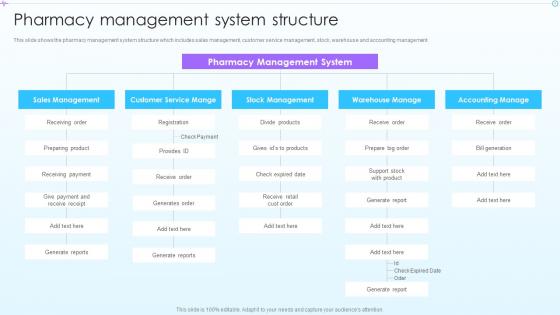
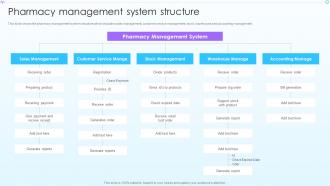
This slide shows the pharmacy management system structure which includes sales management, customer service management, stock, warehouse and accounting management.
People who downloaded this PowerPoint presentation also viewed the following :
Pharmacy Management System Structure Advancement In Hospital Management System with all 6 slides:
Use our Pharmacy Management System Structure Advancement In Hospital Management System to effectively help you save your valuable time. They are readymade to fit into any presentation structure.





FAQs for Pharmacy Management System Structure Advancement In
Effective Pharmacy Management Systems include inventory management, prescription processing, patient record maintenance, insurance claim handling, and regulatory compliance tracking. These technologies streamline operations by automating medication dispensing, reducing human errors, and ensuring accurate billing, with many retail chains and hospital pharmacies finding that integrated systems ultimately deliver faster customer service and improved operational efficiency.
A Pharmacy Management System improves medication dispensing accuracy through automated prescription verification, real-time drug interaction alerts, barcode scanning for medication identification, and integrated patient history tracking. These technologies streamline workflows by minimizing human errors, flagging potential contraindications, and ensuring proper dosage calculations, with many healthcare facilities finding significantly reduced dispensing mistakes and enhanced patient safety outcomes.
Inventory management serves as the backbone of modern Pharmacy Management Systems, enabling automated stock tracking, real-time medication availability monitoring, expiration date alerts, and seamless supplier integration. Through predictive analytics and automated reordering, pharmacies streamline operations, reduce waste from expired medications, and ensure critical drugs remain available, ultimately delivering improved patient care and enhanced operational efficiency.
A Pharmacy Management System enhances patient safety through automated drug interaction checks, dosage verification, allergy alerts, prescription accuracy controls, and real-time inventory tracking. These systems streamline medication dispensing while reducing human error, with many hospitals and retail pharmacies finding that automated compliance monitoring and patient history integration ultimately delivers safer outcomes and improved regulatory adherence.
A Pharmacy Management System should integrate with Electronic Health Records (EHRs), hospital information systems, insurance verification platforms, prescription monitoring databases, and laboratory systems. These integrations streamline medication management by enabling real-time prescription processing, automated insurance claims, drug interaction alerts, and seamless clinical data sharing, ultimately delivering enhanced patient safety and operational efficiency across healthcare networks.
Electronic prescribing interfaces with Pharmacy Management Systems through secure data transmission protocols, real-time medication verification, and automated workflow integration. This streamlines prescription processing by eliminating manual data entry, reducing dispensing errors, and enabling instant insurance verification, with many pharmacies finding that electronic integration accelerates patient service while enhancing inventory management and regulatory compliance.
Pharmacy Management Systems implement multi-layered security through encryption protocols, role-based access controls, audit trails, secure user authentication, and regular data backups. These measures protect sensitive patient information by restricting unauthorized access, monitoring system activities, and ensuring HIPAA compliance, with many healthcare institutions finding that comprehensive security frameworks ultimately enhance patient trust while minimizing regulatory risks.
Analytics and reporting in Pharmacy Management Systems enable informed business decisions by tracking inventory turnover, identifying best-selling medications, monitoring profit margins, and analyzing customer purchasing patterns. These insights help pharmacy owners optimize stock levels, negotiate better supplier contracts, and identify growth opportunities, ultimately reducing waste, improving cash flow, and enhancing operational efficiency in an increasingly competitive healthcare market.
Pharmacies face integration complexities with existing systems, staff training requirements, data migration concerns, and initial workflow disruptions when implementing new management systems. While these challenges can temporarily impact operations, many retail chains and hospital pharmacies find that strategic planning, phased rollouts, and comprehensive staff education ultimately deliver streamlined inventory management, enhanced patient safety, and improved operational efficiency.
A Pharmacy Management System automates billing processes by integrating prescription data with insurance networks, processing claims electronically, and validating coverage in real-time. This streamlined approach reduces manual errors, accelerates claim approvals, and minimizes patient wait times, with many pharmacies finding that automated insurance verification delivers faster reimbursements and enhanced customer satisfaction.
A Pharmacy Management System enhances healthcare team communication through real-time prescription tracking, automated alerts for drug interactions, integrated patient medication histories, and seamless data sharing across departments. These systems enable physicians, nurses, and pharmacists to collaborate more effectively by providing instant access to critical information, reducing medication errors, and streamlining care coordination, ultimately delivering improved patient safety and faster clinical decision-making.
User training significantly enhances Pharmacy Management System effectiveness by improving accuracy, reducing errors, and maximizing feature utilization across inventory management, prescription processing, and compliance protocols. Well-trained staff streamline operations more efficiently, with many pharmacies finding that comprehensive training programs ultimately deliver faster prescription fulfillment, enhanced patient safety, and improved regulatory compliance.
Cloud-based Pharmacy Management Systems offer enhanced scalability, automatic updates, remote accessibility, and reduced IT infrastructure costs, while on-premises systems provide greater data control, customization options, and regulatory compliance assurance. Healthcare organizations increasingly find that cloud solutions streamline operations through real-time inventory tracking and seamless integration, though many hospitals balance both approaches based on specific security requirements and operational needs.
Regulatory requirements significantly influence Pharmacy Management System design by mandating prescription tracking capabilities, controlled substance monitoring, patient safety alerts, audit trail functionality, and compliance reporting features. These systems must accommodate FDA regulations, DEA requirements, and state pharmacy laws, with many healthcare institutions finding that integrated compliance features streamline operations while ensuring regulatory adherence and minimizing costly violations.
Cloud-based systems, AI-driven automation, telepharmacy services, blockchain security, and IoT integration are revolutionizing pharmacy management. These technologies streamline prescription processing, enhance inventory accuracy, and enable remote patient consultations, with many healthcare organizations finding that digital transformation ultimately delivers faster service delivery and improved patient outcomes.
-
Thanks for all your great templates they have saved me lots of time and accelerate my presentations. Great product, keep them up!
-
No second thoughts when I’m looking for excellent templates. SlideTeam is definitely my go-to website for well-designed slides.