


Physiotherapy Brochure Pamphlet Trifold




Try Before you Buy Download Free Sample Product
 Impress Your
 Audience
 100%
100% Editable
 Save Hours
 of Time


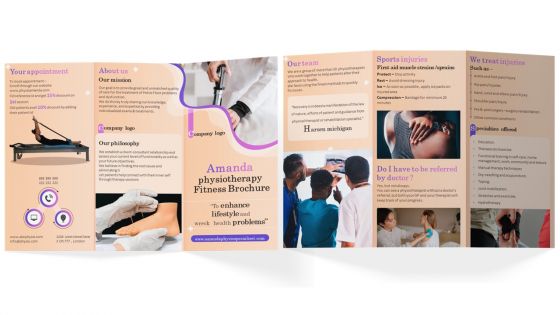
Promote your physiotherapy fitness brochure by using our visually appealing catalogue design template. Use this outwardly engaging catalogue presentation to give a brief introduction about us, our mission, our philosophy, steps to book an appointment with us, discount codes and offers, ways to contact us, how to write to us, etc. The catalogue presents a brief summary of the team working in the clinic, the injuries we treat, and easy ways to provide first aid to injuries. The packages offered to patients include services such as therapeutic exercises, manual therapy techniques, etc. Distribute a professionally designed PowerPoint booklet with QR codes for quick registration to assist and physically aid patients.
People who downloaded this PowerPoint presentation also viewed the following :
Physiotherapy Brochure Pamphlet Trifold with all 1 slides:
Use our Physiotherapy Brochure Pamphlet Trifold to effectively help you save your valuable time. They are readymade to fit into any presentation structure.
FAQs for Physiotherapy
Honestly, it's pretty straightforward - you want to get people moving pain-free again. Whether they're trying to walk their dog or get back to playing tennis, that's what matters. Pain and swelling? Deal with those first. Then rebuild everything - strength, range of motion, coordination. The prevention stuff comes last but it's huge for keeping them from ending up back in your office (which nobody wants). I'd say document their actual goals right away though. Like what do THEY want to do? Some 80-year-old doesn't care about squatting 200 pounds, you know? Focus on what'll actually improve their day-to-day life.
So basically, physio works by retraining how your nervous system processes pain signals. It also gets you moving again, which reduces that awful stiffness, plus strengthens the muscles around problem areas for better support. What I love about it is that you're actually fixing the root issue instead of just popping pills. Your therapist will do hands-on work, give you specific exercises, and teach you about what's happening in your body - honestly that education part is huge. Most people start feeling way better after 6-8 weeks if they actually do their homework exercises.
So manual therapy is basically hands-on treatment - you're directly working joints, muscles, and soft tissue to cut down pain and get things moving better. Joint mobs, manipulations, massage, myofascial release, that kind of stuff. Honestly? It's super satisfying because you feel the changes happening right under your hands. Works great with exercise and teaching patients what's going on. The trick is figuring out when to use it though - some issues respond crazy well to manual work, others need more movement-based stuff. Oh and definitely nail the basics first before trying fancy techniques.
Oh man, definitely do the physio! You'll start with basic movement stuff and work up to harder exercises. Honestly, I've watched people skip it and they're still complaining months later - such a mistake. It prevents nasty complications like blood clots and keeps your muscles from basically turning to mush. Plus it helps with pain management and stops too much scar tissue from building up. My cousin had knee surgery last year and swore by starting early. Soon as your surgeon gives the green light, jump on it. The faster you start, the quicker you'll be back to normal activities.
You'll mostly rely on gait analysis and range of motion testing - those are your daily go-tos. Functional movement screens like the FMS are huge too. Balance tests and postural analysis reveal way more than people think, honestly. Manual muscle testing? That's bread and butter stuff. Strength assessments round out the basics. For trickier cases, Berg Balance Scale or video analysis work great. But here's the thing - just watching someone walk through your door tells you like 70% of what's going on. My old supervisor always said that, and she was totally right. Master those fundamentals first.
So physiotherapy for sports injuries is pretty smart - they look at your specific sport and how you move. First they figure out what's actually broken in your movement patterns, then fix it with hands-on work and targeted exercises. Here's what I love though: they don't just patch you up. They dig deeper to find the root cause. Like maybe your tight hips are what screwed up your knee, or crappy shoulder mechanics caused your back to go. The whole point is getting you back out there stronger than before. Definitely start with a proper assessment to see what's weak.
Honestly, personalized plans make such a huge difference because everyone's body is weird in its own way. Like, two people can have "lower back pain" but need totally different approaches - one might need more mobility work while the other needs stability training. During your initial assessment, you'll pick up on their specific movement quirks and pain triggers. Then you just keep tweaking things based on how they respond. I swear, some patients surprise you with what actually works for them! Their lifestyle matters too - a desk worker versus a construction guy will need different strategies even for the same injury.
Honestly, physio makes a massive difference for neuro patients. The brain's surprisingly good at rewiring itself when you give it the right push. Repetitive exercises help restore movement and balance - lots of walking practice, coordination stuff, that kind of thing. You're literally helping damaged neural pathways from stroke, MS, whatever reconnect. Patients usually see less spasticity, better posture, more independence with daily tasks. I'd start with a solid assessment first, figure out exactly what's not working. Then design exercises that target those specific problems. It's pretty amazing how much improvement you can get.
Telehealth and wearable trackers are huge right now - patients love monitoring their movement data at home. VR therapy is wild for pain management, honestly patients get so distracted they forget they're hurting. AI movement analysis catches compensation patterns we'd totally miss otherwise. Dry needling's gotten way more precise with new instruments too. I'd start with telehealth since insurance actually covers it now (finally!). Then maybe try whatever tech fits your crowd best. Don't go crazy buying everything at once though - learned that the hard way with my practice.
Honestly, physio helps way more than just the physical stuff. Moving around releases endorphins that literally make you feel better - less anxious, mood boost, all that. There's something about getting stronger and more mobile that just builds your confidence back up. I mean, nobody talks about this enough but regaining control over your body is huge mentally. The physios I've worked with were actually pretty supportive too, which helps when you're frustrated with recovery. If whatever's bugging you physically is messing with your head, it's worth trying. You might be surprised how much better you feel overall.
So your physio should hook you up with three main things: strengthening stuff, mobility work, and movements that actually match what you do daily. Basic exercises are your friend here - gentle stretches, resistance bands, bodyweight moves like squats and planks. Target whatever's bugging you most. Honestly, consistency beats going hard every time (I hate that this is true but whatever). Most programs build up over 4-6 weeks. Definitely ask for written instructions or videos though - I always forget the exact form otherwise and end up doing some weird version that probably doesn't help.
So basically you want to work on balance training and strength stuff - core, legs, all that. The proprioception work is huge too, helps them actually feel where their body is. I always start with a fall risk assessment to see what's going wrong. Then it's unstable surfaces, heel-to-toe walking, getting up from chairs repeatedly (patients hate that one at first lol). Honestly the confidence building might be more important than the physical gains. You'll see them light up once they stop being scared of moving around. Gait training and center of gravity challenges round it out nicely.
We basically work with everyone - orthopedic surgeons for post-surgery stuff, neurologists when someone's had a stroke, cardiologists for heart rehab. Sports medicine docs are obvious partners. But honestly, we also team up with rheumatologists, pain specialists, even therapists since chronic pain messes with your head too. Other doctors handle the diagnosing and prescribing, we figure out how to get people moving normally again. Think of it this way - if there's a movement problem, we're probably involved somehow. We're like the practical fix-it people of healthcare.
So basically, I show patients the right way to move stuff during their daily routine - like how to lift things or sit properly. Then I create exercise programs that actually make sense for their specific situation. The best part? When they finally get why their back hurts from slouching all day! I usually give them written stuff to take home, maybe some apps or videos they can reference later. Honestly, generic advice is pretty useless - it's gotta connect to what they're actually dealing with. I focus on giving them 2-3 techniques they can start using right away instead of overwhelming them with everything.
Honestly, people think physio is just fancy massage but it's way more scientific than that. You don't have to wait until you're injured either - prevention is huge. The whole "no pain no gain" thing is outdated BS. Good physios look at how your entire body moves, not just whatever hurts. They'll actually figure out why something's going wrong instead of just treating symptoms. And forget pushing through pain - that's old school. Modern approach is all about gradual progression and fixing movement patterns. I was skeptical at first too, but the assessment alone taught me so much about my weird habits.
-
SlideTeam offers so many variations of designs and topics. It’s unbelievable! Easy to create such stunning presentations now.
-
The website is jam-packed with fantastic and creative templates for a variety of business concepts. They are easy to use and customize.