


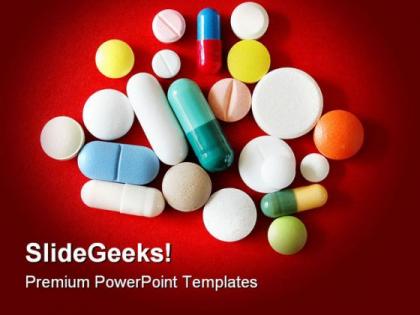
Pills medical powerpoint templates and powerpoint backgrounds 0411




Try Before you Buy Download Free Sample Product
 Impress Your
 Audience
 100%
100% Editable
 Save Hours
 of Time


Pair up your thoughts with our Pills Medical PowerPoint Templates And PowerPoint Backgrounds 0411. They will have a great date.
People who downloaded this PowerPoint presentation also viewed the following :
Pills medical powerpoint templates and powerpoint backgrounds 0411 with all 3 slides:
Are you bored with all those dull preparations that do nothing except make meeting participants sleep? If this is you then our Pills Medical PowerPoint Templates And PowerPoint Backgrounds 0411 are exactly what you need to wake them up.

FAQs for Pills medical powerpoint templates and
Pills include tablets, capsules, softgels, chewables, and extended-release formulations, each designed for specific therapeutic delivery and patient needs. These pharmaceutical formats enhance medication effectiveness by optimizing absorption rates, improving patient compliance, and enabling targeted treatment delivery, with healthcare providers increasingly finding that format selection significantly impacts treatment outcomes and operational efficiency.
Pills offer controlled dosage, longer shelf life, easier storage, and enhanced patient compliance compared to liquid medications, which provide faster absorption and dosage flexibility. While healthcare providers increasingly favor pills for chronic conditions like diabetes and hypertension management, liquid forms remain essential for pediatric care and emergency situations, ultimately delivering different therapeutic advantages based on patient needs.
Administering pills to children requires considering age-appropriate dosages, potential side effects, drug interactions with other medications, and proper timing with meals or activities. Healthcare providers typically recommend liquid formulations for younger children, pill-cutting techniques for appropriate medications, and clear communication about symptoms to monitor, with many pediatric practices finding that parental education and follow-up protocols significantly improve treatment outcomes and safety.
Pills interact with food through absorption changes, enzyme competition, and pH alterations, with some requiring empty stomachs while others need food for optimal effectiveness. Healthcare providers typically recommend avoiding grapefruit with certain medications, timing calcium-rich foods separately from antibiotics, and following specific dietary guidelines, ultimately ensuring maximum therapeutic benefit while minimizing adverse reactions and treatment complications.
Common side effects associated with over-the-counter pills include gastrointestinal upset, drowsiness, dizziness, allergic reactions, and drug interactions with existing medications. These effects vary significantly by medication type and individual tolerance, with many healthcare providers finding that proper dosing, timing, and awareness of contraindications minimizes risks while maintaining therapeutic benefits.
Pill organizers improve medication adherence by providing visual reminders, simplifying complex regimens, and reducing missed doses through compartmentalized daily or weekly scheduling. These devices enhance patient safety by minimizing medication errors, enabling caregivers to monitor compliance more effectively, and ultimately delivering better health outcomes while reducing hospital readmissions and healthcare costs.
Pharmacists serve as crucial educators by counseling patients on proper dosage, potential side effects, drug interactions, storage requirements, and administration timing. Through personalized consultations and medication reviews, they help patients understand contraindications, recognize adverse reactions, and maintain adherence protocols, ultimately reducing medication errors and improving therapeutic outcomes across diverse healthcare settings.
Pharmaceutical companies determine pill shelf life through accelerated stability testing, real-time studies, and chemical analysis that monitor active ingredient degradation, moisture absorption, and potency over time. These comprehensive protocols involve storing medications under various temperature and humidity conditions, with companies like Pfizer and Johnson & Johnson using advanced analytical methods to ensure safety and efficacy, ultimately delivering reliable expiration dates that protect patient health while minimizing waste.
Pill technology advancements include extended-release formulations, smart pills with sensors, personalized dosing systems, targeted delivery mechanisms, and biocompatible coating technologies. These innovations enhance patient compliance by reducing dosing frequency, enable real-time monitoring of medication adherence, and deliver precise therapeutic outcomes, with pharmaceutical companies increasingly finding that strategic combinations of these technologies streamline treatment protocols while improving patient experiences.
Patients can effectively manage pill regimens through medication organizers, smartphone apps with reminders, consistent timing routines, and regular healthcare provider consultations. These strategies streamline adherence by reducing missed doses, tracking side effects, and coordinating multiple medications, with many chronic disease patients finding that systematic approaches ultimately deliver better health outcomes and reduced complications.
Counterfeit pills present significant implications including patient safety risks, regulatory compliance challenges, revenue losses, brand reputation damage, and supply chain vulnerabilities. These fraudulent medications undermine trust in pharmaceutical companies, increase healthcare costs, and create liability concerns, with many organizations finding that robust authentication technologies and enhanced tracking systems deliver competitive advantage while protecting consumers.
Generic pills contain identical active ingredients as brand-name medications and undergo rigorous FDA testing to ensure bioequivalence, delivering the same therapeutic effects at significantly reduced costs. While inactive ingredients like fillers or colors may vary slightly, these differences don't affect efficacy, with many healthcare systems and insurance providers increasingly favoring generics for their proven effectiveness and substantial cost savings.
Key features for pill presentations include dosage specifications, mechanism of action, clinical efficacy data, side effect profiles, and contraindication guidelines. These comprehensive elements enable healthcare professionals to make informed prescribing decisions, assess patient suitability, and monitor treatment outcomes effectively, with many medical institutions finding that structured pharmaceutical presentations ultimately enhance patient safety and treatment success rates.
Telehealth has revolutionized pill prescription and management by enabling remote consultations, digital prescription systems, and virtual monitoring capabilities. Through telemedicine platforms, healthcare providers streamline medication reviews, automate refill processes, and enhance patient adherence tracking, while patients access faster prescription services and continuous care management, ultimately delivering improved medication compliance and reduced healthcare costs.
Legal and ethical considerations surrounding pill prescriptions include informed consent, appropriate dosing protocols, patient privacy protection, addiction risk assessment, and regulatory compliance requirements. These frameworks enhance patient safety by ensuring thorough medical evaluations, transparent communication, and proper monitoring procedures, with healthcare institutions finding that comprehensive prescription protocols ultimately deliver better treatment outcomes and reduced liability risks.
-
Thanks for all your great templates they have saved me lots of time and accelerate my presentations. Great product, keep them up!
-
Informative presentations that are easily editable.