


Pitchbook for acquisition deal powerpoint presentation slides





Try Before you Buy Download Free Sample Product
 Impress Your
 Audience
 100%
100% Editable
 Save Hours
 of Time


Showcase the details of the firm’s main attributes by using Pitchbook For Acquisition Deal PowerPoint Presentation Slides. Highlight information on the company’s critical services, including underwriting, mergers and acquisitions, sales & trading. The slides also brief about the team structure of the company and the number of offices in various countries. You can graphically represent the mergers and acquisitions deals of the company by utilizing a content-ready PPT presentation. Provide an overview of investment banking and market trends by taking the assistance of this PPT slideshow. Information regarding key competitors of the company can be described using these PowerPoint slides. Competitor comparison based on key financials can be highlighted with our content-ready PowerPoint layouts.
People who downloaded this PowerPoint presentation also viewed the following :
Pitchbook for acquisition deal powerpoint presentation slides with all 44 slides:
Use our Pitchbook For Acquisition Deal Powerpoint Presentation Slides to effectively help you save your valuable time. They are readymade to fit into any presentation structure.
-

Pitchbook for Acquisition Deal
-

Table of Content Slide
-

Table of Content
-
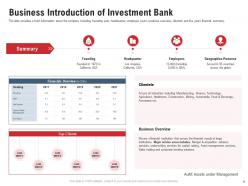
Business Introduction of Investment Bank
-

Primary Services of Investment Bank
-
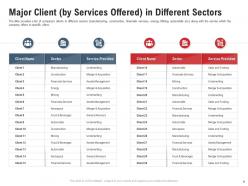
Major Client by Services Offered in Different Sectors
-

Senior Management Team
-

Number of Offices in Various Countries
-
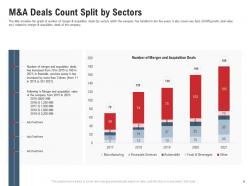
M A Deals Count Split by Sectors
-

Major Successful Deals in Last Five Years
-
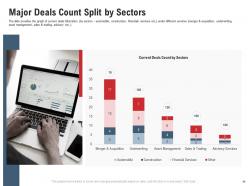
Major Deals Count Split by Sectors
-
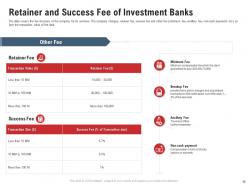
Retainer and Success Fee of Investment Banks
-

Market Overview Slide
-
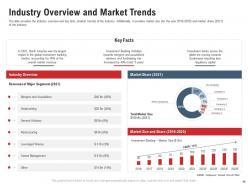
Industry Overview and Market Trends
-
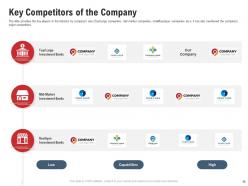
Key Competitors of the Company
-
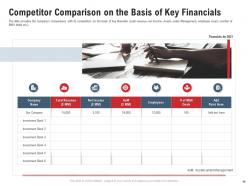
Competitor Comparison on the Basis of Key Financials
-
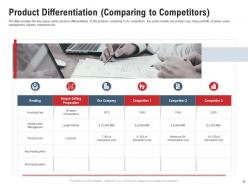
Product Differentiation Comparing to Competitors
-
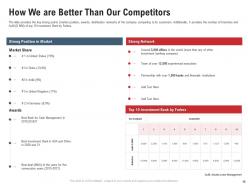
How We are Better Than Our Competitors
-

Table of Content
-
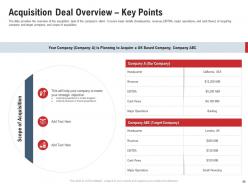
Acquisition Deal Overview Key Points
-
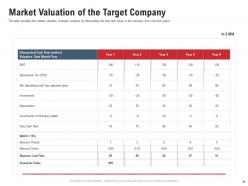
Market Valuation of the Target Company
-
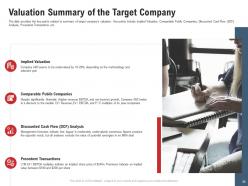
Valuation Summary of the Target Company
-
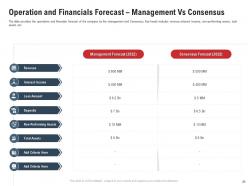
Operation and Financials Forecast Management Vs Consensus
-
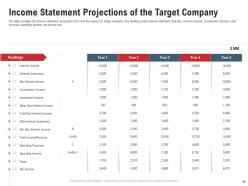
Income Statement Projections of the Target Company
-
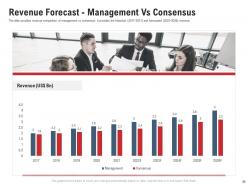
Revenue Forecast Management Vs Consensus
-
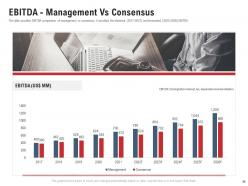
EBITDA Management Vs Consensus
-
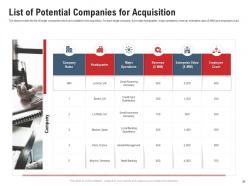
List of Potential Companies for Acquisition
-
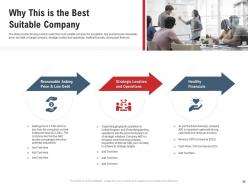
Why This is the Best Suitable Company
-
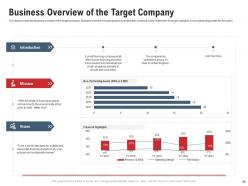
Business Overview of the Target Company
-
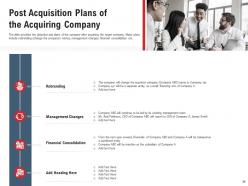
Post Acquisition Plans of the Acquiring Company
-
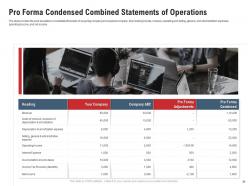
Pro Forma Condensed Combined Statements of Operations
-

Pitchbook for Acquisition Deal Icons Slide
-

Additional Slides
-

Location
-

Our Team
-

Target
-

Mind Map
-

Post It Notes
-
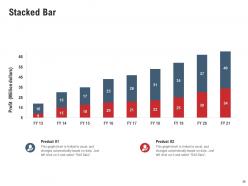
Stacked Bar
-
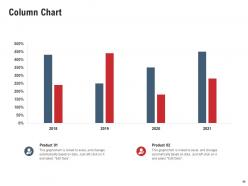
Column Chart
-

Our Goal
-
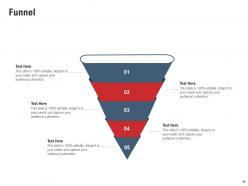
Funnel
-
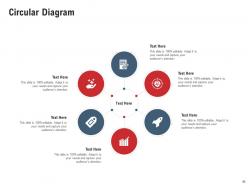
Circular Diagram
-

Thank You
FAQs for Pitchbook for acquisition deal
Effective pitchbooks include compelling market opportunity analysis, clear value propositions, detailed financial projections, competitive differentiation strategies, and strong management team credentials. These elements work together by demonstrating scalability, addressing investor concerns systematically, and presenting measurable growth potential, with many venture capital firms finding that comprehensive pitchbooks significantly streamline due diligence processes while accelerating investment decisions.
Visuals enhance pitchbook storytelling by transforming complex data into compelling narratives, creating emotional connections with investors, and guiding audiences through logical investment arguments. Through strategic infographics, charts, and visual frameworks, startups streamline complex concepts, accelerate investor comprehension, and differentiate their presentations, with many finding that visual storytelling significantly increases funding success rates.
Common pitchbook mistakes include overloading slides with text, lacking clear value propositions, using generic templates, presenting weak financial projections, and failing to tailor content to specific audiences. These errors undermine credibility and investor engagement, with many financial professionals finding that streamlined presentations, compelling narratives, and targeted messaging significantly enhance deal outcomes and client confidence.
Market analysis integrates into pitchbooks through comprehensive market sizing, competitive landscape mapping, customer segmentation analysis, and growth trend identification positioned strategically throughout key sections. This data strengthens investment narratives by validating market opportunities, supporting valuation multiples, and demonstrating competitive positioning, with many private equity firms finding that robust market analysis significantly enhances deal credibility and stakeholder confidence.
Financial modeling serves as the analytical backbone of pitchbooks, providing valuation analyses, scenario projections, comparable company assessments, and sensitivity analyses that support investment recommendations. These models enable investment professionals to present compelling data-driven narratives, demonstrate potential returns across various market conditions, and ultimately deliver credible financial forecasts that help clients make informed strategic decisions in an increasingly complex investment landscape.
Companies tailor pitchbooks by adjusting focus areas, detail levels, and messaging to match investor preferences and investment stages. Angel investors typically prefer personal stories, market validation, and founder backgrounds, while venture capitalists emphasize scalable business models, competitive analysis, and detailed financial projections, with many startups finding that customizing risk assessment, traction metrics, and growth strategies for each audience significantly improves funding success rates.
Best practices for presenting complex data in pitchbooks include using clear visual hierarchies, simplified charts and graphs, executive summaries for key metrics, consistent formatting throughout, and strategic data storytelling that connects numbers to business outcomes. These approaches streamline investor comprehension by highlighting critical insights, minimizing cognitive load, and creating compelling narratives, with many investment firms finding that well-structured data presentation significantly accelerates decision-making processes and enhances stakeholder engagement.
A pitchbook's design and layout significantly impact effectiveness by enhancing readability, reinforcing key messages, establishing credibility, and guiding investor attention through strategic visual hierarchy. Professional layouts with consistent branding, clear data visualization, and logical flow enable investment teams to communicate complex financial information more persuasively, while poor design can undermine even the strongest content, ultimately determining whether investors engage deeply with the opportunity.
Innovative pitchbook formats include interactive digital presentations, video pitchbooks, virtual reality experiences, AI-powered personalized decks, and mobile-responsive designs with real-time data integration. These technologies enhance client engagement by delivering immersive experiences, enabling real-time customization, and providing seamless accessibility across devices, with many investment firms finding that interactive formats significantly improve deal success rates and client retention.
Pitchbooks should be updated quarterly for core content and immediately when significant changes occur, such as new deals, performance metrics, or market conditions. Investment firms and advisory teams maintain relevance by refreshing financial data, recent transactions, and team accomplishments regularly, with many finding that proactive updates enhance client confidence and competitive positioning.
Key growth metrics for pitchbooks include revenue growth rates, market size expansion, customer acquisition costs, lifetime value ratios, and recurring revenue percentages. These indicators demonstrate scalability through financial momentum, market opportunity validation, and operational efficiency, with investors increasingly focusing on sustainable growth patterns, competitive positioning, and clear paths to profitability that showcase long-term viability.
Storytelling transforms pitchbooks by weaving data into compelling narratives that showcase market opportunities, customer journeys, and growth trajectories through relatable scenarios and emotional connections. This approach enables investors to visualize potential outcomes, understand market dynamics more intuitively, and connect with the business vision, ultimately delivering stronger engagement and more persuasive funding proposals.
Digital pitchbooks offer enhanced interactivity, real-time updates, multimedia integration, cost efficiency, and detailed analytics tracking. These advantages streamline client presentations by enabling dynamic content customization, instant revisions, and seamless distribution, while print versions provide tangible credibility and focused attention, with many financial services firms finding that strategic combination of both formats delivers optimal client engagement and competitive advantage.
Feedback from previous pitchbook presentations improves future versions by identifying content gaps, clarifying messaging effectiveness, and revealing audience preferences and concerns. Through systematic collection of investor comments, presentation analytics, and stakeholder insights, organizations can refine their value propositions, adjust financial projections, and enhance visual storytelling, ultimately delivering more compelling and targeted presentations that resonate with specific investor audiences.
Ethical pitchbook considerations include accurate financial data representation, transparent risk disclosure, honest market positioning, respectful competitor analysis, and clear conflict-of-interest statements. These standards enhance credibility by building investor trust, ensuring regulatory compliance, and maintaining long-term relationships, with many investment firms finding that ethical transparency ultimately delivers stronger partnerships and sustainable business growth.
-
Use of icon with content is very relateable, informative and appealing.
-
Presentation Design is very nice, good work with the content as well.
-
Best way of representation of the topic.
-
Innovative and attractive designs.
-
Enough space for editing and adding your own content.
-
Excellent template with unique design.
-
Innovative and attractive designs.
-
Nice and innovative design.
-
Illustrative design with editable content. Exceptional value for money. Highly pleased with the product.
-
Illustrative design with editable content. Exceptional value for money. Highly pleased with the product.
-
Page:
- You're currently reading page 1
- Page 2
-
