


Planning And Execution Calendar For Shareholder Engagement Communication Channels And Strategies




Try Before you Buy Download Free Sample Product
 Impress Your
 Audience
 100%
100% Editable
 Save Hours
 of Time


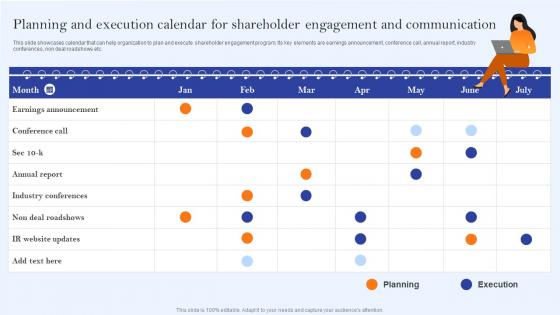
This slide showcases calendar that can help organization to plan and execute shareholder engagement program. Its key elements are earnings announcement, conference call, annual report, industry conferences, non deal roadshows etc.
People who downloaded this PowerPoint presentation also viewed the following :
Planning And Execution Calendar For Shareholder Engagement Communication Channels And Strategies with all 6 slides:
Use our Planning And Execution Calendar For Shareholder Engagement Communication Channels And Strategies to effectively help you save your valuable time. They are readymade to fit into any presentation structure.





FAQs for Planning And Execution Calendar For Shareholder Engagement Communication
Effective shareholder engagement strategies include regular communication channels, transparent reporting mechanisms, proactive investor relations programs, strategic feedback collection systems, and comprehensive stakeholder mapping initiatives. These components work together by building trust through consistent dialogue, addressing concerns before they escalate, and aligning corporate objectives with investor expectations, ultimately delivering stronger market confidence and enhanced long-term value creation.
Companies tailor shareholder communication by using multi-channel approaches including digital platforms, traditional mail, webinars, mobile apps, and social media to match demographic preferences. Younger investors increasingly favor interactive digital formats and real-time updates, while older shareholders often prefer detailed printed materials and phone conferences, with many organizations finding that personalized communication strategies enhance engagement and build stronger investor relationships.
Technology streamlines shareholder engagement through digital voting platforms, virtual annual meetings, real-time communication tools, mobile applications, and automated reporting systems. These solutions enhance accessibility by enabling remote participation, delivering instant updates and notifications, and providing comprehensive data analytics, ultimately improving transparency and shareholder satisfaction while reducing administrative costs.
Shareholder feedback shapes corporate governance through board composition changes, executive compensation adjustments, strategic priority shifts, and enhanced transparency requirements. Companies increasingly integrate shareholder insights into decision-making processes, with many financial institutions and technology firms finding that active engagement leads to improved risk management, better capital allocation, and ultimately stronger long-term performance.
Companies can measure shareholder engagement success through voting participation rates, attendance at annual meetings, feedback quality from surveys, institutional investor dialogue frequency, and share price stability during market volatility. These metrics help organizations assess communication effectiveness, with many companies finding that stronger engagement correlates with reduced proxy contests, improved ESG ratings, and enhanced long-term shareholder loyalty.
Companies face challenges including diverse shareholder expectations, communication barriers across global investor bases, regulatory compliance complexities, managing activist investor demands, and balancing transparency with competitive sensitivity. These obstacles often result in fragmented engagement strategies, with many organizations finding that inconsistent messaging and limited digital platforms hinder meaningful dialogue, ultimately affecting investor confidence and strategic alignment in an increasingly demanding market environment.
Cultural differences significantly influence shareholder engagement through varying communication styles, decision-making processes, governance expectations, and relationship-building approaches across international markets. While Western markets often emphasize direct communication and quarterly transparency, Asian markets typically prioritize long-term relationships and consensus-building, with many multinational corporations finding that culturally-adapted engagement strategies enhance investor trust and ultimately deliver stronger stakeholder relationships.
Companies can improve transparency through regular quarterly updates, comprehensive annual reports, accessible investor portals, proactive disclosure of material changes, and interactive shareholder meetings with Q&A sessions. These practices enhance trust by providing timely financial data, strategic insights, and risk assessments, with many organizations finding that transparent communication reduces volatility and strengthens long-term investor relationships.
Organizations can effectively address environmental and social shareholder concerns through transparent ESG reporting, regular stakeholder dialogues, measurable sustainability targets, and clear governance frameworks that demonstrate accountability. By implementing comprehensive sustainability strategies, engaging in proactive communication through investor calls and annual reports, and showcasing tangible progress metrics, companies build trust while delivering long-term value and competitive advantage.
Shareholder activism significantly influences corporate policies by pressuring companies to adopt better governance practices, enhance transparency, improve environmental sustainability, and optimize capital allocation strategies. Through proxy campaigns and board representation, activist investors drive strategic changes in executive compensation, operational efficiency, and stakeholder accountability, with many corporations finding that proactive engagement ultimately delivers improved performance and stronger investor relations.
Companies balance short-term shareholder interests with long-term sustainability goals by implementing transparent reporting frameworks, setting measurable ESG targets, and demonstrating clear ROI on sustainable investments. Through strategic communication and phased implementation plans, organizations increasingly find that sustainable practices reduce operational costs, enhance brand value, and attract ESG-focused investors, ultimately delivering competitive advantage while meeting immediate financial expectations.
Companies should evaluate stakeholder engagement effectiveness using response rates, feedback quality scores, participation levels in consultations, sentiment analysis results, and resolution timeframes for stakeholder concerns. These metrics enable organizations to measure engagement depth across investor relations, community outreach, and employee communications, with many finding that comprehensive tracking ultimately delivers stronger relationships, enhanced reputation, and improved strategic decision-making processes.
Regular shareholder meetings can be transformed through interactive Q&A sessions, live polling, breakout discussions, multimedia presentations, and digital engagement platforms. These approaches enhance participation by enabling real-time feedback, facilitating direct dialogue between management and investors, and incorporating visual storytelling, with many companies finding that interactive formats increase attendance, improve transparency, and ultimately strengthen investor relationships while building greater confidence in corporate leadership.
Quarterly earnings calls serve as crucial touchpoints for transparency, allowing management to directly communicate financial performance, strategic updates, and future outlook to investors and analysts. These structured interactions foster trust through real-time Q&A sessions, enable immediate market feedback, and demonstrate accountability, with many publicly traded companies finding that consistent, transparent communication during these calls significantly enhances investor confidence and long-term shareholder relationships.
Companies leverage social media platforms to enhance shareholder engagement through real-time updates, interactive content, live streaming of events, targeted messaging, and transparent communication channels. These digital approaches streamline information dissemination while enabling direct dialogue, with many financial institutions and public companies finding that platforms like LinkedIn and Twitter deliver faster investor relations, broader reach, and ultimately stronger stakeholder relationships in an increasingly connected marketplace.
-
This visual representation is stunning and easy to understand. I like how organized it is and informative it is.
-
I am not the best at presentations but using SlideTeam’s PPT template made it easier for me. Thank you SlideTeam!