


Planning And Execution Of Bid Projects Through Agile IT Powerpoint Presentation Slides




Try Before you Buy Download Free Sample Product
 Impress Your
 Audience
 100%
100% Editable
 Save Hours
 of Time


The deck will showcase the implementation of agile scrum in the bidding and proposal process. Agile scrum will aid in developing complex software through incremental and iterative approaches through consistent feedback. Check out our professionally designed Planning and Execution of Bid Projects through Agile IT. It comprises slides related to existing concerns faced due to ineffective project proposal delivery, agile and various methods adaptation, and present challenges met while agile methodology implementation, etc. The deck captures slides about critical people associated with the bidding process and proposal building, such as the bid or proposal manager as scrum master and the development team as a scrum team. It covers slides about various scrum ceremonies associated with the proposal, proposal backlog for managing tasks, and sprint proposal backlog. It caters to slides about user-specific initiatives such as scrum task board, user persona for client understanding, and burndown chart. The deck caters to slides about overcall costs tracking through estimating the size and story points, ideal days for the project, planning poker technique, and overall bid and proposal budget plan. Download this 100 percent editable template now.
People who downloaded this PowerPoint presentation also viewed the following :
Content of this Powerpoint Presentation
Slide 1: This slide introduces Planning And Execution of Bid Projects Through Agile (IT). State Your Company Name and begin.
Slide 2: This is an Agenda slide. State your agendas here.
Slide 3: This slide presents Table of Content for the presentation.
Slide 4: This slide shows title for current scenario assessment.
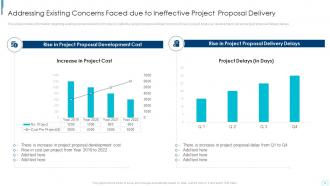
Slide 5: This slide provides information regarding existing concerns faced by firm.
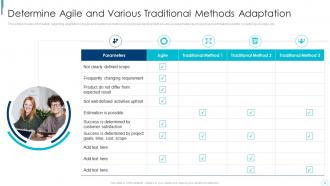
Slide 6: This slide provides information regarding adaptation of Agile and traditional methods for proposal development.
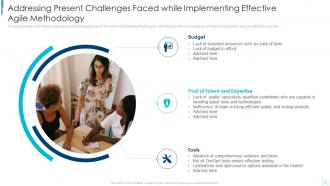
Slide 7: This slide provides information regarding present challenges faced by firm while implementing effective agile methodology.
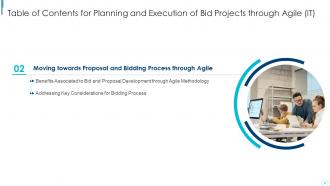
Slide 8: This slide depicts title for moving towards proposal & bidding process.
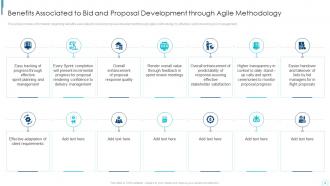
Slide 9: This slide provides information regarding benefits associated to bid and proposal development.
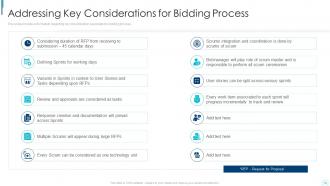
Slide 10: This slide provides information regarding key consideration associated to bidding process.
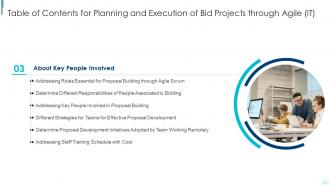
Slide 11: This slide shows title for 'about key people involved'.
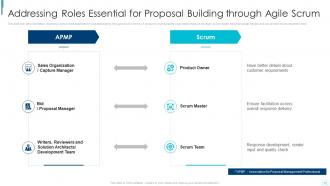
Slide 12: This slide provides information regarding various roles essential for proposal building through scrum.
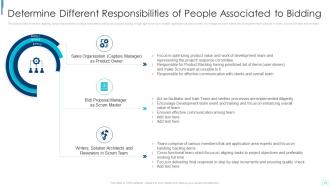
Slide 13: This slide provides information regarding various responsibilities of people associated to bidding and proposal building.
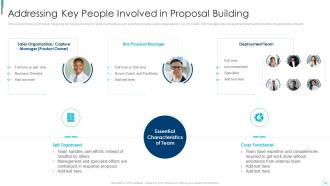
Slide 14: This slide provides information regarding key people involved in proposal building.
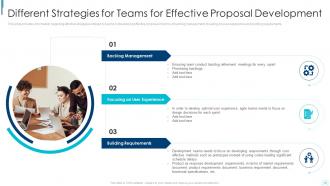
Slide 15: This slide provides information regarding effective strategies utilized by teams in developing effective proposal.
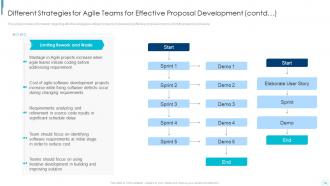
Slide 16: This slide presents continued content.
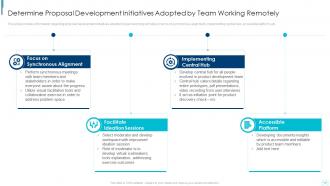
Slide 17: This slide provides information regarding proposal development initiatives adopted by team working remotely.
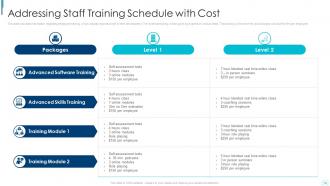
Slide 18: This slide provides information regarding employee training which will play important role in their development.
Slide 19: This slide displays title for Implementing agile methodology in bidding & proposal process.
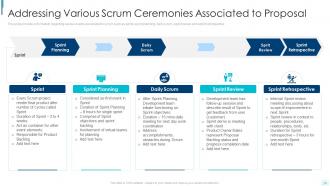
Slide 20: This slide provides information regarding various events associated to scrum.
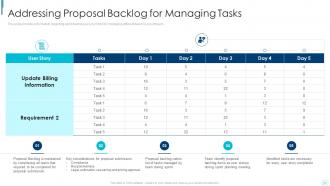
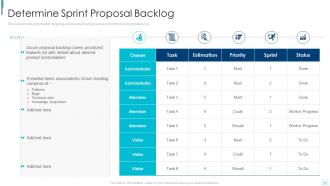
Slide 21: This slide provides information regarding sprint backlog as scrum tool for managing different tasks by scrum team.
Slide 22: This slide provides information regarding sprint product backlog as scrum tool for prioritizing feature list.
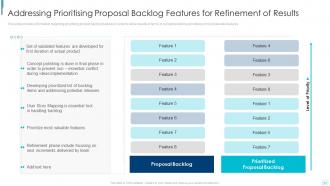
Slide 23: This slide provides information regarding prioritizing product backlog features in order to refine results.
Slide 24: This slide exhibits title for 'focusing on user specific initiatives'.
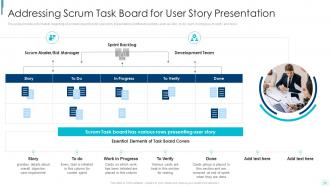
Slide 25: This slide provides information regarding scrum task board tool for user story presentation.
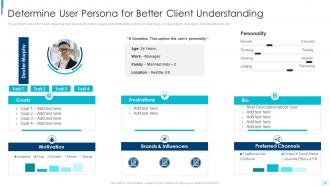
Slide 26: This slide provides information regarding user persona for better customer understanding.
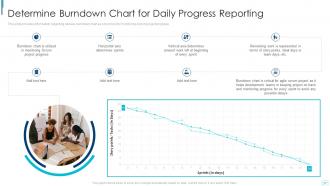
Slide 27: This slide provides information regarding release burndown chart as scrum tool for monitoring scrum project progress.
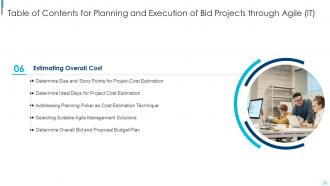
Slide 28: This slide displays title for estimating overall cost.
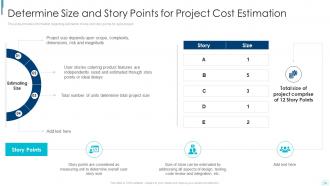
Slide 29: This slide provides information regarding estimation of size and story points for agile project.
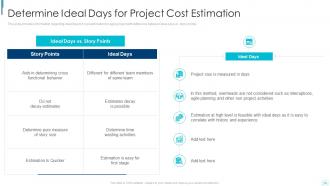
Slide 30: This slide provides information regarding ideal days for cost estimation for agile project.
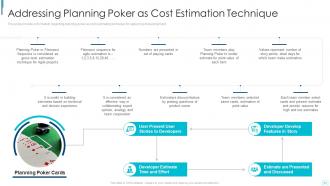
Slide 31: This slide provides information regarding planning poker as cost estimating technique for agile project development.
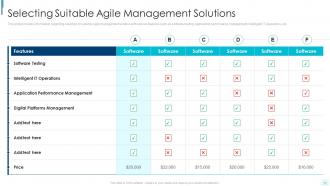
Slide 32: This slide provides information regarding selection of suitable Agile management solution with various features.
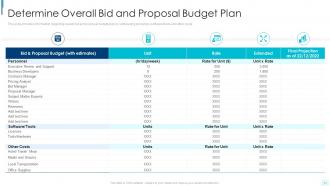
Slide 33: This slide provides information regarding overall bid and proposal budget plan by addressing personnel, software/tools and other costs.
Slide 34: This slide depicts title for determine overall progress.
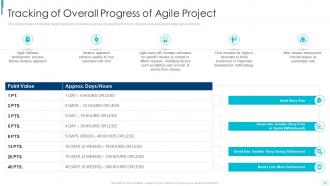
Slide 35: This slide provides information regarding tracking of overall progress of agile project.
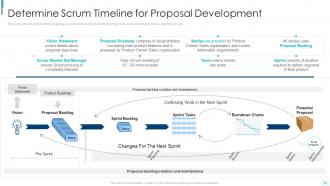
Slide 36: This slide provides information regarding scrum timeline for product development with vision statement, stories, sprint, team, etc.
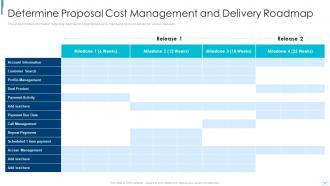
Slide 37: This slide provides information regarding roadmap for project proposal by managing cost and delivery for various releases.
Slide 38: This slide displays Icons for Planning and Execution of Bid Projects through Agile (IT).
Slide 39: This slide is titled as Additional Slides for moving forward.
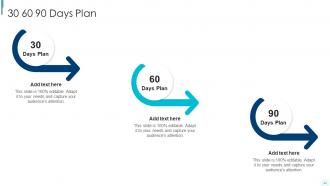
Slide 40: This slide provides 30 60 90 Days Plan with text boxes.
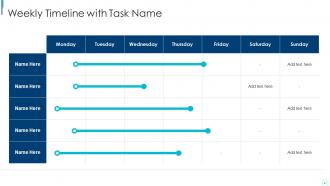
Slide 41: This slide shows Weekly Timeline with Task Name.
Slide 42: This slide presents Roadmap with additional textboxes.
Slide 43: This slide shows Post It Notes. Post your important notes here.
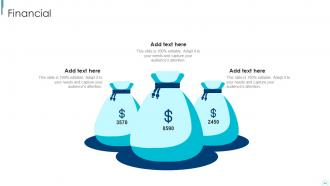
Slide 44: This is a Financial slide. Show your finance related stuff here.
Slide 45: This is Our Mission slide with related imagery and text.
Slide 46: This is a Comparison slide to state comparison between commodities, entities etc.
Slide 47: This slide depicts Venn diagram with text boxes.
Slide 48: This is Our Goal slide. State your firm's goals here.
Slide 49: This is a Timeline slide. Show data related to time intervals here.
Slide 50: This is a Thank You slide with address, contact numbers and email address.
Planning And Execution Of Bid Projects Through Agile IT Powerpoint Presentation Slides with all 55 slides:
Use our Planning And Execution Of Bid Projects Through Agile IT Powerpoint Presentation Slides to effectively help you save your valuable time. They are readymade to fit into any presentation structure.









FAQs for Planning And Execution Of Bid Projects Through Agile IT
Agile Bid Project Management principles include iterative development, cross-functional collaboration, customer-centric focus, adaptive planning, and continuous feedback integration. These methodologies streamline proposal development by enabling faster response times, enhanced team coordination, and improved quality through regular reviews, with many organizations finding that agile approaches deliver more competitive bids and higher win rates.
Agile Bid Project Management emphasizes iterative development, continuous stakeholder feedback, and flexible scope adjustments, while traditional bidding follows rigid, sequential phases with fixed requirements and limited client interaction. Through sprint-based workflows and collaborative planning sessions, organizations streamline proposal development, reduce revision cycles, and enhance client engagement, ultimately delivering more competitive bids and stronger client relationships.
Sprints serve as time-boxed iterations that break bid development into manageable phases, typically lasting 1-3 weeks, enabling teams to focus on specific deliverables like proposal sections, pricing models, or compliance requirements. Through structured sprint cycles, bid teams can rapidly iterate on content, incorporate stakeholder feedback, and adapt to changing client requirements, ultimately delivering more competitive proposals while maintaining quality and meeting tight deadlines.
Teams effectively prioritize tasks in Agile bidding environments by implementing value-based scoring, time-boxing critical deliverables, maintaining stakeholder feedback loops, and using dynamic backlog refinement techniques. Through sprint planning focused on bid milestones, organizations streamline proposal development, enhance cross-functional collaboration, and accelerate decision-making processes, ultimately delivering more competitive bids while maintaining quality standards.
Effective Agile bid management tools include Jira, Azure DevOps, Trello, Slack, and Microsoft Teams, which streamline workflow tracking, sprint planning, and real-time communication. These platforms enhance collaboration by enabling cross-functional teams to coordinate proposal development, track deliverables, and maintain transparency throughout bid cycles, ultimately delivering faster responses and improved win rates.
Feedback loops enhance Agile Bid Project Management by enabling continuous improvement, facilitating real-time stakeholder input, and allowing rapid adjustments to proposals based on client requirements. Through regular sprint reviews and retrospectives, bid teams can refine their approach, address emerging client concerns, and optimize resource allocation, ultimately delivering more competitive proposals while minimizing costly revisions.
Improving stakeholder engagement in Agile bids involves regular sprint reviews, collaborative workshops, transparent communication channels, visual progress dashboards, and early prototype demonstrations. These strategies enhance stakeholder buy-in by providing continuous visibility into deliverables, enabling real-time feedback, and fostering collaborative decision-making, with many organizations finding that engaged stakeholders ultimately deliver higher win rates and stronger client relationships.
Risk assessment in Agile Bid Project Management involves continuous identification through sprint reviews, stakeholder feedback, and iterative evaluation of technical, commercial, and timeline uncertainties. Through regular risk registers, cross-functional collaboration, and adaptive mitigation strategies, organizations streamline responses to emerging challenges, ultimately delivering more resilient proposals while maintaining competitive positioning in dynamic bidding environments.
Agile methodologies improve bid success rates by enabling iterative proposal development, rapid response to client feedback, cross-functional team collaboration, and continuous refinement of value propositions. Through sprint-based approaches, organizations can quickly adapt proposals to changing requirements, incorporate stakeholder insights more effectively, and deliver more competitive bids, with many consulting firms and contractors finding that agile processes significantly enhance their win rates.
Metrics and KPIs for Agile Bid Project Management include sprint velocity, bid win rates, response time reduction, stakeholder satisfaction scores, and budget adherence percentages. These measurements enable organizations to track proposal quality improvements, streamline bid processes, and optimize resource allocation, with many consulting firms and government contractors finding that data-driven agile approaches deliver faster submissions and higher success rates.
Common challenges include resistance to cultural change, difficulty adapting traditional bid timelines to iterative sprints, stakeholder alignment across departments, and balancing documentation requirements with Agile's streamlined approach. While these obstacles present initial hurdles, organizations increasingly find that structured change management, cross-functional training, and phased implementation ultimately deliver enhanced collaboration, faster proposal development, and improved win rates across competitive bidding processes.
Agile bid management practices can be tailored through industry-specific sprint structures, customized stakeholder engagement protocols, and sector-appropriate compliance frameworks that address unique regulatory requirements. Financial services firms streamline proposal reviews through iterative compliance checks, while construction companies adapt daily standups for multi-disciplinary teams, ultimately delivering faster response times and improved win rates across diverse market segments.
Best practices for retrospective meetings in Agile Bid Project Management include structured facilitation, honest feedback collection, data-driven analysis, actionable improvement identification, and comprehensive documentation. These approaches enhance team performance by examining bid timelines, proposal quality metrics, and stakeholder coordination effectiveness, with many organizations finding that regular retrospectives streamline future bid processes and ultimately deliver improved win rates.
Cross-functional collaboration significantly enhances Agile bid outcomes by bringing diverse expertise together, accelerating decision-making, and ensuring comprehensive proposal development through integrated perspectives from technical, commercial, and delivery teams. This collaborative approach streamlines bid processes, reduces revision cycles, and delivers more compelling proposals, with many organizations finding that cross-functional teams produce 30-40% higher win rates than siloed approaches.
Adopting Agile Bid Project Management transforms team dynamics through enhanced collaboration, cross-functional communication, iterative feedback cycles, and shared accountability for deliverables. This cultural shift encourages adaptive thinking and continuous improvement, with many organizations finding that teams become more responsive to client needs, ultimately delivering higher-quality proposals and strengthening competitive positioning.
-
Great quality slides in rapid time.
-
I discovered this website through a google search, the services matched my needs perfectly and the pricing was very reasonable. I was thrilled with the product and the customer service. I will definitely use their slides again for my presentations and recommend them to other colleagues.