


Political Crisis Communications Plan Powerpoint PPT Template Bundles




Try Before you Buy Download Free Sample Product
 Impress Your
 Audience
 100%
100% Editable
 Save Hours
 of Time


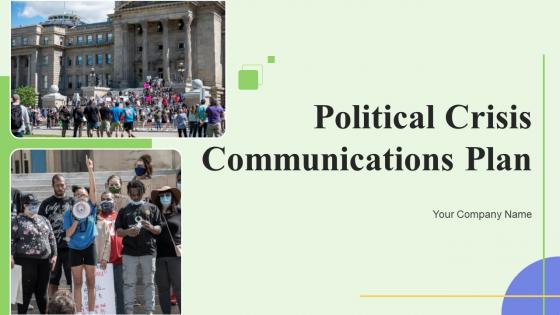
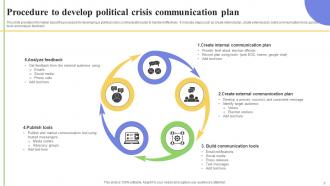
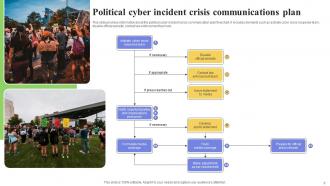
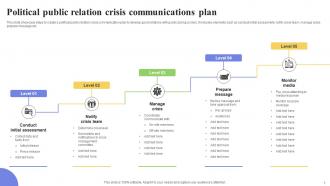
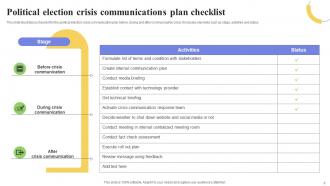
Introducing our comprehensive Political Crisis Communication Plan PowerPoint PPT presentation, designed to assist governments, political organizations, and public figures in effectively managing and communicating during times of political crises. This informative slide deck covers essential keywords such as Anti corruption Crisis, Climate Crisis, Terrorism Crisis, Election Crisis Communication Plan, and Disaster Management. With visually engaging slides and concise content, our PPT offers a deep dive into the key elements of crisis communication planning for political events. Whether youre a political leader, campaign manager, or part of a crisis response team, this resource will enhance your understanding of establishing clear communication protocols, managing public perception, and mitigating the impact of political crises. From crisis messaging strategies to media relations, our PPT provides valuable insights and practical techniques to effectively communicate during times of political upheaval. Strengthen your crisis management capabilities and maintain public trust with our user friendly Political Crisis Communication Plan PPT.
People who downloaded this PowerPoint presentation also viewed the following :
Political Crisis Communications Plan Powerpoint PPT Template Bundles with all 17 slides:
Use our Political Crisis Communications Plan Powerpoint PPT Template Bundles to effectively help you save your valuable time. They are readymade to fit into any presentation structure.









FAQs for Political Crisis Communications Plan Powerpoint
Key elements of an effective crisis communications plan include designated spokesperson roles, pre-approved messaging templates, stakeholder contact databases, escalation protocols, and monitoring systems for real-time feedback. These components work together by ensuring rapid response coordination, maintaining consistent messaging across channels, and enabling swift decision-making, with many organizations finding that comprehensive preparation significantly reduces reputation damage and accelerates recovery.
Organizations anticipate potential crises through comprehensive risk assessments, scenario planning, stakeholder mapping, and regular monitoring of internal and external threats. By developing pre-approved message templates, establishing clear communication protocols, and conducting crisis simulation exercises, companies can respond swiftly and consistently when issues arise, ultimately protecting their reputation and maintaining stakeholder trust.
Social media serves as both a rapid communication channel and reputation management tool during crises, enabling real-time updates, direct stakeholder engagement, and transparent information sharing. Organizations leverage platforms like Twitter and LinkedIn to control narratives, address misinformation quickly, and maintain customer trust, with many companies finding that proactive social media strategies significantly reduce crisis recovery time.
Organizations should address misinformation through rapid, transparent communication across multiple channels, direct stakeholder engagement, and factual correction campaigns supported by credible third-party validation. Many companies find that proactive monitoring, swift response protocols, and authentic leadership messaging help control narratives, while maintaining consistent transparency ultimately builds stronger stakeholder trust and competitive resilience.
**INPUT**: What strategies can be employed to maintain transparency with stakeholders during a crisis? **OUTPUT**: Transparency strategies include regular communication updates, proactive disclosure of relevant information, clear timelines for resolution, dedicated stakeholder channels, and honest acknowledgment of uncertainties or mistakes. These approaches streamline trust-building by demonstrating accountability, providing consistent messaging across platforms, and enabling stakeholders to make informed decisions, with many organizations finding that transparent communication ultimately delivers stronger relationships and faster crisis recovery. [Word count: 60 words]
Companies ensure crisis messaging resonates with diverse audiences by conducting demographic analysis, utilizing cultural liaisons, adapting communication channels, employing multilingual content, and implementing feedback loops. Through targeted approaches, organizations like healthcare systems during emergencies and financial institutions during market volatility deliver culturally sensitive, accessible communications that build trust across different communities while maintaining consistent core messaging.
Essential crisis communication tools include mass notification systems, social media management platforms, secure messaging applications, video conferencing solutions, and real-time monitoring dashboards. These technologies streamline response coordination, enable instant stakeholder updates, and provide comprehensive situation tracking, with many organizations finding that integrated platforms ultimately deliver faster response times, enhanced transparency, and stronger stakeholder trust during critical situations.
Cultural differences significantly impact crisis communication strategies through varying communication styles, authority structures, relationship priorities, and transparency expectations across regions. Organizations must adapt their messaging, channels, and timing to respect local cultural norms, with companies in collectivist cultures emphasizing community impact while individualist cultures focus on personal accountability, ultimately ensuring effective stakeholder engagement and reputation management globally.
Organizations should evaluate crisis communications success through response time metrics, stakeholder sentiment analysis, media coverage tone, message reach and engagement rates, and operational recovery indicators. These measurements enable companies to assess how effectively they maintained trust, minimized reputational damage, and restored stakeholder confidence, with many finding that comprehensive metric tracking ultimately delivers stronger crisis preparedness and faster organizational recovery.
Leadership can effectively communicate during crises by delivering transparent, timely updates, acknowledging responsibility where appropriate, and providing clear action plans with specific timelines. Through consistent messaging across all channels, companies like Johnson & Johnson during product recalls and airlines during service disruptions maintain stakeholder confidence, ultimately preserving brand reputation and competitive positioning in challenging markets.
Common mistakes include delayed responses, inconsistent messaging across channels, over-promising without deliverables, ignoring social media conversations, and failing to designate clear spokespersons. Organizations can avoid these pitfalls by establishing pre-approved response protocols, training cross-functional teams on unified messaging, and implementing real-time monitoring systems, ultimately maintaining stakeholder trust and minimizing reputational damage during challenging periods.
Post-crisis analysis improves future communication efforts by identifying response gaps, evaluating message effectiveness, and assessing stakeholder feedback patterns. Through systematic review of communication timelines, channel performance, and audience reactions, organizations can refine crisis protocols, enhance spokesperson training, and develop more targeted messaging strategies, ultimately delivering faster response times and stronger stakeholder trust during future crises.
Effective crisis management training should include communication protocols, role-specific responsibilities, media interaction guidelines, stakeholder messaging frameworks, and decision-making procedures under pressure. Organizations increasingly provide simulation exercises, digital communication tools, crisis response templates, and regular workshops, with many companies finding that comprehensive preparation enables faster response times, minimizes reputational damage, and maintains stakeholder confidence during challenging situations.
Organizations humanize crisis communications through storytelling by sharing personal employee experiences, acknowledging emotional impacts on stakeholders, and using authentic narratives that demonstrate empathy and accountability. These techniques enable companies to build trust, create emotional connections, and maintain credibility during challenging situations, with many organizations finding that genuine storytelling ultimately strengthens stakeholder relationships and accelerates recovery.
Internal communications during a crisis ensures employee alignment, reduces misinformation, and maintains operational continuity by providing clear directives, regular updates, and transparent leadership messaging. These strategic communications enable organizations to coordinate response efforts effectively, preserve employee morale and trust, and ultimately deliver unified external messaging, with many companies finding that well-informed teams become valuable crisis ambassadors.
-
Their professional templates are very impressive, even my manager was curious about the source. I am very grateful.
-
Unique design & color.