


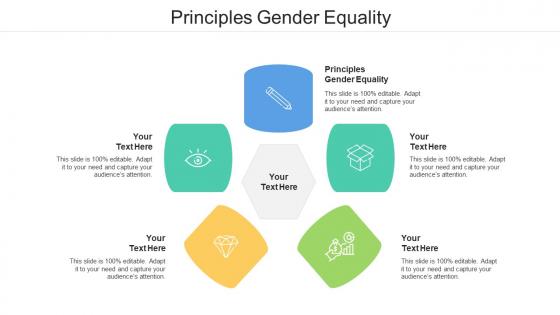
Principles Gender Equality Ppt Powerpoint Presentation Pictures Icon Cpb




Try Before you Buy Download Free Sample Product
 Impress Your
 Audience
 100%
100% Editable
 Save Hours
 of Time


Our Principles Gender Equality Ppt Powerpoint Presentation Pictures Icon Cpb are topically designed to provide an attractive backdrop to any subject. Use them to look like a presentation pro.
People who downloaded this PowerPoint presentation also viewed the following :
Principles Gender Equality Ppt Powerpoint Presentation Pictures Icon Cpb with all 6 slides:
Use our Principles Gender Equality Ppt Powerpoint Presentation Pictures Icon Cpb to effectively help you save your valuable time. They are readymade to fit into any presentation structure.





FAQs for Principles Gender Equality Ppt Powerpoint Presentation
Key barriers to achieving gender equality include unconscious bias in hiring and promotions, unequal pay structures, limited flexible work arrangements, inadequate parental leave policies, and lack of female leadership representation. These challenges particularly impact sectors like finance and technology, where organizations increasingly recognize that addressing systemic inequities through comprehensive diversity programs ultimately delivers enhanced innovation, broader talent pools, and stronger competitive advantage.
Cultural perceptions of traditional gender roles significantly slow gender equality progress by reinforcing stereotypes about women's capabilities, limiting career opportunities, and perpetuating workplace biases. These deeply rooted beliefs influence hiring practices, leadership advancement, and compensation decisions across industries, with many organizations finding that addressing cultural mindsets through targeted training and inclusive policies ultimately delivers better talent retention and enhanced business performance.
Education serves as a fundamental catalyst for gender equality in developing countries by increasing women's economic participation, reducing child marriage rates, improving maternal health outcomes, and enhancing decision-making power within households. Through accessible schooling and literacy programs, countries like Bangladesh and Rwanda have demonstrated that educated women contribute significantly to economic growth, political representation, and community development, ultimately creating sustainable pathways out of poverty while strengthening entire societies.
Companies can measure gender equality progress through pay gap analysis, representation metrics across leadership levels, promotion and retention rates by gender, and employee satisfaction surveys addressing workplace culture. Through regular diversity audits and transparent reporting, organizations streamline identification of improvement areas while delivering enhanced talent retention and innovation, with many finding that consistent measurement ultimately drives meaningful organizational change.
**INPUT**: What strategies can be implemented to support women in leadership positions? **OUTPUT**: Strategies include mentorship programs, leadership development training, flexible work arrangements, transparent promotion processes, and sponsorship initiatives that connect women with senior executives. These approaches streamline career advancement by addressing systemic barriers, enhancing skill development, and creating supportive networks, with many organizations finding that diverse leadership ultimately delivers improved decision-making and competitive advantage. **Word count: 56 words**
Intersectionality significantly influences gender inequality experiences by combining gender with race, class, sexuality, age, and disability status to create unique challenges. Women in different sectors, from healthcare to corporate leadership, face varying barriers depending on their intersecting identities, with many organizations finding that understanding these layered experiences enables more effective diversity strategies and inclusive workplace policies.
Gender bias in media representation significantly shapes societal attitudes by perpetuating stereotypes, limiting role models, and normalizing unequal power dynamics across industries. Through skewed portrayals in news, entertainment, and advertising, organizations increasingly recognize that balanced representation enhances brand credibility, expands market reach, and drives cultural change, ultimately delivering competitive advantage while fostering more inclusive workplace environments.
Men can become allies by advocating for equal pay, mentoring women colleagues, challenging discriminatory behavior, supporting flexible work policies, and amplifying women's voices in meetings. Through active allyship in corporate environments, educational institutions, and community organizations, men help create inclusive cultures that enhance collaboration, reduce workplace bias, and ultimately deliver stronger organizational performance and innovation outcomes.
Gender pay gap reports provide crucial transparency by revealing compensation disparities across roles, departments, and leadership levels, while enabling organizations to identify systemic inequities and track progress toward fair compensation practices. These findings present both challenges and opportunities, with many organizations finding that addressing identified gaps through strategic salary adjustments, promotion policy reviews, and transparent career development ultimately delivers enhanced employee trust, improved retention, and stronger competitive advantage in attracting top talent.
Technology promotes gender equality through AI-powered recruitment tools that eliminate bias, flexible work platforms enabling better work-life balance, and data analytics identifying pay gaps. These solutions streamline equitable hiring practices, enhance remote collaboration opportunities, and deliver transparent compensation frameworks across sectors like finance, healthcare, and technology, ultimately enabling organizations to build more inclusive workforces.
Successful gender equality implementations reveal that comprehensive policy frameworks combining legislative mandates, economic incentives, and cultural initiatives deliver sustained progress. Countries like Iceland, Sweden, and Rwanda demonstrate that strategic combinations of parental leave reforms, corporate quotas, and educational investments streamline workforce participation while enhancing economic competitiveness, ultimately delivering measurable outcomes in productivity and social cohesion.
Access to reproductive health services significantly influences gender equality by enabling women's economic participation, educational advancement, and career progression through family planning control. These services enhance workplace equality, reduce maternal mortality, and expand leadership opportunities, with many organizations finding that comprehensive reproductive healthcare ultimately delivers stronger female workforce participation and economic empowerment across industries.
Men play a crucial role in both perpetuating gender stereotypes through unconscious bias, traditional role expectations, and workplace behaviors, while also challenging them through advocacy, mentorship, and inclusive leadership practices. In organizations, male executives increasingly champion gender equality initiatives, mentor female colleagues, and model inclusive behaviors, ultimately delivering cultural transformation and competitive advantage through diverse perspectives.
Grassroots movements influence gender equality policy through community mobilization, advocacy campaigns, coalition building, and direct engagement with policymakers at local and national levels. These organizations enhance policy change by raising public awareness, documenting systemic issues, and building voter coalitions, with many advocacy groups finding that sustained community pressure ultimately delivers legislative reforms and institutional accountability measures.
Achieving gender equality in the workforce delivers significant economic benefits including increased GDP growth, enhanced innovation through diverse perspectives, improved talent utilization, reduced wage gaps, and stronger consumer market representation. Organizations with gender-balanced teams consistently demonstrate higher profitability, better decision-making capabilities, and greater competitive advantage, with many companies finding that diverse leadership ultimately drives sustainable growth and operational excellence.
-
Thanks for all your great templates they have saved me lots of time and accelerate my presentations. Great product, keep them up!
-
Graphics are very appealing to eyes.