


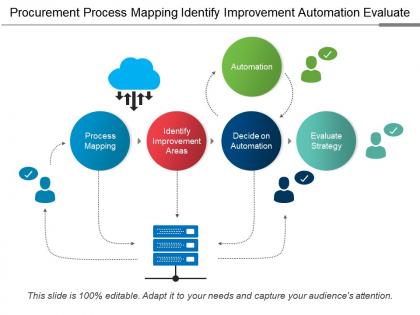
Procurement process mapping identify improvement automation evaluate




Try Before you Buy Download Free Sample Product
 Impress Your
 Audience
 100%
100% Editable
 Save Hours
 of Time


Enjoy the benefits of better access with our Procurement Process Mapping Identify Improvement Automation Evaluate. Get across to bigger audiences.
People who downloaded this PowerPoint presentation also viewed the following :
Procurement process mapping identify improvement automation evaluate with all 5 slides:
Our Procurement Process Mapping Identify Improvement Automation Evaluate ensure you don't lift a finger. They handle daily chores with ease.

FAQs for Procurement process mapping identify
Key procurement process mapping stages include needs identification, supplier research and selection, request for proposals, contract negotiation, purchase order creation, goods receipt, and invoice processing. These stages streamline organizational purchasing by enhancing transparency, reducing cycle times, and minimizing costs, with many companies finding that systematic mapping delivers improved supplier relationships and operational efficiency.
Process mapping enhances supplier relationship management by identifying communication gaps, standardizing evaluation criteria, and establishing clear performance metrics throughout procurement cycles. Through visual workflow documentation, organizations streamline vendor onboarding, automate contract renewals, and improve dispute resolution processes, with many companies finding that mapped supplier interactions reduce costs while strengthening strategic partnerships.
Recommended tools include Lucidchart, Visio, Process Street, Bizagi, and Nintex for comprehensive procurement mapping. These platforms streamline documentation by enabling collaborative flowcharts, automated workflows, and real-time updates, with many organizations finding that integrated mapping software reduces procurement cycle times, enhances vendor management transparency, and ultimately delivers better cost control and compliance tracking.
Procurement process mapping contributes to cost reduction by identifying inefficiencies, eliminating redundant steps, and revealing opportunities for vendor consolidation and bulk purchasing. Through detailed workflow analysis, organizations streamline approval cycles, reduce processing time, and enhance spend visibility, with many companies finding 10-15% cost savings while improving supplier relationships and operational efficiency.
Cross-functional collaboration ensures procurement process mapping captures diverse perspectives from finance, operations, legal, and supplier management teams, creating comprehensive workflows that reflect real organizational needs. This collaborative approach streamlines decision-making, eliminates departmental silos, and enhances supplier relationships, with many organizations finding that integrated mapping delivers faster procurement cycles and improved cost management.
Organizations can identify procurement bottlenecks through process mapping, data analytics, stakeholder feedback, performance metrics analysis, and workflow audits. These methods reveal delays in approval chains, supplier onboarding, and purchase order processing, with many companies finding that automated tracking systems and cross-departmental reviews ultimately streamline operations and reduce procurement cycle times significantly.
**INPUT**: What KPIs should be included in a procurement process map? **OUTPUT**: Essential procurement KPIs include cost savings percentage, supplier performance ratings, procurement cycle time, contract compliance rates, and purchase order accuracy. These metrics streamline vendor management, enhance budget control, and minimize operational delays, with many organizations finding that comprehensive KPI tracking delivers improved supplier relationships and significant cost reductions. **Word count: 50 words**
Procurement process mapping aids compliance and risk management by identifying control points, documenting approval workflows, and establishing audit trails throughout sourcing activities. Through systematic visualization, organizations can pinpoint regulatory gaps, monitor vendor compliance requirements, and implement risk mitigation protocols, with many financial services and healthcare institutions finding that mapped processes significantly reduce audit findings while enhancing operational transparency.
Common procurement challenges include fragmented data sources, inconsistent documentation across departments, resistance to change from stakeholders, and complex supplier relationships with varying terms. These obstacles often create delays in mapping accuracy and implementation, with many organizations finding that inadequate cross-functional collaboration and unclear approval hierarchies significantly complicate efforts to streamline procurement workflows and achieve operational transparency.
Procurement process mapping enhances organizational agility by identifying bottlenecks, streamlining approval workflows, and enabling faster supplier onboarding and contract negotiations. Through detailed visualization of procurement steps, organizations can quickly adapt to market changes, reduce cycle times by 30-40%, and pivot supplier strategies more efficiently, ultimately delivering competitive advantage in rapidly changing business environments.
Procurement process mapping integrates methodologies like Lean manufacturing, Six Sigma quality management, Kaizen continuous improvement, Value Stream Mapping, and DMAIC problem-solving frameworks. These approaches streamline vendor selection, reduce procurement cycle times, and eliminate redundant approval steps, with many organizations finding that strategic combination of these methodologies delivers significant cost savings and enhanced supplier relationships.
Process mapping streamlines supplier onboarding by standardizing documentation requirements, establishing clear approval workflows, and defining communication touchpoints throughout the qualification process. Through visual process maps, procurement teams accelerate vendor assessments, reduce compliance gaps, and ensure consistent due diligence procedures, while new suppliers gain transparency into requirements and timelines, ultimately delivering faster onboarding cycles and stronger partnerships.
Stakeholder engagement ensures procurement process mapping captures diverse perspectives, identifies pain points, and secures buy-in across departments like finance, operations, and legal. Through collaborative workshops and interviews, organizations uncover hidden inefficiencies, streamline approval workflows, and enhance transparency, ultimately delivering faster procurement cycles and stronger supplier relationships while reducing operational costs.
Technology leverages process mapping software, digital flowcharts, interactive dashboards, data visualization tools, and automated workflow systems to create clear, real-time procurement visualizations. These solutions streamline complex procurement cycles by mapping supplier relationships, tracking approval stages, and identifying bottlenecks, with many organizations finding that visual process mapping reduces cycle times and enhances operational transparency.
Procurement process mapping assists sustainability initiatives by identifying opportunities for eco-friendly sourcing, waste reduction, and supplier sustainability assessment throughout the supply chain. Through detailed process visualization, organizations can pinpoint carbon footprint reduction opportunities, implement circular economy practices, and establish green vendor criteria, with many companies finding that mapped processes enable better tracking of environmental metrics and sustainable procurement goals.
-
Visually stunning presentation, love the content.
-
Out of the box and creative design.