


Procurement Chain For Shoe Manufacturing Startup Comprehensive Guide




Try Before you Buy Download Free Sample Product
 Impress Your
 Audience
 100%
100% Editable
 Save Hours
 of Time


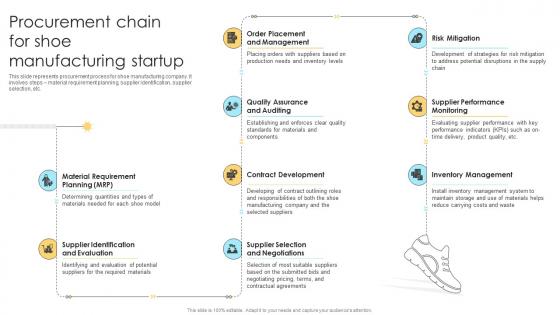
This slide represents procurement process for shoe manufacturing company. It involves steps material requirement planning, supplier identification, supplier selection, etc.
People who downloaded this PowerPoint presentation also viewed the following :
Procurement Chain For Shoe Manufacturing Startup Comprehensive Guide with all 9 slides:
Use our Procurement Chain For Shoe Manufacturing Startup Comprehensive Guide to effectively help you save your valuable time. They are readymade to fit into any presentation structure.








FAQs for Procurement Chain For Shoe Manufacturing
Key procurement stages include sourcing, supplier evaluation, contract negotiation, purchase order creation, goods receipt, invoice processing, and payment execution. These interconnected phases create a seamless workflow where sourcing decisions influence supplier partnerships, contract terms guide ordering processes, and receipt verification triggers payment cycles, ultimately delivering cost efficiency, supply chain transparency, and strategic vendor relationships that enhance organizational procurement performance.
Technology streamlines procurement chains through automation, AI-powered analytics, digital platforms, cloud-based systems, and real-time tracking capabilities. These solutions enhance efficiency by reducing manual processes, accelerating vendor selection, and improving spend visibility, with many organizations finding that automated procurement delivers faster sourcing cycles, better supplier relationships, and significant cost reductions.
Supplier relationship management enhances procurement chain optimization by fostering strategic partnerships, improving communication channels, ensuring quality standards, and negotiating favorable terms that reduce costs and delivery times. Through collaborative approaches, organizations streamline vendor performance monitoring, mitigate supply risks, and ultimately deliver enhanced operational efficiency and competitive advantage across their procurement operations.
Organizations can measure procurement chain performance through key metrics like cost savings, supplier delivery times, quality scores, contract compliance rates, and cycle time reduction. By implementing procurement analytics platforms, conducting regular supplier assessments, and establishing performance dashboards, companies streamline operations, enhance supplier relationships, and achieve significant cost reductions while improving service quality and competitive advantage.
Global procurement challenges include supply disruptions, currency fluctuations, regulatory compliance complexities, quality control inconsistencies, and cultural communication barriers. These obstacles can be mitigated through diversified supplier networks, strategic hedging mechanisms, and robust digital tracking systems, with many organizations finding that enhanced supplier relationships and predictive analytics ultimately deliver greater resilience and competitive advantage.
Sustainability transforms procurement decisions by prioritizing environmental impact, ethical sourcing, and long-term viability alongside traditional cost considerations. Organizations increasingly evaluate suppliers based on carbon footprints, labor practices, and circular economy principles, with companies in manufacturing, retail, and healthcare finding that sustainable procurement reduces risks, enhances brand reputation, and delivers competitive advantage.
Transparency strategies in procurement chains include open bidding processes, real-time tracking systems, supplier audits, blockchain documentation, and standardized reporting protocols. These approaches streamline accountability by enabling stakeholder visibility, automating compliance monitoring, and creating immutable transaction records, with many organizations finding that enhanced transparency ultimately delivers reduced costs, improved supplier relationships, and stronger regulatory compliance.
Risk management practices stabilize procurement chains in volatile markets by diversifying supplier bases, implementing dynamic pricing models, establishing buffer inventory systems, and utilizing predictive analytics for demand forecasting. Through these strategic approaches, organizations minimize supply disruptions, reduce cost fluctuations, and maintain operational continuity, with many companies finding that proactive risk assessment ultimately delivers competitive advantage during market uncertainty.
Contract management best practices include centralized contract repositories, automated renewal tracking, standardized templates, regular performance monitoring, and clear approval workflows. These approaches streamline procurement operations by reducing processing times, minimizing compliance risks, and enhancing supplier relationships, with many organizations finding that systematic contract oversight delivers significant cost savings and operational efficiency.
Data analytics enhances procurement decision-making by analyzing supplier performance metrics, identifying cost-saving opportunities, predicting market trends, and optimizing inventory levels through real-time insights. These capabilities enable organizations to streamline vendor selection, negotiate better contracts, and minimize supply chain risks, with many manufacturing and retail companies finding that data-driven procurement delivers significant cost reductions and operational efficiency.
Collaboration within the procurement chain delivers cost savings through volume consolidation, shared forecasting, joint supplier negotiations, streamlined processes, and reduced inventory costs. By working together, organizations achieve better pricing through combined purchasing power, minimize duplicate efforts across departments, and enhance supplier relationships, ultimately delivering 15-30% cost reductions while improving operational efficiency and service quality.
Regulatory compliance significantly impacts procurement chain operations by requiring enhanced documentation, standardized vendor verification processes, and rigorous audit trails throughout sourcing activities. These requirements, while adding operational complexity, ultimately deliver greater transparency, reduced legal risks, and improved supplier relationships, with many organizations finding that compliance frameworks enhance their competitive positioning in regulated industries.
The procurement chain adapts to changing consumer demands through real-time data analytics, flexible supplier networks, agile sourcing strategies, and demand forecasting technologies. These approaches enable organizations to pivot quickly when market conditions shift, with retail and manufacturing sectors increasingly leveraging predictive analytics and supplier diversification to maintain competitive advantage while minimizing supply disruptions.
Procurement professionals drive supply chain innovation by identifying emerging technologies, collaborating with innovative suppliers, and implementing strategic sourcing practices that prioritize creativity over cost alone. Through vendor partnerships and cross-functional teams, they facilitate digital transformation, sustainable solutions, and process improvements, while fostering supplier diversity programs that introduce fresh perspectives, ultimately delivering competitive advantage and operational excellence.
Effective communication enhances procurement chain collaboration by establishing clear expectations, sharing real-time updates, and facilitating transparent decision-making processes among suppliers, buyers, and internal teams. Through digital platforms and structured protocols, organizations streamline vendor negotiations, accelerate approval cycles, and minimize costly misunderstandings, ultimately delivering improved supplier relationships and operational efficiency.
-
“Immediate response, professional support, and effective solutions that were customized and immediately provided. Well done- Thank you!”
-
The content is very helpful from business point of view.