

Product life cycle stages presentation pictures




Try Before you Buy Download Free Sample Product
 Impress Your
 Audience
 100%
100% Editable
 Save Hours
 of Time


Be bullish about your chances with our Product Life Cycle Stages Presentation Pictures. Build faith in your firm fundamentals.
People who downloaded this PowerPoint presentation also viewed the following :
Product life cycle stages presentation pictures with all 5 slides:
Our Product Life Cycle Stages Presentation Pictures give a formidable boost. Ambitions expand to cover greater ground.


FAQs for Product life cycle
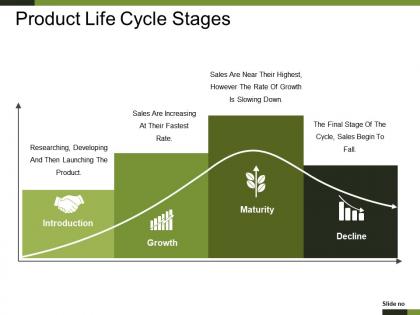
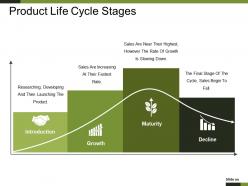
So there's four main stages your product goes through. First is introduction - you're basically hemorrhaging money while trying to get people to notice you exist. Then growth hits and suddenly everyone wants what you're selling (honestly the best phase). Maturity sucks because now you've got competitors crawling out of everywhere, so you're fighting just to keep customers. Finally there's decline when sales tank and you gotta decide if it's worth saving or time to pull the plug. Here's the thing though - you can't use the same playbook for each stage. Growth tactics will absolutely wreck you during maturity.
Look at your sales first - are they climbing or flattening out? That's honestly your best clue right there. Growth stage means steady increases, while maturity is when things plateau. Check your customer acquisition costs too - if you're spending way more to get new customers than you did last year, that's a red flag. Market share and competition matter a lot here. When tons of new competitors start pouring in, you're probably hitting maturity. I'd just graph your revenue from the past few quarters and see what pattern emerges. Oh, and declining margins? Yeah, that usually means you've passed your peak growth phase.
Ok so at this stage, nobody knows you exist yet - that's your biggest problem. Content marketing and PR are gonna be your best friends here. Get some influencer partnerships going if you can swing it. Free trials work amazing because people are weird about trying new stuff. Don't even bother competing on price right now, you're fighting for eyeballs instead. Your ads need to actually explain what your thing does (sounds obvious but you'd be surprised). Focus on the problem you're solving, not just listing features. Oh and start that email list yesterday - seriously, wish someone told me that earlier. Position yourself as the go-to expert in your space.
Honestly, consumer behavior is everything during growth stage. Early adopters become your free marketing team - they'll tell everyone about your product if they love it. That word-of-mouth pulls in the mainstream customers who won't buy until they see others using it first. Their feedback helps you tweak things too. Here's what I've noticed though: if people are buying again and leaving good reviews, you're golden. Premium pricing during this phase? Smart move. Gives you cash to actually scale up production. Watch those adoption patterns - they don't lie about where you're headed.
Okay so here's the deal - once you hit that maturity phase, pricing becomes everything. Growth stage? You could charge whatever because demand was crazy high. Now everyone and their mom is entering your market. Competitive pricing or value-based stuff is probably your best bet. I mean, you don't want to get stuck in some brutal price war where nobody wins. Start looking at what competitors are charging right now. Figure out how your product is actually different - like what makes people choose you over them? Do this before you're scrambling to react. Trust me, being proactive here beats playing catch-up later.
So when products hit maturity, most companies just do small tweaks to keep things interesting. Like how iPhones get new cameras or colors every year - basically the same phone but refreshed. They'll update packaging, target different customers, or add features without changing the core product. Honestly, it's pretty smart because you don't want to mess with something that's already working. Just listen to what customers are saying and peek at what competitors are doing. Then make changes that actually matter to people. Quick updates beat major overhauls every time.
Look for sales dropping over several quarters straight - that's your biggest red flag. Market share shrinks even when competitors aren't stealing customers. Profit margins fall while you're spending more to get new customers (and losing the ones you have). Honestly, it's exhausting when you're running twice as hard just to break even. Your product stops getting feature requests too, which... yeah, that stings but it tells you everything. Customers suddenly care way more about price than they used to. Once you spot these patterns, don't wait around. Start planning your exit or pivot before you're scrambling.
Yeah, definitely don't scrap it yet! First thing - figure out what's actually broken. Check your sales data and what customers are saying. Maybe it's just the messaging that sucks, or the packaging looks dated. I've seen companies completely flip a failing product just by finding a different audience or changing the price point. Could be worth bundling it with something else or trying new places to sell it. Sometimes it's not even the product itself, just how you're talking about it. Oh, and look at what competitors are doing differently - that usually tells you a lot.
Honestly, it depends where your product is right now. New launch? You'll want to watch brand awareness and how fast people are adopting it. Growth phase is where it gets fun - track market share, what you're spending to get customers, and revenue jumps. Once you hit maturity, profit margins and keeping customers around matter most. If things are declining... well, keep an eye on inventory and whether certain customer groups still care. Oh, and competitive stuff throughout. Figure out your stage first, then pick maybe 3-4 metrics to check weekly instead of drowning in data.
Dude, you absolutely can't skip market research at launch - I've watched so many products crash and burn because teams thought they could just figure it out as they went. Customer interviews should be your first move, then dig into what competitors are doing. This stuff helps you nail your pricing, find the right channels, and actually talk to people in a way that clicks with them. Honestly, those two things alone will save you from making expensive mistakes that could've been totally avoided. Way better than guessing and hoping for the best.
Honestly, digital marketing makes product lifecycle stuff way easier when you match tactics to each stage. New product launch? Content marketing and influencer collabs work great for awareness. Once you hit growth mode, that's when you scale with paid ads and SEO. Here's what most people mess up - they ignore the maturity phase. That's when retention campaigns and loyalty programs actually matter most. If your product's declining, you can either try remarketing to revive it or just communicate the sunset clearly. Don't just spray and pray with random tactics though.
Honestly, external factors mess with each stage totally differently. New products? Economic downturns basically kill them because nobody wants to risk trying something unproven. Growth stages are the opposite - when people have money, things scale way faster. Maturity gets weird though. Customers start comparing you to every cheap knockoff out there when times get tight. And decline stages are unpredictable - sometimes a recession speeds up the death, but occasionally your product becomes the budget solution everyone needs. Watch those economic indicators and be ready to completely flip your messaging depending on where you are.
Look, building sustainability into your whole product cycle is actually a smart business move. You'll save money on materials through better design, dodge regulatory headaches, and customers love brands that give a damn about the environment. Honestly, sustainable materials often last longer too, so product quality goes up. The trick is baking this thinking in from day one - retrofitting sucks and costs more. Map out where you're creating the biggest environmental mess first, then tackle those spots. Regulations aren't going anywhere but stricter, so might as well get ahead of it now.
Honestly, customer feedback is like having a cheat sheet for every stage of your product. Early on, use it to catch big problems before you launch. Growing? That's when people tell you what's actually broken or missing. Once you're established, they'll literally hand you your roadmap - seriously, they do half the work for you. Even if things are tanking, their feedback shows whether you can pivot or should just cut your losses. The trick is setting up ways to actually hear them regularly. Surveys work, but I'd also dig into support tickets and do some real interviews. Then - and this is key - you have to actually do something with what they tell you.
Honestly, the worst trap is getting too cozy in the maturity stage - you're making decent money so you ignore the warning signs. Companies also freak out during growth phases and completely pivot instead of just doubling down (happens way more than you'd think). At the start, people expect quick wins but really need to focus on educating the market first. Oh, and in decline? They waste so much cash trying to revive dead products instead of just letting them go. Set exit criteria for each stage upfront and check them every quarter - keeps you strategic instead of just reacting to whatever crisis pops up.
-
Really like the color and design of the presentation.
-
Very unique and reliable designs.