


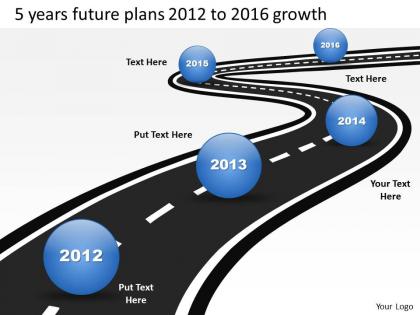
Product roadmap timeline 5 years future plans 2012 to 2016 growth powerpoint templates slides




Try Before you Buy Download Free Sample Product
 Impress Your
 Audience
 100%
100% Editable
 Save Hours
 of Time


Convey your views with our Product Roadmap Timeline 5 Years Future Plans 2012 to 2016 Growth Powerpoint Templates Slides. They will amplify the strength of your logic.
People who downloaded this PowerPoint presentation also viewed the following :
Product roadmap timeline 5 years future plans 2012 to 2016 growth powerpoint templates slides with all 5 slides:
Our Product Roadmap Timeline 5 Years Future Plans 2012 to 2016 Growth Powerpoint Templates Slides will get your thoughts to circulate. They will give them a glowing introduction.

FAQs for Product roadmap timeline 5 years future plans 2012 to 2016 growth
A product roadmap timeline should include feature releases, development milestones, market launch dates, resource allocation phases, and stakeholder review checkpoints. These components work together by providing clear visibility into product evolution, aligning cross-functional teams around shared objectives, and enabling strategic decision-making, with many organizations finding that comprehensive timelines ultimately streamline development cycles and enhance competitive positioning.
Product roadmap timelines should be updated quarterly or bi-annually, with major reviews aligning to business planning cycles and market shifts. Many organizations find that regular updates enable teams to respond to customer feedback, competitive pressures, and resource changes, while maintaining strategic focus and stakeholder alignment, ultimately delivering more responsive product development and enhanced market positioning.
Best practices for prioritizing features include value-based scoring, customer impact assessment, resource requirements analysis, strategic alignment evaluation, and competitive differentiation potential. These frameworks streamline decision-making by balancing user needs, business objectives, and technical feasibility, with many product teams finding that regular stakeholder input and data-driven metrics ultimately deliver faster market responsiveness and stronger competitive advantage.
Aligning product roadmap timelines with business goals requires strategic prioritization of features that directly support revenue targets, market expansion objectives, and competitive positioning requirements. This involves regular cross-functional collaboration between product, sales, and executive teams to ensure development milestones synchronize with launch windows, seasonal demands, and strategic initiatives, ultimately delivering market advantages while maintaining operational efficiency.
Customer feedback serves as a critical input for prioritizing features, identifying market demands, validating assumptions, and adjusting development sequences within product roadmap timelines. This strategic integration enables product teams to allocate resources more effectively, reduce development risks, and accelerate time-to-market for high-impact features, with many organizations finding that customer-driven roadmaps ultimately deliver stronger market fit and competitive advantage.
Teams effectively communicate roadmap changes through transparent stakeholder updates, clear change rationale documentation, regular cross-functional meetings, and visual timeline adjustments that highlight impacts. Through structured communication frameworks, organizations streamline alignment across development, marketing, and sales teams while maintaining customer transparency, ultimately delivering consistent expectations and reducing project friction with stakeholders increasingly valuing proactive change management.
Tools for creating product roadmap timelines include Aha!, ProductPlan, Roadmunk, Monday.com, and Asana, each offering specialized features for strategic planning and stakeholder communication. These platforms enhance collaboration by enabling real-time updates, visual timeline management, and cross-functional alignment, with many organizations finding that integrated roadmap software streamlines decision-making processes and delivers greater transparency across product development cycles.
Balancing short-term goals with long-term vision requires strategic prioritization, regular milestone assessment, and flexible planning frameworks that connect immediate deliverables to broader objectives. Through phased development approaches, product teams deliver quick wins while building foundational capabilities, with many organizations finding that quarterly reviews and stakeholder alignment sessions ensure tactical progress ultimately serves strategic transformation and competitive positioning.
Common pitfalls include overcommitting to rigid deadlines, underestimating development complexities, failing to account for dependencies, and neglecting stakeholder feedback loops throughout the process. While these challenges can derail product launches, organizations increasingly find that building buffer time, maintaining cross-functional communication, and regularly reassessing priorities delivers more realistic timelines and ultimately stronger competitive positioning.
Visual product roadmap presentations enhance stakeholder engagement by transforming complex timelines into digestible formats, clarifying dependencies and priorities, and enabling interactive discussions around strategic decisions. These presentations streamline communication across departments like engineering, marketing, and sales, while providing transparency that builds trust and alignment, with many organizations finding that visual roadmaps accelerate decision-making and strengthen stakeholder buy-in.
**INPUT**: What metrics should be tracked to measure the success of a product roadmap timeline? **OUTPUT**: Success metrics for product roadmap timelines include milestone completion rates, feature delivery velocity, stakeholder satisfaction scores, market responsiveness indicators, and resource utilization efficiency. These measurements enable organizations to streamline planning processes, enhance cross-functional alignment, and ultimately deliver competitive advantages, with many companies finding that consistent tracking significantly improves their strategic execution capabilities.
Cross-team collaboration integrates into product roadmap timelines through shared milestone planning, regular synchronization meetings, and transparent progress tracking across departments. By establishing clear dependencies between engineering, design, marketing, and sales teams, organizations streamline development cycles, reduce bottlenecks, and accelerate time-to-market, ultimately delivering cohesive products that meet both technical requirements and market demands.
Timeframes in product roadmaps provide strategic structure by establishing development priorities, resource allocation schedules, and stakeholder expectations for feature delivery. While maintaining flexibility for market changes, these timeframes enable organizations to coordinate cross-functional teams, secure necessary funding, and communicate realistic launch expectations to customers, ultimately delivering competitive advantage through disciplined execution.
Product roadmap flexibility requires building in buffer time, establishing regular review cycles, prioritizing features by market impact, and maintaining modular development phases that can be adjusted quickly. By implementing agile methodologies and quarterly reassessment points, companies can pivot strategies while maintaining forward momentum, with many tech organizations finding that flexible roadmaps ultimately deliver better market alignment and competitive responsiveness.
Agile methodologies transform product roadmap timeline development by emphasizing iterative planning, flexible prioritization, and continuous stakeholder feedback over rigid long-term schedules. Through sprint-based cycles and regular retrospectives, organizations can adapt timelines based on market changes, user insights, and technical discoveries, ultimately delivering more responsive products while maintaining strategic direction in an increasingly dynamic business environment.
-
Really like the color and design of the presentation.
-
Appreciate the research and its presentable format.