


Product roadmap timeline technology growth map future improvements powerpoint templates slides




Try Before you Buy Download Free Sample Product
 Impress Your
 Audience
 100%
100% Editable
 Save Hours
 of Time


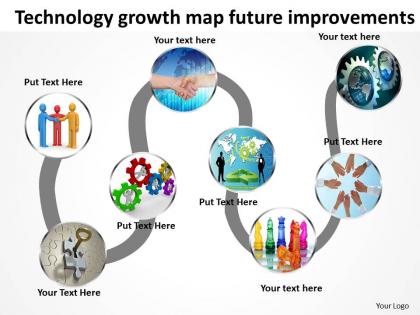
Technological innovation is a continuous process for any organization who believes in keeping pace with the changing technology in the market. Such organization always find our product roadmap timeline technology growth map future improvements PowerPoint templates slides beneficial to keep a record of the changes they had made in past , changes which they have undertaken in resent time and the innovations which they have planned for future. The technological advancement roadmap PPT PowerPoint presentation is a tool to evaluate the variation in the economy of your company on the basis of the technological innovations it has embedded in itself with time. Growth in the usage of internet is one of the primary reasons behind the ever changing trends in technology. The provided technology growth map PPT presentation slide model has set up a flat layout for you comprising of icons related to the areas which are affected by the modernization of technology. You simply need to name them as per your choice and/or change the PPT icons as per your need if desired.If your presentation needs to be it's best try our Product Roadmap Timeline Technology Growth Map Future Improvements Powerpoint Templates Slides. A wide selection offers the chance to support any topic.
People who downloaded this PowerPoint presentation also viewed the following :
Product roadmap timeline technology growth map future improvements powerpoint templates slides with all 2 slides:
Priceless design at down to earth prices. These Product Roadmap Timeline Technology Growth Map Future Improvements Powerpoint Templates Slides are a great buy for every budget.
FAQs for Product roadmap timeline technology growth map future improvements
Start with your business goals and work backwards - what features actually move the needle? I always group things into themes rather than getting stuck on individual features. Build in some buffer time because stuff always takes longer than you think. Beyond next quarter, keep it pretty high-level since you're basically guessing anyway. Show stakeholders the "why" behind everything - they eat that up. Add confidence levels too since roadmaps are really just educated guesses the further out you go. Biggest trap? Getting too granular with distant stuff. Update it regularly as you learn new things.
Always start with business goals and what actually helps your customers - that's your north star. I score stuff on a basic high impact vs effort grid, plus look at revenue potential and how much customers are asking for it. Politics will mess with your priorities way more than you'd expect, but stick to the data when you can. Technical dependencies matter too - some things just have to happen first. Be upfront about how you're deciding things and revisit quarterly. The loudest feature requests aren't always the right ones. Focus on what actually makes a difference for users and the bottom line.
Yeah, customer feedback drives like 60-70% of our roadmap decisions. We grab it from support tickets, user interviews, and this little feedback widget in the app - though that thing is basically just a bug complaint box lol. Here's the thing though: don't build everything people ask for. Look for patterns instead. When fifty people want the same feature, dig into the actual problem they're solving. Sometimes what they think they need isn't what they actually need. Set up quarterly feedback reviews with your team and connect those directly to roadmap planning. Works way better than just randomly responding to requests.
Quarterly works for most teams, but honestly it depends on your market. Fast-moving spaces? You might need monthly check-ins. I've watched teams completely lose credibility because their roadmaps were ancient history - stakeholders just stopped caring. Find a rhythm that actually makes sense for your reality. Start quarterly and see how it feels. Short sentences work better than these massive updates that nobody reads anyway. Build in some wiggle room for when priorities inevitably shift. The worst thing is being stuck with a process that doesn't fit how your team actually operates.
Short-term roadmaps are basically your next 1-3 months - specific features, real deadlines, stuff you're actually committing to. Long-term covers 6-18 months but way more high-level. Like "improve onboarding" instead of "redesign the signup flow button." Think sprint planning vs big picture strategy. The further out you plan, the vaguer it gets (which is fine, honestly). You can't predict everything six months ahead anyway. I update short-term weekly, long-term maybe once a month. Oh and don't stress if your long-term roadmap changes - that's literally the point.
Dude, visual stuff saves roadmaps from being total snoozefests. Color-code your priorities, throw in some timeline bars and progress indicators - way better than text walls. Icons help people spot features instantly. Oh, and swimlanes are clutch for separating different teams or product areas. I swear, half the roadmaps I see look like Excel threw up on them. Stick with consistent colors - maybe green for performance tweaks, blue for shiny new features. Progress bars show what's actually done. Timeline views beat boring lists every time. Your stakeholders will actually pay attention instead of mentally checking out after five seconds.
ProductPlan and Roadmunk are built specifically for roadmaps - super visual and clean. Aha! works too but honestly feels bloated unless you need all the bells and whistles. My last team just used Notion and it worked great, way cheaper than the fancy stuff. Google Sheets can work in a pinch if you're scrappy. The real trick is finding something everyone will actually update instead of letting it rot. I'd start simple with whatever clicks for your team first, then move up if you outgrow it.
Don't let stakeholders run your roadmap - that's a recipe for disaster. I split feedback into two buckets: actual must-haves (like regulatory stuff) and nice-to-haves. Your product vision should guide which feedback you act on, not the loudest voice in the room. Being transparent helps a ton - people actually respect you more when you explain why their favorite feature isn't happening yet. Set up regular check-ins so everyone feels heard, but always tie decisions back to real user value and business impact. Oh, and document your reasoning behind roadmap choices. Future you will thank you for it.
Focus on both leading and lagging stuff - feature adoption rates, how fast you ship planned features, customer satisfaction, revenue from new releases. Are you actually hitting your promised dates? Because honestly, nothing pisses off stakeholders more than blown timelines. Also watch user engagement with new features and support tickets (tells you if you're building garbage or gold). Oh, and delivery predictability is huge. Start with maybe 3-4 metrics that match your business goals. Don't try tracking everything - you'll go crazy and learn nothing useful.
Honestly, start by figuring out what your company actually wants to hit in the next few years - revenue stuff, new markets, whatever. Map your features directly to those goals. Business wants enterprise clients? Skip the shiny consumer features and focus on security + integrations instead. Regular leadership check-ins are clutch since priorities change constantly (learned this the hard way). Create a simple matrix showing how each roadmap item supports specific goals. Makes it obvious where you're adding real value. Trust me, this saves so many awkward conversations later.
Honestly, the worst thing you can do is get super specific with dates and features right away - you'll spend forever explaining why stuff changed. I learned this the hard way lol. Also don't just throw every feature request on there or it becomes total chaos. Work with your engineering team from the start, otherwise you're basically writing fiction. Your roadmap isn't a contract! It should change as you figure things out. Focus on outcomes instead of just listing features, and always connect it back to your bigger strategy so people get why you're doing what you're doing.
Honestly, just jump on it right away when roadmap stuff changes. Don't wait around - I made that mistake once and rumors got totally out of hand. Quick email first explaining what's different and why it happened. Then do actual meetings where people can ask questions because they always have a million of them. With stakeholders, skip the technical jargon and focus on how it affects the business side of things. A simple before/after chart works wonders. The "why" matters way more than just dropping news on people. Face-to-face conversations are clutch for this stuff.
Look, timelines are basically your sanity saver. You need them to figure out what comes first, manage everyone's expectations, and get your teams on the same page. Otherwise you're just making a fancy wish list that nobody can actually use. Yeah, they'll definitely change - mine always do, usually within like two weeks lol. But starting with that framework makes you think through all the messy dependencies and resource stuff early. Sales needs to know when they can promise features. Engineering has to plan their workload. Leadership makes big decisions based on this stuff. Keep them loose enough to adapt but solid enough that people can actually plan around them.
Think of it like this - your product roadmap stops everyone from running in different directions. Engineering can actually plan their work instead of scrambling last minute. Marketing gets a heads up on what features are coming so they're not caught off guard. Sales teams know what they can promise without overpromising (learned that one the hard way at my last job). Honestly, it just gets everyone on the same page instead of playing guessing games. You've gotta keep updating it though and share it widely, not hoard it in product team meetings.
Honestly, ditch the super detailed annual plans - they'll just bite you later. I'd go with quarterly reviews instead and focus on themes rather than locked-in features. Build buffer time because random stuff always pops up (trust me on this one). Try the "now/next/later" approach instead of hard dates. Confidence levels help too - like "we're 90% sure about this quarter, maybe 60% on next." Keep collecting user feedback to guide pivots. The roadmap needs regular check-ins or it becomes useless pretty fast. Think outcomes, not specific solutions.
-
good
-
Excellent products for quick understanding.
-
Wonderful templates design to use in business meetings.