


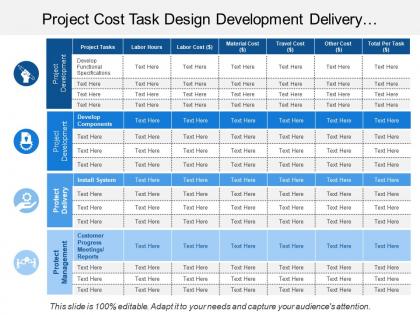
Project cost task design development delivery management labor material




Try Before you Buy Download Free Sample Product
 Impress Your
 Audience
 100%
100% Editable
 Save Hours
 of Time


Our Project Cost Task Design Development Delivery Management Labor Material facilitate collation of information. It eases the burden of journalists.
People who downloaded this PowerPoint presentation also viewed the following :
Project cost task design development delivery management labor material with all 5 slides:
Aid the infirm with our Project Cost Task Design Development Delivery Management Labor Material. Give them the confidence that they can be fit again.



FAQs for Project cost task design development delivery
The key phases of the project management lifecycle include initiation, planning, execution, monitoring and controlling, and closing. These phases streamline project delivery by establishing clear objectives, allocating resources effectively, and maintaining quality standards throughout development, with many organizations finding that structured lifecycle management reduces costs, accelerates timelines, and ultimately delivers more successful outcomes.
Effectively defining project scope involves establishing clear deliverables, timelines, resource requirements, success metrics, and stakeholder responsibilities through comprehensive documentation and stakeholder alignment sessions. This strategic approach enables teams to minimize scope creep, allocate resources efficiently, and maintain project focus, with many organizations finding that well-defined objectives ultimately deliver faster completion times and higher success rates.
Common project management methodologies include Agile, Waterfall, Scrum, Kanban, and Lean, each offering distinct approaches to planning, execution, and delivery. While Waterfall follows sequential phases ideal for construction and manufacturing, Agile emphasizes iterative development perfect for software projects, with organizations increasingly finding that hybrid approaches deliver enhanced flexibility and improved project outcomes.
Project managers can effectively handle scope creep by establishing clear project boundaries, implementing formal change control processes, maintaining regular stakeholder communication, and documenting all requirements upfront. Through structured change requests and impact assessments, managers in construction, software development, and consulting successfully minimize unauthorized additions while preserving client relationships, ultimately delivering projects on time and within budget.
**INPUT**: What tools and software are most effective for project scheduling? **OUTPUT**: Effective project scheduling tools include Microsoft Project, Asana, Trello, Monday.com, and Smartsheet, each offering unique features for timeline management and resource allocation. These platforms streamline project workflows by enabling real-time collaboration, automated task dependencies, and comprehensive reporting, with many organizations finding that integrated scheduling tools ultimately deliver improved efficiency and better project outcomes. [Word count: 58 words]
Project success measurement extends beyond deadlines to include budget adherence, quality deliverables, stakeholder satisfaction, and strategic objective alignment. Through comprehensive metrics like ROI analysis, customer feedback scores, and team performance indicators, organizations can evaluate project impact, resource efficiency, and long-term value creation, ultimately delivering sustainable competitive advantage.
Managing stakeholder expectations involves regular communication updates, clear project scope documentation, realistic timeline setting, transparent risk assessment, and structured feedback collection processes. Through consistent stakeholder meetings and progress reporting, project managers can address concerns proactively, minimize scope creep, and maintain alignment, ultimately delivering successful outcomes while preserving stakeholder relationships and organizational credibility.
Risk management integrates into project planning through risk identification workshops, probability assessments, impact analysis, contingency planning, and regular monitoring protocols. These approaches enable project managers to proactively address potential issues by allocating buffer resources, establishing alternative timelines, and creating response strategies, ultimately delivering more predictable outcomes and enhanced stakeholder confidence.
Communication serves as the foundation of successful project management, enabling clear goal alignment, stakeholder coordination, risk mitigation, and timely decision-making across all project phases. Through regular status updates, collaborative tools, and structured feedback loops, project managers streamline team productivity, minimize costly misunderstandings, and maintain stakeholder engagement, ultimately delivering projects on time and within budget while enhancing overall organizational efficiency.
Project managers foster collaboration and engagement by establishing clear communication channels, implementing collaborative tools like shared dashboards, conducting regular check-ins, and creating inclusive decision-making processes. Through strategic team-building activities and transparent goal-setting, organizations enhance productivity, reduce project delays, and improve team satisfaction, with many companies finding that engaged teams deliver 23% better performance outcomes.
Best resource allocation practices include skills-based matching, workload balancing, priority-driven assignments, cross-functional coordination, and continuous monitoring through resource management tools. These approaches streamline project delivery by maximizing team efficiency, preventing bottlenecks, and ensuring critical tasks receive adequate support, with many organizations finding that strategic resource planning ultimately reduces project timelines while enhancing overall outcomes.
Managing remote project teams effectively requires clear communication protocols, robust digital collaboration tools, regular check-ins, defined deliverables, and flexible scheduling across time zones. Through platforms like Slack, Asana, and video conferencing, organizations streamline coordination, enhance transparency, and maintain team cohesion, with many companies finding that structured virtual workflows ultimately deliver improved productivity and broader talent access.
Ethical considerations in project management include stakeholder transparency, resource allocation fairness, conflict of interest management, data privacy protection, and honest progress reporting. These principles enhance team trust, client relationships, and organizational reputation by ensuring accountability, minimizing legal risks, and delivering sustainable outcomes, with many organizations finding that ethical practices ultimately strengthen competitive advantage.
Technology has revolutionized modern project management through cloud-based collaboration platforms, AI-powered scheduling, real-time analytics, automated resource allocation, and integrated communication tools. These digital solutions streamline project workflows by enhancing team coordination, reducing administrative overhead, and enabling data-driven decision-making, with organizations across industries finding significantly improved delivery timelines and operational efficiency.
Common project management pitfalls include unclear scope definition, inadequate resource allocation, poor communication protocols, unrealistic timeline estimation, and insufficient risk assessment. These challenges can be avoided by implementing comprehensive project planning frameworks, establishing regular stakeholder communication channels, and conducting thorough feasibility analyses, with many organizations finding that proactive risk management and clear milestone tracking ultimately deliver improved project success rates and enhanced operational efficiency.
-
Awesome presentation, really professional and easy to edit.
-
Wonderful templates design to use in business meetings.