


Project Onboarding And Orientation Powerpoint Ppt Template Bundles




Try Before you Buy Download Free Sample Product
 Impress Your
 Audience
 100%
100% Editable
 Save Hours
 of Time


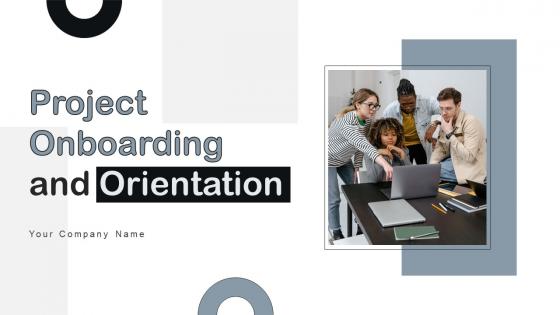
Introducing our comprehensive PPT on Project Onboarding and Orientation your ultimate guide to mastering the art of seamless project integration. In this presentation, we delve into project onboarding strategies that streamline your project initiation, covering the essential steps and key elements involved. Navigate through the intricate world of project onboarding challenges and discover how to overcome them effectively. We also spotlight cutting edge project onboarding technologies that can revolutionize your approach. Whether you are a seasoned project manager or a newbie, this PPT equips you with the knowledge and tools necessary to optimize your project onboarding processes. Get ready to enhance your project success rates and boost efficiency with our in depth insights and practical solutions.
People who downloaded this PowerPoint presentation also viewed the following :
Project Onboarding And Orientation Powerpoint Ppt Template Bundles with all 22 slides:
Use our Project Onboarding And Orientation Powerpoint Ppt Template Bundles to effectively help you save your valuable time. They are readymade to fit into any presentation structure.











FAQs for Project Onboarding And Orientation Powerpoint
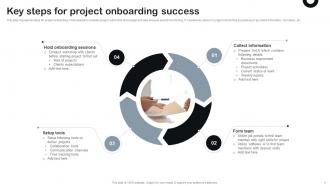
Essential components include stakeholder introductions, project scope clarification, role definitions, communication protocols, resource access setup, timeline overviews, and risk assessment briefings. These elements work together by establishing clear expectations, facilitating team integration, and providing necessary context, with many organizations finding that comprehensive onboarding significantly reduces project startup delays and enhances overall team performance.
Organizations tailor onboarding by customizing content delivery, role-specific training modules, industry compliance requirements, stakeholder engagement protocols, and project methodology frameworks. Through strategic adaptation, companies in healthcare focus on regulatory standards while technology firms emphasize agile practices and collaboration tools, ultimately delivering faster team integration and improved project outcomes across diverse operational environments.
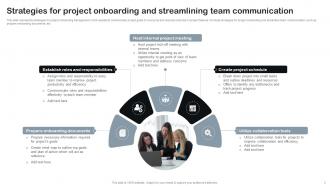
Communication serves as the foundation for successful project orientation by establishing clear expectations, facilitating knowledge transfer, and building relationships between new team members and existing stakeholders. Through regular check-ins, structured feedback sessions, and transparent information sharing, organizations streamline the integration process, reduce time-to-productivity, and enhance team collaboration, ultimately delivering stronger project outcomes and improved retention rates.
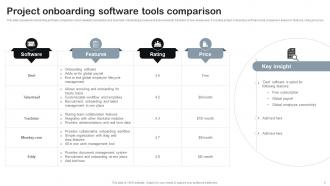
Digital onboarding platforms like BambooHR, Workday, and Monday.com, along with collaboration tools such as Slack, Microsoft Teams, and Asana, significantly streamline the orientation process. These technologies enhance project manager efficiency by automating documentation workflows, centralizing communication channels, and tracking progress milestones, ultimately delivering faster team integration and improved project outcomes.
Cultural differences can significantly impact project onboarding through varying communication styles, decision-making processes, hierarchy expectations, and feedback preferences across international teams. These variations present both challenges and opportunities, with many global organizations finding that culturally-aware onboarding approaches enhance team cohesion, minimize misunderstandings, and ultimately deliver stronger project outcomes through diverse perspectives and inclusive practices.
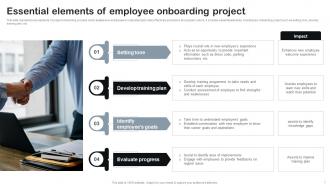
Effective onboarding strategies include interactive training sessions, mentorship programs, clear role expectations, team integration activities, and regular feedback loops. These approaches enhance engagement by fostering connection, reducing uncertainty, and accelerating productivity, with many organizations finding that structured onboarding improves retention rates and delivers faster project contributions.
Feedback from newly onboarded team members can be integrated through structured surveys, one-on-one sessions, focus groups, and digital feedback platforms that capture their experiences systematically. Organizations streamline this process by implementing quarterly onboarding reviews, creating feedback loops with HR teams, and establishing mentorship programs, ultimately enhancing future onboarding experiences and reducing time-to-productivity for subsequent hires.
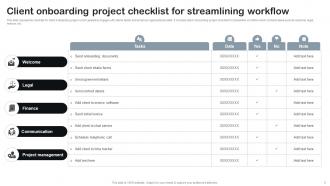
**INPUT**: What best practices should be followed to document project onboarding procedures effectively? **OUTPUT**: Effective project onboarding documentation includes standardized templates, role-specific checklists, clear timeline frameworks, accessible resource repositories, and feedback collection mechanisms. These practices streamline integration by establishing consistent processes, reducing orientation time, and enhancing team productivity, with many organizations finding that comprehensive documentation ultimately delivers faster project ramp-up and improved stakeholder alignment. [Word count: 54 words]
Aligning onboarding with project goals is critical for ensuring team members understand their roles, deliverables, and success metrics from day one, ultimately reducing confusion and accelerating productivity. This strategic alignment enables organizations to streamline resource allocation, minimize project delays, and enhance collaboration, with many companies finding that well-aligned onboarding reduces project timelines by up to 30% while improving overall deliverable quality.
Mentorship and buddy systems enhance onboarding by providing personalized guidance, accelerating cultural integration, reducing initial anxiety, and creating structured knowledge transfer pathways. These programs enable faster project familiarization, smoother stakeholder introductions, and clearer role expectations, with many organizations finding that new hires become productive 40% faster while experiencing improved retention rates and stronger team connections.
Key metrics include time-to-productivity, onboarding completion rates, early turnover rates, performance assessments at 30-60-90 days, and stakeholder satisfaction scores. These KPIs enable organizations to streamline resource allocation, enhance team integration, and minimize project delays, with many companies finding that comprehensive measurement ultimately delivers faster project delivery and improved team performance across departments.
Onboarding facilitates cross-functional collaboration by establishing shared communication protocols, clarifying roles and responsibilities, and creating unified project goals from the start. Through structured orientation sessions, teams align on workflows, decision-making processes, and integration points, while fostering interpersonal connections that streamline coordination, ultimately delivering faster project execution and enhanced team synergy.
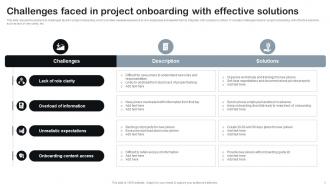
Common onboarding challenges include unclear role expectations, inadequate training resources, poor communication workflows, limited stakeholder engagement, and insufficient technology access. These obstacles can be mitigated through structured orientation programs, comprehensive documentation, regular check-ins with managers, and streamlined system provisioning, with many organizations finding that proactive planning and dedicated onboarding teams significantly enhance employee integration and reduce time-to-productivity.
Training serves as the foundation of effective project onboarding by establishing technical competencies, clarifying role expectations, defining workflow processes, and ensuring regulatory compliance standards. Tailored training programs address specific project requirements through role-based modules, industry-specific protocols, and hands-on simulations, with many organizations finding that customized approaches significantly reduce ramp-up time while enhancing team productivity and project success rates.
Organizations can leverage onboarding by implementing inclusive welcome processes, diverse mentor pairings, cultural competency training, bias awareness sessions, and equitable resource access from day one. Through strategic onboarding design, companies in sectors like technology and consulting create psychologically safe environments, establish clear inclusion expectations, and foster cross-cultural collaboration, ultimately building stronger project teams and enhancing innovation outcomes.
-
I took a chance with SlideTeam. I never looked back. Great products and great service.
-
SlideTeam has helped me take my presentation to the next level. Everyone at the office is impressed! I’ll be using their designs for a long-long time.