

Project Pilot Strategy Action Plan




Try Before you Buy Download Free Sample Product
 Impress Your
 Audience
 100%
100% Editable
 Save Hours
 of Time


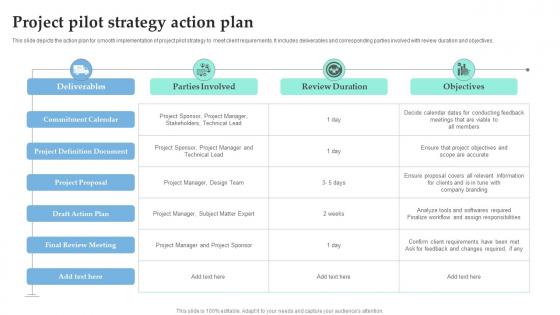
This slide depicts the action plan for smooth implementation of project pilot strategy to meet client requirements. It includes deliverables and corresponding parties involved with review duration and objectives.
People who downloaded this PowerPoint presentation also viewed the following :
Project Pilot Strategy Action Plan with all 6 slides:
Use our Project Pilot Strategy Action Plan to effectively help you save your valuable time. They are readymade to fit into any presentation structure.





FAQs for Project Pilot
You want to test your idea small-scale first - way smarter than going all-in and discovering it sucks after you've blown the budget everywhere. Pilots let you collect real feedback and spot problems early. I'd actually set success metrics upfront so you'll know if it worked or just felt like it did (happens more than you'd think). Plus you can refine things based on actual user data instead of just hoping your assumptions were right. Honestly, it's like a dress rehearsal before the real show.
Honestly, start with something that already bugs people - those complaints you hear all the time? Gold mine right there. You'll want a 3-6 month timeline max, nothing crazy ambitious for your first rodeo. Make sure you've got some allies already on board because nobody wants to fight politics AND execute a pilot at the same time. The real trick is picking something small but visible enough that other teams will want to copy it later. I'd sketch out maybe 3-4 options first, then bounce them off your team. They'll tell you pretty quickly which one's actually doable versus which sounds good on paper but would be a nightmare.
Honestly, just nail down three things: did you actually hit your goals, how messy was the whole process, and what do people think about it? Obviously track your main metrics first - the stuff you said you'd accomplish from day one. Timeline and budget stuff matters too, though timelines always go sideways no matter what you plan. Don't stress too much about that part. Getting feedback from users and stakeholders is probably the biggest thing since they decide if this thing scales or dies. Oh, and make yourself a basic scorecard before you even start. Trust me on this one - figuring out what "success" means after everything's done is way harder than it sounds.
Honestly, pilots are lifesavers because you catch all the stuff that breaks before it becomes a company-wide nightmare. Testing with real people shows you technical bugs, adoption issues, and gaps you'd never think of in meetings. Way better than crossing your fingers and hoping everything works. You get actual data instead of just guessing what users want - though I've seen teams rush through pilots just to check a box, which defeats the point. Make sure you budget time to actually fix what you discover, not just document it. Otherwise you're basically doing an expensive demo that nobody learns from.
Start with your project team and affected department heads. End users are honestly the most critical though - they'll tell you if it actually works in real life. I've watched pilots crash and burn because teams ignored this part. Get IT involved early if there's tech stuff, legal if you need them. Oh, and grab someone from leadership who can bulldoze obstacles out of your way. Keep the initial planning group small - maybe 5-6 people max? You can always add more stakeholders once you figure out what you're actually building.
Once your pilot works out, map a rollout plan that goes department by department or region by region. Write down what worked and what bombed - you'll need this later. Here's the thing: scaling isn't just "more of the same." You'll hit different challenges with bigger groups, so adjust your training and resources accordingly. Pick teams similar to your pilot group first, then branch out from there. Oh, and definitely assign someone to own the scaled version - I've watched too many good pilots crash because nobody was actually running the show. Set your success metrics early so you're not scrambling later.
Honestly, the biggest mistake is making your pilot way too small - you'll get garbage data that tells you nothing. People always forget to nail down what success actually looks like upfront, then later they're like "wait, did this even work?" Getting the actual users on board is huge too. If they hate it, they'll just find workarounds or bitch about it constantly. Oh, and this might sound obvious but plan how you'll actually roll it out if it works. I've seen so many pilots that were basically just expensive science experiments that died after the test phase.
Pilot data is gold for figuring out what actually works before you go big. Think of it as your trial run - check your metrics, user feedback, all the weird stuff that popped up. Honestly, most people underestimate how much resources and timelines shift when you scale up (learned that the hard way). Document your top 3-5 lessons first. Then adjust your main project plan based on what you found. It's like a dress rehearsal but for business stuff. Catch the problems early so you're not scrambling later when there's way more on the line.
Honestly, 3-6 months hits the sweet spot for most pilots. You need enough time to gather real data and deal with all the stuff that'll inevitably go wrong. But don't drag it out too long or people lose interest and start questioning everything - I've watched year-long pilots just become permanent without anyone actually evaluating them (such a waste). Think about what you're testing first. User adoption? Maybe 8-12 weeks works. Bigger operational stuff might need the full 6 months. Just set check-ins every few weeks so you can pivot if things go sideways.
Start collecting feedback right away - surveys, focus groups, regular check-ins. Mix structured stuff with open-ended questions because the messy human insights are usually gold. I learned this the hard way, but definitely do a mid-pilot pulse check too, not just waiting until the end. Look for patterns when you're analyzing everything. Different feedback types, different groups of people. Oh, and don't get obsessed with just the problems - write down what's actually working so you can do it again later. Schedule your analysis while it's all still fresh in everyone's heads. Trust me on that one.
Dude, change management can totally make or break your pilot. People will resist if they don't get the "why" behind it - I've watched so many pilots crash just because of that. Get your team bought in from the start with clear communication about goals and solid training. Find those change champions early, they're gold for driving adoption and giving you real feedback. Oh and definitely map out your change strategy before launch, not after when everything's already going sideways. Trust me on this one.
Honestly, good project management software makes such a difference - I'd go with Asana or Monday to track your milestones. Analytics dashboards are clutch for watching your KPIs in real-time (way better than spreadsheets, trust me). Automation handles the boring stuff so you're not stuck doing repetitive tasks. Don't go overboard though - pick like 2-3 solid tools max or you'll just confuse everyone. Oh, and make sure whatever you choose actually talks to each other. Start basic and add more later if you need it.
Focus on three main buckets for your pilot metrics. Performance stuff first - adoption rates, time saved, fewer errors, whatever matches your goals. User experience comes next (satisfaction scores and feedback - this is honestly where you'll catch problems before they blow up). Also grab operational data like costs and resource usage. Don't get metric-crazy though - stick to maybe 5-7 that your stakeholders actually care about. I'd set up a basic dashboard and check it weekly. That way you can pivot fast if things start going sideways.
Right after each pilot ends, get everyone together for a debrief while it's all still fresh. Write down what worked, what bombed, and anything weird that happened. Stick it all in a shared folder - Google Drive works fine, just organize it properly for once. Include the actual numbers plus what people thought about the whole thing. Send summaries to other teams or do lunch sessions to share what you learned. Most important part? Make it searchable so the next team doesn't make your same dumb mistakes.
Document everything from your pilot while it's still fresh in your head. Don't try scaling all at once - I've watched so many projects implode that way. Build a phased plan instead. Get leadership actually committed (not just nodding along) and make sure you've got the resources. Oh, and start with the people who are already excited about it. They'll help sell everyone else on it. Set up clear metrics and check-in points so you can pivot fast if stuff starts breaking. Way easier to fix problems early than after you've rolled out to hundreds of people.
-
The templates are handy and I can personalize them as per my needs. Glad to be your subscriber!
-
SlideTeam provides PPTs on every single topic. Their templates suit my job very well. I am very grateful!