


Project team member digitalization strategy to accelerate




Try Before you Buy Download Free Sample Product
 Impress Your
 Audience
 100%
100% Editable
 Save Hours
 of Time


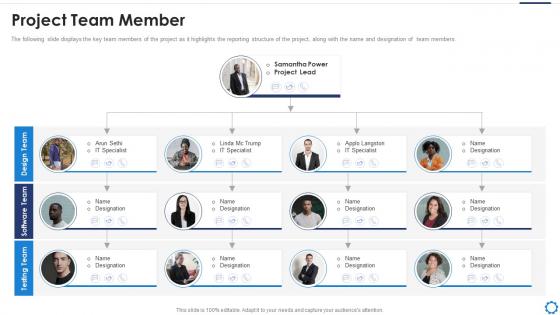
The following slide displays the key team members of the project as it highlights the reporting structure of the project, along with the name and designation of team members.
People who downloaded this PowerPoint presentation also viewed the following :
Project team member digitalization strategy to accelerate with all 6 slides:
Use our Project Team Member Digitalization Strategy To Accelerate to effectively help you save your valuable time. They are readymade to fit into any presentation structure.
-
Project team member digitalization strategy to accelerate
-

Project team member digitalization strategy to accelerate
-

Project team member digitalization strategy to accelerate
-

Project team member digitalization strategy to accelerate
-

Project team member digitalization strategy to accelerate
-

Project team member digitalization strategy to accelerate
FAQs for Project team member digitalization
Honestly, it's mostly about keeping up with what customers want now - they expect everything to work smoothly online. Competition is brutal too, so if you don't adapt, someone else will steal your customers. The cost savings are huge though. Digital tools make everything run faster and way cheaper than old-school methods. COVID obviously pushed everyone into this faster than planned - suddenly remote work wasn't optional anymore. I'd probably start by looking at your customer journey first. Find where people get frustrated or drop off, then throw your money at fixing those spots. That's where you'll see the biggest impact anyway.
Honestly, you gotta track both the hard numbers and the softer stuff. Revenue growth, cost savings, productivity gains - those are obvious. But customer satisfaction and how engaged your employees actually are? That matters way more than people think. Set your baseline before you change anything, then check in quarterly or whatever works. Don't go crazy with like 20 different metrics though - pick maybe 3-5 that actually matter to your specific goals. Oh, and response time to market changes is huge these days. The fancy dashboards look cool but focus on what'll actually move the needle for your business.
Honestly? Leadership makes or breaks this stuff. If your executives aren't walking the walk - like actually using the new tools and backing up teams when they mess up - forget it. I've watched so many companies where the CEO gives a big speech about going digital, then everyone goes back to doing things the old way. Your leaders need to explain why you're changing (people hate change without reasons), throw some budget at training, and actually celebrate when teams try new stuff. Even the failures! Otherwise you're just spinning your wheels and nothing really changes long-term.
Look at what's actually breaking in your business right now and what could make you money. That's where you start. Quick wins are clutch for getting people on board - I learned this the hard way after wasting months on fancy stuff nobody cared about. Build a simple grid: high impact vs low effort. Those are your first targets. The big complex projects can wait until you've got some credibility built up. Don't take on anything unless you've got the skills in-house or budget to hire help. And honestly? Get comfortable saying no to random requests that sound cool but won't move the needle.
Ugh, where do I even start? Companies always skip getting the executives on board first - huge mistake. Then they try changing everything overnight instead of starting small. The worst part? Nobody asks employees what they actually need. I've watched teams drop crazy money on fancy software that just collects digital dust. Also, don't treat this like some one-and-done project you can check off a list. It's more like... ongoing maintenance? Focus on fixing real problems, not just making everything "digital" because it sounds cool. Get your people involved early and build from there.
Honestly, data analytics is like having a GPS for your digital transformation. Look at what data you're already collecting - bet there's a goldmine just sitting unused in your systems. Customer behavior stuff, where things slow down operationally, basic performance numbers. This tells you where to actually spend your tech money instead of guessing. Analytics proves whether new digital tools are worth it and shows which processes genuinely need automation (not just the ones that look fancy to automate). I'd pick one small area first, get a few wins under your belt, then expand. Way less overwhelming that way.
Look, AI and machine learning are crushing it right now - automating customer service, data analysis, you name it. Cloud computing's massive too since you can scale without dropping tons of cash upfront. IoT devices are pumping out data streams that actually help companies get their customers. Blockchain? Kinda overhyped if I'm being real, but it works for supply chain stuff. Oh and here's the thing - don't chase every new tech trend. Pick one or two things that'll actually fix your problems. Way better than spreading yourself thin on flashy nonsense.
Honestly, customer experience should be driving your whole digital transformation strategy. Map out where customers are getting frustrated first - that's your roadmap right there. Too many companies just start throwing money at random tech without actually thinking about the user journey (I've definitely seen this mess up more than a few projects). Your CX data tells you whether you need mobile apps, chatbots, self-service stuff, whatever. Don't digitize just to digitize. Start with an audit of every touchpoint. Where's the friction? Fix those spots first and you'll actually solve real problems instead of creating shiny new ones.
Honestly, data literacy is probably the biggest game-changer right now - like being able to actually understand what all those numbers mean. You'll definitely want to get comfortable with digital collaboration tools since we're all working remotely half the time anyway. Problem-solving skills are clutch too. But here's the thing - adaptability matters most because tech moves ridiculously fast. Oh, and don't sleep on automation tools; they're everywhere now. My sister actually started with just one skill she sucked at and took a random online course. Maybe find someone at work who's good with this stuff to show you the ropes?
Pick one thing that's driving you absolutely nuts - like invoicing or how you handle customer emails. Don't go crazy trying to fix everything at once. Google Workspace and basic CRMs are cheap wins that actually work. Zapier's pretty solid for connecting stuff together too. I've watched so many businesses blow their budget on expensive software that just sits there unused (my cousin's restaurant did this with some $300/month thing). Cloud tools are perfect since you're not buying servers or whatever. Once that first fix saves you time and sanity, use those savings for the next upgrade.
Honestly, you can't separate digital transformation from cybersecurity - they're totally connected. Moving to the cloud or adding new tech? You're creating more ways to get hacked. Think of it like adding rooms to your house but leaving the doors wide open. Security has to be part of the plan from the start, not something you slap on later (learned this the hard way at my last job). Your IT and security people need to actually talk to each other during the whole process. Otherwise you'll just end up with fancy new ways for hackers to mess with you.
Honestly, you've gotta get people involved from the start - don't just dump changes on them. Explain why this matters for their actual job, not just some corporate BS about growth. Training is huge too because nothing pisses people off more than new systems they can't figure out. Listen when they complain (they will) and actually do something about it. Oh, and celebrate the small wins early on - builds momentum and shows it's not just another failed initiative. Bottom line: make them feel like partners, not victims of change.
Honestly, there are three main things you gotta watch out for. Data privacy is huge - people actually care about this now, so be upfront about what you're collecting and why. Then there's your employees - are you helping them learn new skills or just tossing them aside? That's always a tough call. Bias in your AI systems is the third one - you'll need to check regularly that your algorithms aren't screwing over certain groups. Oh, and don't wait until the end to think about this stuff. Build it in from the start or you'll hate yourself later.
Look, skip the massive overhauls - they're a nightmare. Break everything into bite-sized pieces so you can actually pivot when stuff goes sideways (and it will). Cross-functional teams are your best bet, and let them make decisions without waiting for approval from twelve different people. Build tech that bends instead of breaks when you need to swap tools. Oh, and definitely loop in customers and employees for feedback throughout - they'll catch things you missed. Honestly? Just pick one tiny pilot project and start it this week.
Honestly, you can't pull off digital transformation solo anymore - it's just too complex. Map out where you're weakest first, then find partners to fill those gaps. Cloud vendors, AI specialists, cybersecurity firms, sometimes even competitors for industry standards stuff. I've watched companies try the DIY route and it rarely ends well. The trick is finding partners who actually get your business, not ones just trying to sell you their flashy new product. Focus on what you're already good at and let others handle the rest. Way smarter approach than burning out your team on everything.
-
Unique and attractive product design.
-
Easy to edit slides with easy to understand instructions.