


Defining a framework for digital transformation digitalization strategy to accelerate




Try Before you Buy Download Free Sample Product
 Impress Your
 Audience
 100%
100% Editable
 Save Hours
 of Time


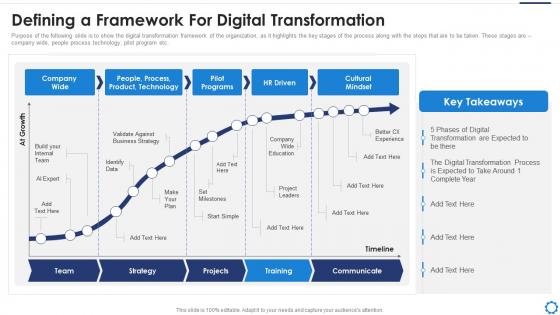
Purpose of the following slide is to show the digital transformation framework of the organization, as it highlights the key stages of the process along with the steps that are to be taken. These stages are company wide, people process technology, pilot program etc.
People who downloaded this PowerPoint presentation also viewed the following :
Defining a framework for digital transformation digitalization strategy to accelerate with all 6 slides:
Use our Defining A Framework For Digital Transformation Digitalization Strategy To Accelerate to effectively help you save your valuable time. They are readymade to fit into any presentation structure.





FAQs for Defining a framework for digital transformation digitalization
Honestly, you've got four main things to nail down. First, make sure your digital stuff actually ties to real business goals - I've seen too many companies chase fancy tech for no reason. Solid infrastructure is obviously crucial. Then there's getting your team bought in, which is brutal because nobody likes change. Oh, and data governance can't be an afterthought. The culture shift is what kills most companies though. People will fight you every step. I'd start by figuring out where you are now, then spot the biggest gaps. Don't try to fix everything at once - you'll burn out your team.
Start with a digital maturity assessment - basically rate yourself 1-5 on stuff like tech infrastructure, data capabilities, and how ready people are for change. Don't sugarcoat it though, that's pointless. Check your cloud adoption, automation, whether decisions actually use data, employee digital skills. The usual suspects. Gap between where you are now and where you need to be? That's your roadmap right there. Oh, and definitely ask multiple departments - IT always thinks everything's fine while operations is probably screaming internally. They'll give you totally different pictures of the same company.
Honestly, if your leadership isn't fully on board, you're basically screwed. They control the budget and set the tone for everyone else. I've watched so many digital projects crash and burn because executives thought they could just throw money at IT and call it a day. Your C-suite needs to actually show up - not just write checks. They have to explain why this matters, change their own habits first, and back up teams when things get messy. And trust me, things will get messy. People hate change, but strong leaders can push through that resistance.
So you basically take that core framework and twist it around your industry's specific headaches. Healthcare? They're obsessed with compliance and keeping patient data locked down tight. Retail's all about customer experience and supply chain stuff. Manufacturing cares way more about IoT and automation than pretty customer-facing apps - makes sense when you think about it. Keep the same structured approach but swap out which tech areas you focus on. Oh, and definitely change up your success metrics too. Start by figuring out where your industry's falling behind digitally, what regulations you're dealing with, then build your framework phases around that mess. Same bones, different skin basically.
Honestly, most teams I've worked with totally overthink this stuff. Start simple - pick maybe 3-5 metrics your boss actually cares about, not just the flashy ones that look good in presentations. Business-wise, you want customer satisfaction scores, revenue from digital channels, maybe how much faster processes are running. Then track the tech stuff like uptime, how many people are actually using your features, and how quickly you can ship new things. I learned this the hard way at my last job - we were measuring everything but nothing connected to real business results. Once you nail those core metrics, then you can get fancy with more data.
Honestly? Your people will make or break this whole thing. I've watched so many digital projects crash and burn because nobody bothered asking employees what they actually needed. Start by getting them involved early - like, really involved, not just some fake "feedback session." Explain what's in it for them personally (not just company profits). Training is huge too, obviously. Oh, and celebrate the small stuff along the way! Your team should feel like they're part of building something cool, not having change forced on them. That partnership mindset makes all the difference.
Honestly, the worst part is dealing with people who just don't want things to change - and I get it, why mess with what works? Budget issues will hit you hard too. Leadership often has zero clear vision, plus everyone tries tackling everything at once instead of being smart about it. Different departments refuse to work together, which is so frustrating. Then you've got skills gaps where nobody actually knows how to use the new tech you bought. Oh, and picking totally wrong software that creates more problems. Start with small pilot projects first. Get the bosses on board and train people properly before you roll anything out.
Okay so first thing - map your digital stuff directly to what your business actually wants to achieve. Like if you're focused on keeping customers, your tech spending better support that. Get leadership on board early because I've watched so many "innovative" projects crash and burn when they didn't connect to real outcomes (kind of painful to witness honestly). Set up regular check-ins to see how digital projects are hitting your strategic goals. Don't let IT run wild with strategy, but also don't let strategy people ignore what's actually possible with tech. Quarterly reviews work well - make both teams present together so there's accountability.
Honestly, start with cloud infrastructure and data analytics platforms - that's your base. API integration tools too. You'll want automation software for workflows plus customer engagement stuff. Cybersecurity is huge (trust me on this one). But here's the thing - don't rip out everything you have. Connect your existing systems first instead of going crazy with replacements. Actually solve the problems you have right now, not whatever's trending on LinkedIn. I'd audit what's already there, then figure out where your customer journey or internal processes are totally broken.
So basically, a digital transformation framework is like having a roadmap instead of just randomly buying tech stuff and crossing your fingers. First thing - audit where your customers are getting frustrated right now. Then the framework helps you figure out which fixes will actually move the needle on satisfaction and revenue. Honestly, most companies just pile on digital tools without any strategy, which is why half their systems don't even talk to each other. The whole point is connecting your tech spending to real improvements customers will notice. Map out their journey, spot the pain points, then build a plan that makes sense.
Honestly, you need exec buy-in first or you're dead in the water. Map out where you actually are right now - be brutal about it. Then grab some quick wins while planning the bigger stuff. I've watched way too many companies try to fix everything at once and just... crash and burn spectacularly. Focus on things that'll improve customer experience and cut costs - stuff that actually moves the needle. Get people from different departments working together early because those departmental silos? They'll torpedo your progress faster than you can blink. Oh, and don't forget the people side - your team needs to get why you're doing this, not just what you're changing.
Don't treat continuous improvement like some side project you'll get to later. Build feedback loops right into each step - monthly reviews for one area, quarterly check-ins for the bigger picture. Track your KPIs religiously and create easy ways for people to actually tell you what's broken. Honestly, most companies do one huge overhaul then act surprised when things drift back. Your framework should feel alive, changing as you learn more. I'd start small though - pick just one piece to tweak each month and get good at that rhythm first.
Think of data analytics and AI as your company's crystal ball, but actually useful. Analytics shows you what's happening right now in your business. AI takes it further - predicting future trends and handling boring repetitive stuff automatically. Without them, you're just making everything digital without getting any smarter, which seems like a waste. They're game-changers for personalizing customer experiences and making real decisions instead of guessing. My advice? Don't go crazy at first. Pick one area where your data's already decent and test things out there.
Make sustainability part of your game plan from the start - seriously, don't just slap it on later. Build up your own team's skills instead of throwing money at consultants who'll disappear eventually. Skip the big flashy overhauls that drain your budget fast. Better to do smaller chunks with regular check-ins so you can pivot when things aren't working. Pick 2-3 digital skills your people actually need and focus on those for the next 6 months. Honestly, the whole "culture of learning" thing sounds cheesy but it's real - you need people who can adapt and figure stuff out as you go.
Dude, you're gonna be throwing money at random tech stuff with no plan. Teams end up doing the same work twice because nobody's talking to each other. I watched one company waste like 3 million this way - absolute nightmare. Meanwhile your competitors are getting their act together with actual strategy. Customers want everything to work smoothly online, but your people are stuck with ancient systems that make them want to quit. The worst part? You end up just reacting to problems instead of preventing them. Figure out what digital stuff you already have, then make a real roadmap.
-
Excellent products for quick understanding.
-
Informative presentations that are easily editable.